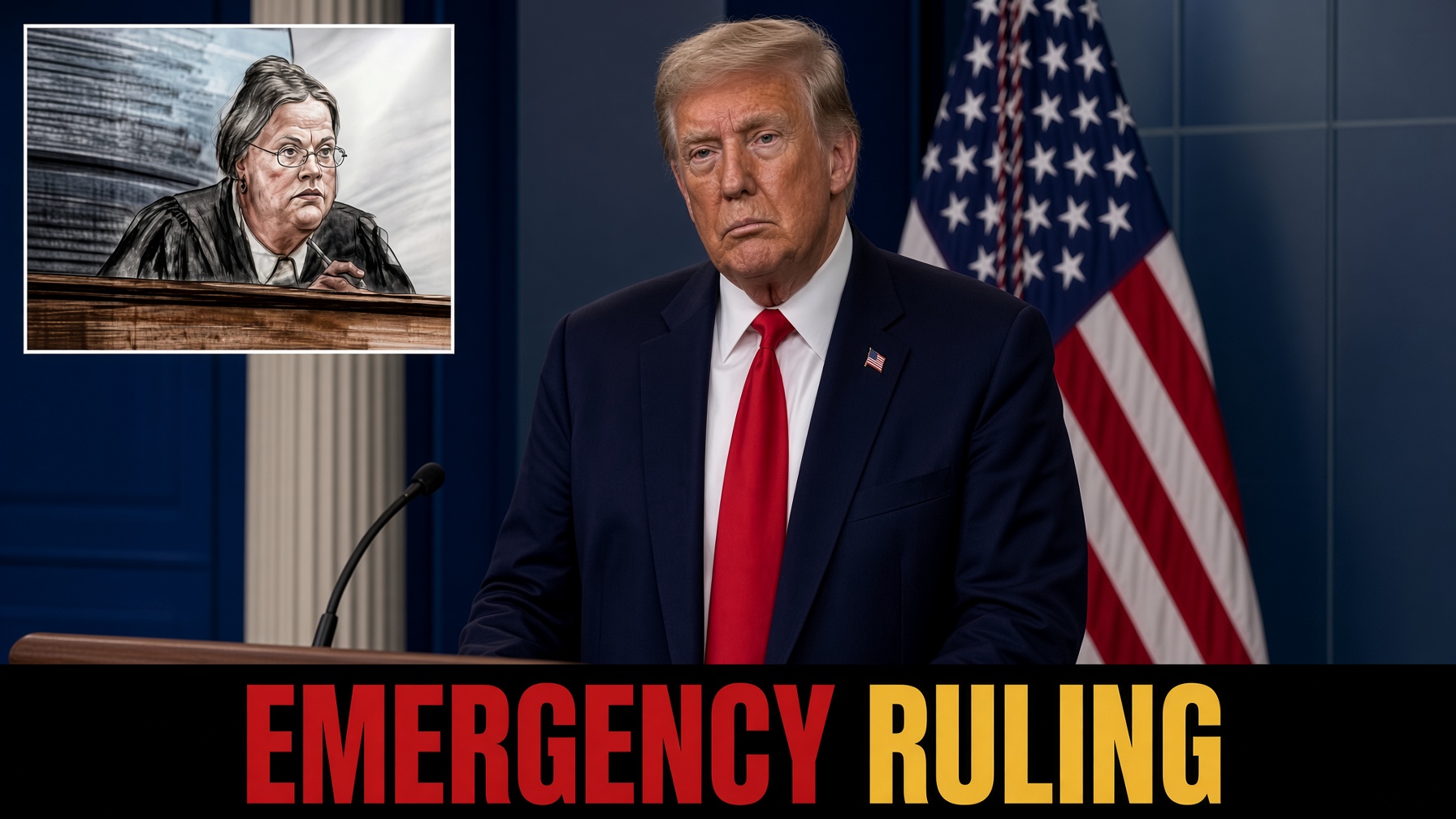
WASHINGTON — A federal judge in Virginia has temporarily blocked the Trump administration from moving forward with a proposed $1.8 billion Anti-Weaponization Fund, escalating a legal dispute over how the money was created and who could potentially receive compensation.
U.S. District Judge Leonie Brinkema issued a brief order barring the administration from taking action related to the fund, including transferring money into the program, reviewing claims or distributing payments.
Brinkema scheduled a June 12 hearing to consider whether the temporary restriction should be extended while the broader legal challenge proceeds.
The proposed fund has drawn opposition from a wide coalition of individuals and organizations that argue they would not qualify for compensation. Critics have also questioned whether the administration has the legal authority to establish the fund without a formal congressional appropriation.
The controversy centers on a settlement arrangement involving President Donald Trump and the Internal Revenue Service. The agreement followed Trump’s decision to drop a $10 billion lawsuit against the IRS concerning the disclosure of his tax returns by a contractor in 2019 and 2020.
The Justice Department subsequently announced the $1.8 billion compensation program, prompting questions from lawmakers about its legal basis, oversight and eligibility requirements.
The potential involvement of defendants prosecuted in connection with the January 6, 2021, Capitol attack has become another major point of contention.
During a recent House Rules Committee meeting, Rep. Jim McGovern, D-Mass., proposed an amendment that would have barred individuals charged or convicted in connection with the Capitol riot from receiving compensation through the program.
McGovern also sought greater transparency, calling for the attorney general to disclose payments made through the fund.
He argued that Congress should have a direct role in determining how federal resources are distributed and criticized the settlement arrangement as lacking sufficient public oversight.
Republicans on the committee rejected the amendment, prompting McGovern to accuse the majority of preventing lawmakers from debating restrictions on potential payments to January 6 defendants.
The dispute is now likely to receive increased scrutiny as the court considers whether the administration can legally proceed with the fund and whether additional restrictions are necessary.
Separately, the House delivered a significant bipartisan vote on housing legislation aimed at addressing rising costs and expanding the availability of affordable homes.
Lawmakers approved the amended 21st Century ROAD to Housing Act by a 396-13 vote, sending the measure to the Senate.
The legislation is designed to increase housing supply, expand opportunities for homeownership and address concerns over institutional investors purchasing large numbers of single-family homes.
House leaders described the measure as part of a broader effort to respond to the affordability pressures facing American families.
Speaker Mike Johnson, R-La., said rising housing costs and insufficient supply have become major concerns for households across the country.
The two developments highlight competing priorities confronting Congress and the administration: resolving disputes over federal authority and spending while pursuing legislation intended to ease economic pressures on Americans.
For now, however, the $1.8 billion fund remains on hold. The June 12 hearing is expected to provide the next major test of whether the administration can proceed with the controversial program.