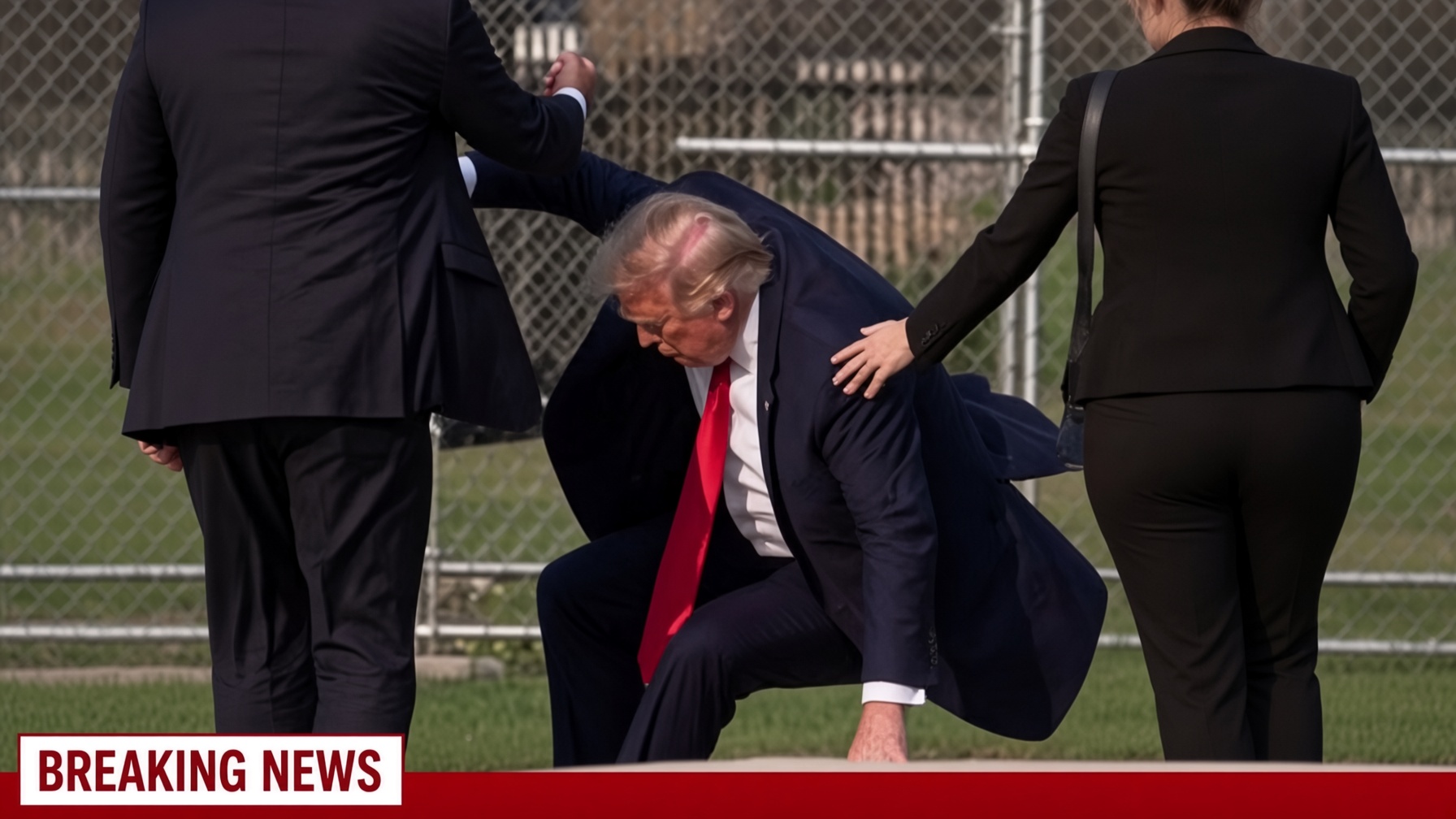
WASHINGTON — President Donald Trump’s latest reported fall has renewed public discussion about his health, physical condition and the level of transparency surrounding medical information from the White House.
The incident has attracted particular attention because of Trump’s age and the demanding schedule associated with the presidency. Any visible stumble, fall or moment of apparent physical difficulty involving a sitting president can quickly become the subject of intense public and political scrutiny.
However, medical experts generally caution against drawing conclusions about a person’s overall health from a single incident. A fall can have numerous explanations, and determining whether it reflects an underlying medical condition requires a proper clinical evaluation rather than photographs or short video clips.
The White House has continued to emphasize that Trump remains capable of performing his presidential responsibilities. Administration officials have pointed to his extensive travel schedule, public appearances and continued involvement in government affairs as evidence that he remains active in the role.
Questions about presidential health have long been politically sensitive. The public has a legitimate interest in knowing whether a president is physically and mentally capable of carrying out the responsibilities of office, while medical privacy also remains an important consideration.
Trump has previously faced scrutiny over his health whenever images or videos have appeared to show him moving cautiously, appearing unsteady or experiencing difficulty navigating stairs or other surfaces. Supporters have generally dismissed such moments as ordinary incidents, while critics have argued that they deserve greater explanation.
The latest episode is therefore likely to intensify an already familiar debate.
White House physicians play an important role in providing medical assessments and determining whether an incident requires further examination. Official medical evaluations generally provide substantially more information than isolated footage, particularly when assessing cardiovascular, neurological or musculoskeletal concerns.
At the same time, limited public information can create an environment in which speculation spreads rapidly. Social media platforms frequently amplify brief clips or photographs without providing the surrounding context, making it difficult for the public to distinguish confirmed medical information from political commentary.
For the Trump administration, maintaining confidence in the president’s ability to serve remains an important part of its public messaging. For critics and members of the media, questions about transparency are likely to continue as long as uncertainty remains surrounding specific incidents.
The reported fall does not, by itself, establish that Trump is suffering from a serious health problem. Any broader conclusions would require reliable medical evidence and an assessment by qualified physicians.
As Trump continues his presidential duties, attention will likely remain focused on his physical condition and on how the White House communicates information about his health. The episode underscores the continuing tension between a president’s right to medical privacy and the public’s interest in the fitness of the nation’s highest elected official.