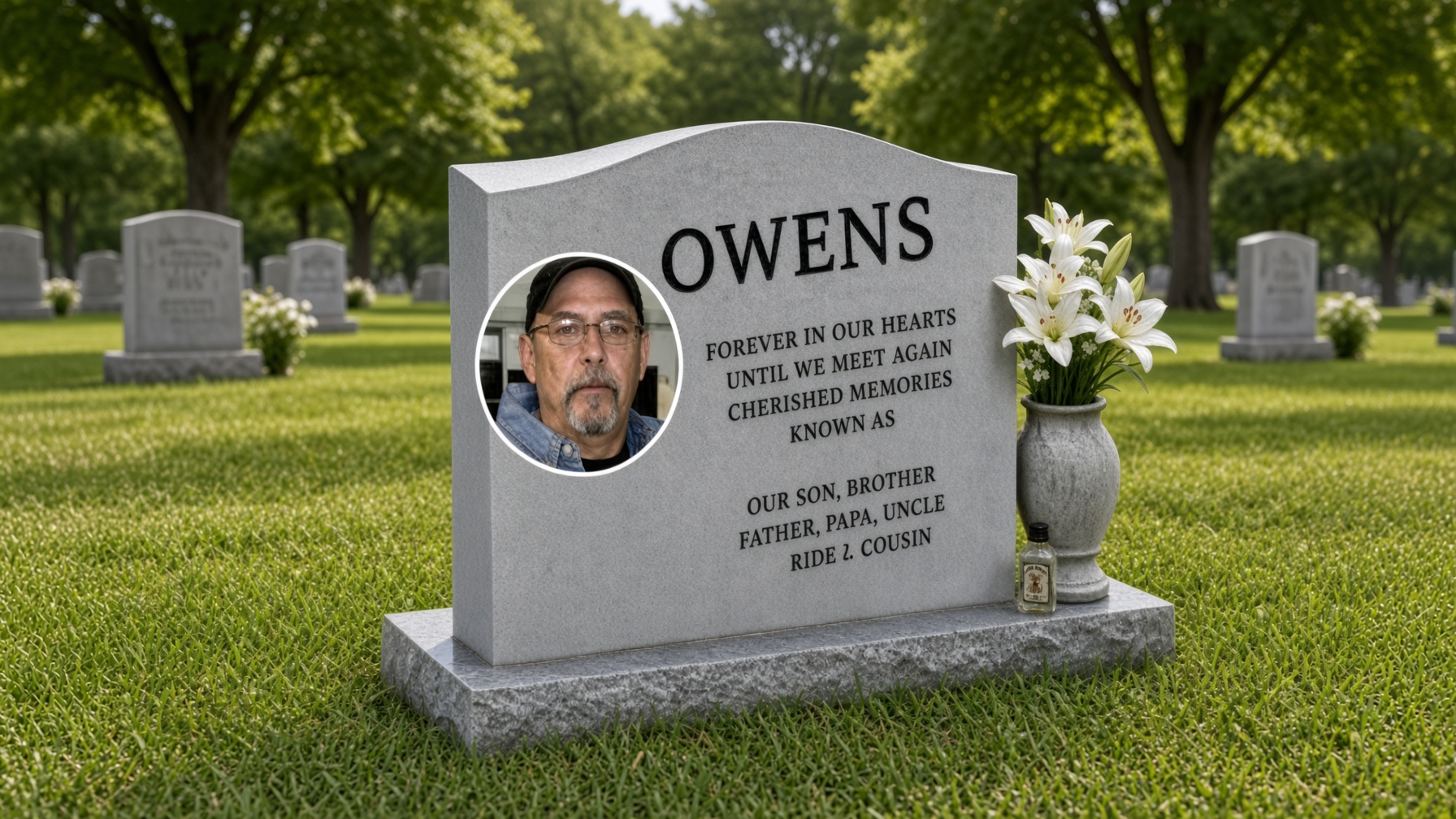
Carved in Granite, Coded in Spite: Cemetery Standoff Erupts Over Father’s Hidden Epitaph
A quiet municipal cemetery has become an unexpected battleground over free expression, grief, and decorum after a grieving family embedded an acrostic profanity into a newly erected headstone—igniting a bitter standoff with local cemetery administrators.
What the surviving relatives describe as a cherished, irreverent inside joke honoring their late patriarch’s lifelong sense of humor is now being scrutinized as a breach of cemetery regulations. With trustees threatening to alter or remove the granite monument and the family refusing to budge, the standoff exposes a growing tension between deeply personalized mourning and the collective governance of sacred civic grounds.
The Acrostic in Plain Sight
At first glance, the memorial appears entirely conventional: a solemn marker inscribed with dates, names, and poetic phrasing meant to honor a devoted father. Upon closer inspection, however, the structure reveals a classic literary cipher. By taking the first letter of each successive line—an acrostic arrangement—the text deliberately spells out an unmistakable expletive.
According to family members, the linguistic sleight-of-hand was an authentic extension of the deceased man’s personality. Known during his lifetime for dry wit, sharp ribbing, and an aversion to solemn platitudes, he had reportedly shared the subversive phrasing with his children as a running household joke.
“This was not erected to target, provoke, or insult the public,” a representative for the relatives stated. “It was carved to honor the specific man we lost—his humor, his voice, and the unspoken language of our family. To sanitize the stone is to rewrite who he was.”
Because the profanity is embedded structurally rather than printed explicitly across the face of the stone, casual mourners walking the grounds would likely never notice it. But once deciphered, the message became impossible for cemetery overseers to ignore.
Decorum vs. Dedication: The Board Intervenes
For the cemetery’s governing board, the sentiment behind the carving cannot override institutional policy. Cemetery trustees operate under a legal and ethical mandate to maintain perpetual care, ensure aesthetic consistency, and safeguard the peaceful, reverent atmosphere expected by hundreds of other grieving families sharing the grounds.
Cemetery leadership argues that permitting vulgarity—coded or explicit—sets an untenable administrative precedent.
“Rules governing monument inscriptions are established in advance so that standards are applied impartially across every plot,” an official familiar with municipal cemetery management explained. “The question is rarely about the purity of a family’s grief. It is about whether administrators have the contractual and statutory right to prevent vulgarity from entering a communal resting place.”
Trustees have reportedly presented the family with an ultimatum: authorize an alteration to ground down or re-engrave the disputed lettering, or face administrative removal of the monument at the plot owner’s expense.
The family has categorically rejected both options, viewing any forced revision as state-sanctioned desecration of a private tribute.
The Legal Crossroads of Perpetual Plots
As talks stall, both sides are weighing whether the standoff could migrate from the cemetery lawn to a courtroom. Legal precedent regarding cemetery disputes occupies a complex intersection of property law, contract rights, and First Amendment jurisprudence:
-
Deed Restrictions and By-Laws: When purchasing interment rights, buyers typically sign contracts incorporating the cemetery association’s bylaws by reference. These bylaws almost universally grant trustees discretionary authority to reject “improper, offensive, or indecorous” inscriptions.
-
Public vs. Private Property: If the grounds are municipally owned, governmental restrictions on speech face strict constitutional scrutiny, though courts have historically granted broad leeway to municipalities managing dedicated cemetery spaces under public forum doctrine.
-
Property Ownership of Markers: While the cemetery authority controls the real estate, the physical headstone remains the personal property of the family who commissioned and paid for it. Forcible removal without a court order risks wrongful interference or property damage claims.
Attorneys specializing in municipal and probate law note that disputes over epitaphs rarely reach appellate courts because most families quietly concede to administrative pressure. However, when families treat the carving as an existential matter of remembrance, litigation can drag out for years, running up thousands of dollars in legal fees over a single slab of polished granite.
Redefining the Modern Epitaph
The standoff underscores a broader cultural shift in how modern families navigate grief. For generations, funerary art was rigidly uniform: biblical verses, standardized tributes, and solemn iconography dominated churchyards and memorial parks.
Over the last two decades, memorialization has pivoted sharply toward individuality. Contemporary headstones now routinely feature QR codes linking to personal blogs, detailed photo engravings, pop culture references, and idiosyncratic sayings. Yet as memorial markers become increasingly bespoke, the friction between individual identity and shared public spaces inevitably escalates.
For now, the monument stands undisturbed among rows of weathered slate and polished marble. Whether it remains intact will depend on whether trustees choose to enforce their bylaws through formal legal channels, or whether community mediation can bridge the gap between institutional rules and an irreverent final farewell.



