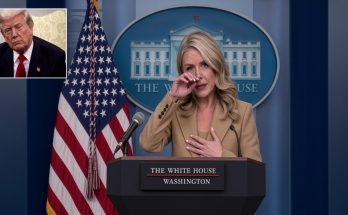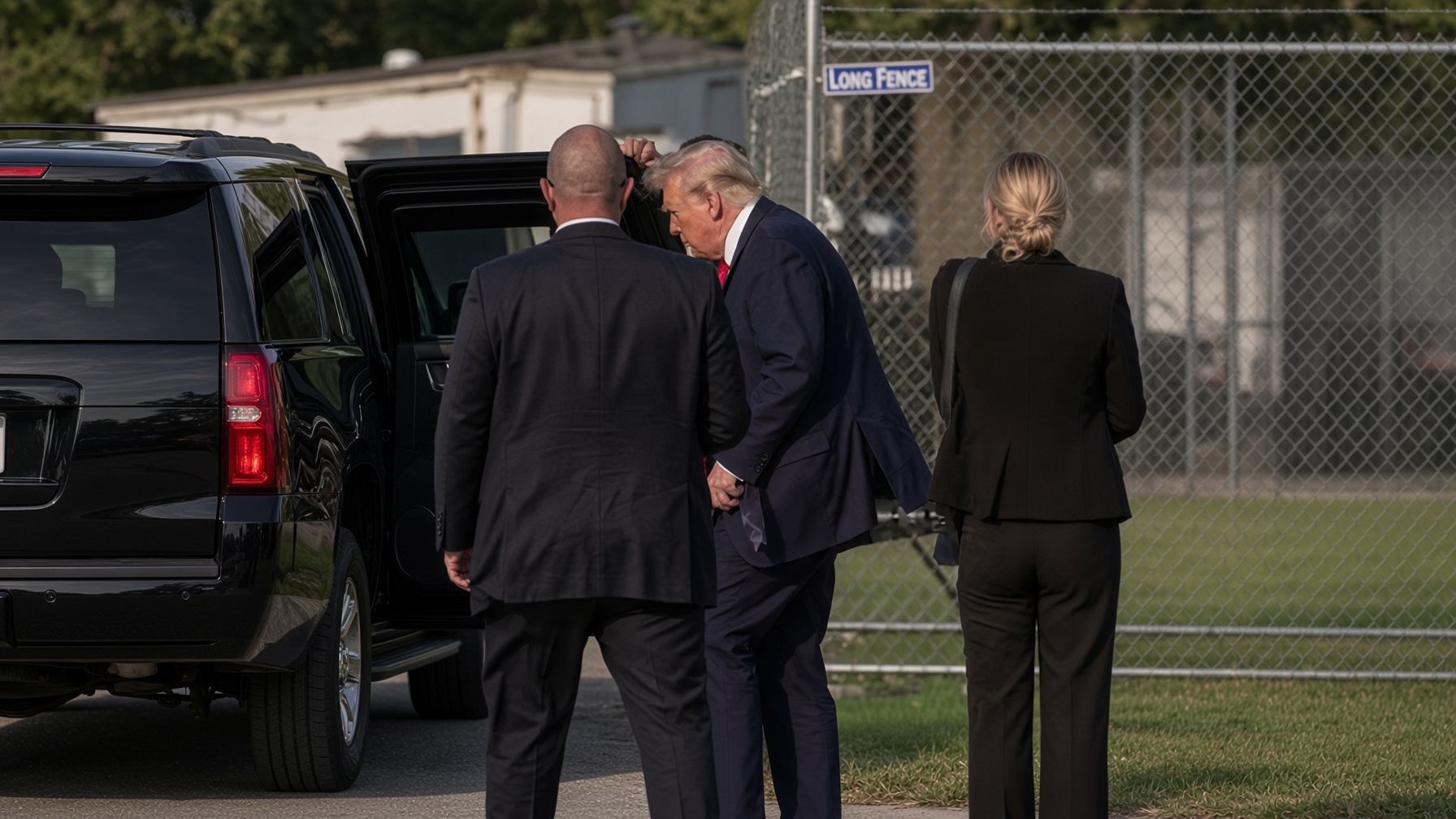
WASHINGTON — Viral claims circulating across social media platforms have ignited renewed public conjecture regarding President Donald Trump’s physical stamina, following allegations that he stumbled while boarding Air Force One ahead of a planned trip to Florida.
The online accounts quickly tied the purported physical mishap to high-stakes diplomatic maneuvering surrounding the war in Ukraine, alleging the president was en route to confidential talks involving Ukrainian President Volodymyr Zelensky. However, despite rapid amplification across digital channels, the claims remain entirely unsupported by verified broadcast footage, press pool reports, or corroborating statements from the White House.
The velocity of the rumor underscores how modern political discourse frequently outpaces verified facts. Within hours of the initial posts, commentators and partisans had seized upon the unverified incident, framing an alleged misstep alternately as an acute health scare or as an outright fabrication designed to generate clicks. The complete absence of standard documentation—such as pool footage or log entries from the traveling press corps that accompanies the commander in chief on every boarding—has left digital forensic analysts unable to establish whether the incident occurred at all.
Unsubstantiated Leaks and Disinformation Risks
The speculative narrative intensified significantly when secondary posts alleged that a White House medical officer had leaked an undisclosed diagnosis following the supposed boarding incident.
Independent fact-checking networks and national security monitors found no evidence to substantiate that claim. No credible medical personnel have spoken on the record, no formal diagnostic paperwork has surfaced, and no congressional committees have received notifications of an acute executive health event.
Media analysts caution that the posts exhibit standard hallmarks of coordinate digital disinformation: reliance on sensational vocabulary, total dependence on anonymous assertions, and the absence of primary-source metadata. In recent political cycles, partisan actors have repeatedly stripped years-old video clips of context, slowed down audio, or deployed AI-driven deepfakes to suggest that domestic leaders are facing physical collapse. Without verifiable timestamps, authenticated source video, and independent reporting from journalists on the tarmac, the latest episode represents an internet rumor rather than documented news.
Clinical Context and the Limits of Remote Assessment
Beyond the evidentiary void, clinical specialists and occupational health practitioners have repeatedly warned against diagnosing public officials from brief, isolated fragments of footage.
Even when a stumble or loss of footing is captured on video, physicians note that an individual misstep is clinically non-diagnostic. Everyday factors—ranging from slick metal aircraft stairs, wind gusts, and footwear tread to fatigue, travel schedules, and brief moments of distraction—regularly cause healthy adults to momentarily lose their balance.
Neurological or cardiovascular evaluations require rigorous baseline metrics: exhaustive medical histories, balance and gait assessments, blood profiles, and objective cognitive testing. In the absence of corroborated clinical disclosures or verified hospital visits, attempting to derive a chronic medical diagnosis from an unsubstantiated airport claim contradicts established medical ethics.
Geopolitical Friction Amplifies Speculation
The speed with which the rumor gained traction was heavily driven by the tense geopolitical climate surrounding Eastern Europe. With global focus locked on potential bilateral negotiations between Washington, Kyiv, and Moscow, any perceived shift in presidential stamina is instantly magnified by market traders, foreign adversaries, and domestic political rivals.
While the Trump administration has engaged in ongoing public and private messaging regarding a framework to freeze or resolve the conflict in Ukraine, diplomatic correspondents note that the existence of high-level geopolitical friction has no bearing on the veracity of medical rumors. The conflation of ongoing diplomatic summits with baseless health claims serves primarily as an algorithmic accelerant, driving engagement during periods of international unease.
The Imperative of Primary Verification
The Air Force One claims highlight the persistent vulnerability of the digital information ecosystem to unverified gossip masquerading as investigative reporting. When evaluating sensational allegations involving head-of-state fitness, intelligence analysts and media ethicists urge audiences to rely on institutional standards of proof: official pool reports, on-camera press briefings, authenticated full-length video, and cross-verified reporting by reputable newsrooms.
Until credible primary documentation or official administrative releases emerge, the alleged boarding mishap and purported physician disclosures remain entirely unsubstantiated rumors.