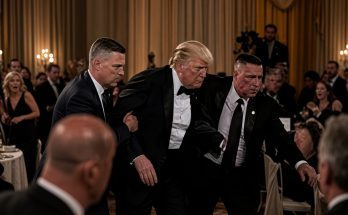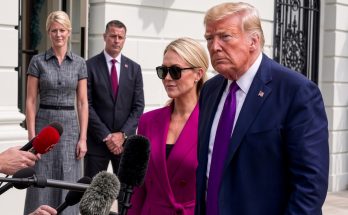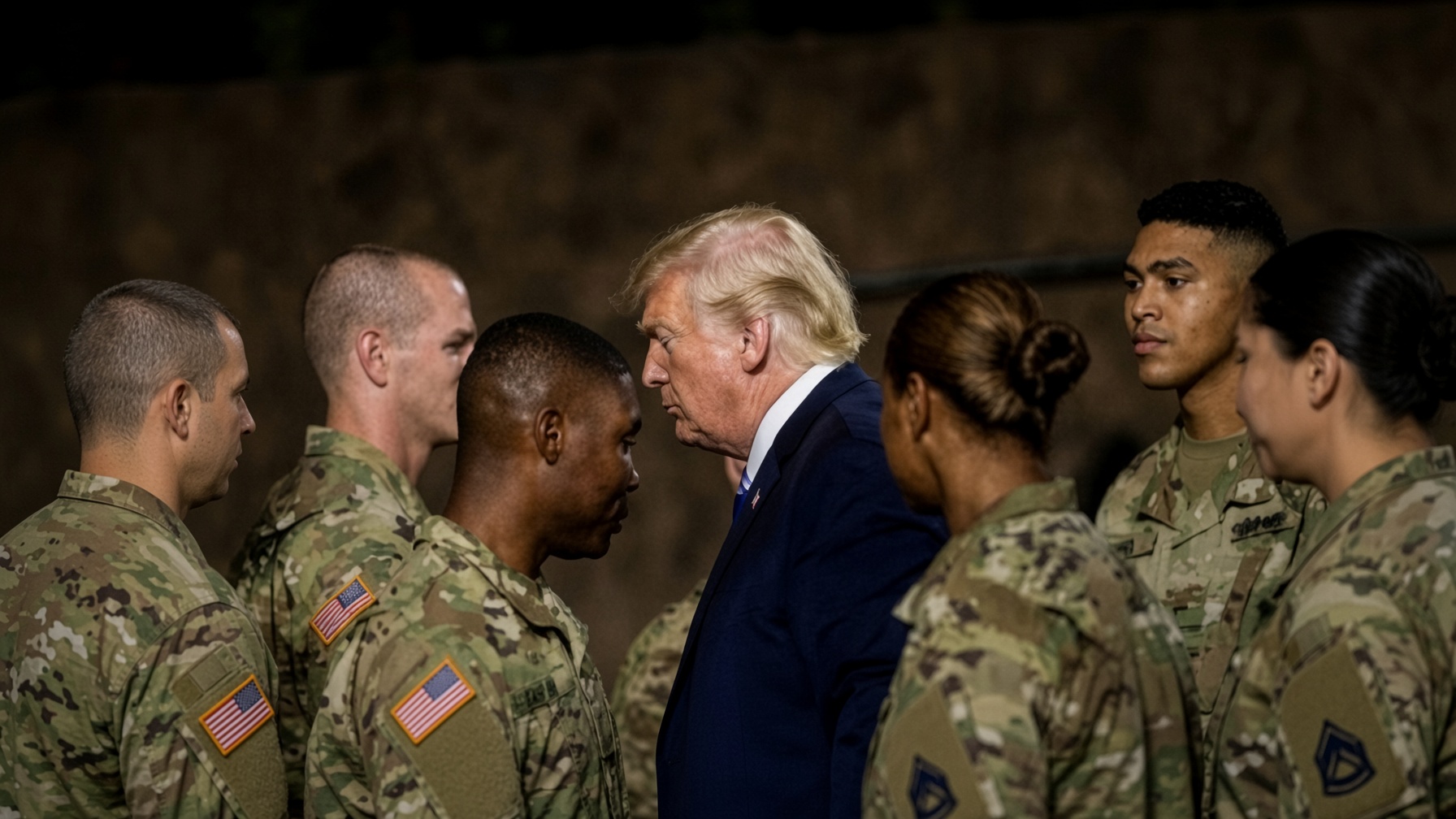
WASHINGTON — At 4:00 a.m., unverified intelligence reports began circulating through the Pentagon and Capitol Hill detailing an unprecedented development: pockets of active-duty service members refusing deployment orders. While the Department of Defense has not officially corroborated the alleged walkout, the explosive rumors alone expose an acute institutional rift inside the American defense apparatus, ignited by aggressive rhetoric from Donald Trump signaling potential kinetic strikes against civilian infrastructure in Iran.
Trump’s public floating of non-military targets—including Iranian power grids, municipal bridges, and water distribution networks—marks a radical departure from established rules of engagement, triggering fierce pushback from national security veterans, humanitarian monitors, and international legal scholars.
The political and legal blowback in Washington was instantaneous. Legal experts warned that systematically crippling critical civilian infrastructure violates international humanitarian law, particularly the Geneva Conventions, which strictly prohibit strikes against assets indispensable to the survival of the civilian population. Beyond legal jeopardy, military strategists contend that such scorched-earth tactics are strategically counterproductive. Decades of modern combat history demonstrate that infrastructure destruction rarely fractures an adversary’s political resolve. Instead, it universally galvanizes nationalist cohesion, suppresses internal dissent, and consolidates hardline control around the targeted regime.
On Capitol Hill, congressional leaders moved swiftly to confront the administration’s posture. Senator Chris Van Hollen (D-MD) and a bipartisan cohort of lawmakers condemned the aggressive rhetoric as reckless, noting the total absence of a coherent operational objective. Lawmakers voiced urgent alarm that executive decision-making is dangerously bypassing constitutional war-powers oversight. With the tempo of the crisis escalating, members of Congress fear the White House could pull the nation into open warfare without statutory authorization, formal debate, or strategic appropriations.
Across the Middle East, the operational fallout threatens to unleash broad regional contagion. Seasoned intelligence analysts emphasize that Tehran has historically refused to capitulate under coercive military threats. Direct intimidation typically empowers hardline factions within the Islamic Revolutionary Guard Corps (IRGC), crowding out moderate voices and closing off diplomatic off-ramps.
Compounding the crisis is the glaring absence of a defined operational endgame. Without clear benchmarks for de-escalation, foreign policy analysts warn that Washington risks slipping into an open-ended kinetic trap—one that could bog down American naval and air assets, exhaust strategic stockpiles, and imperil thousands of service personnel across forward operating bases in Iraq and the Persian Gulf.
Behind the public brinkmanship, global diplomats are scrambling to prevent a terminal collapse in communications. Regional intermediaries in Doha, Muscat, and Geneva are reportedly working through backchannels to establish emergency guardrails. In modern asymmetric warfare, where perceived intent drives battlefield calculus as decisively as raw military power, an unauthorized strike or tactical misjudgment in the Persian Gulf could trigger uncontrolled escalation.
The crisis has brought the international security architecture to an agonizing inflection point. As Washington reckons with potential dissent within its own ranks and deep constitutional friction at home, the broader world watches to see whether institutional restraint can prevail, or if the Middle East is on the brink of an uncontainable conflagration.