WASHINGTON — In an era marked by escalating friction between the executive branch and the Fourth Estate, rhetoric targeting the press has increasingly shifted from routine political skirmishing toward explicit challenges to the operational independence of the media.
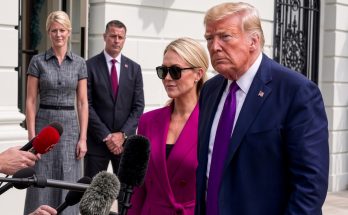
During a recent briefing, former President Donald Trump delivered an unvarnished warning directly to the assembled press corps, declaring that the institutional rules governing the news media were “going to change.”
The remark went beyond customary policy disputes, tax debates, or geopolitical strategy, focusing squarely on the legal protections, institutional access, and operational norms that have shielded working journalists from executive overreach for generations. For press freedom advocates and First Amendment scholars, the statement signaled a deliberate escalation: moving past everyday political grievance toward the implicit threat of institutional retaliation against independent news organizations.
The Imperative for Public Accountability
Media ethicists and First Amendment watchdogs warn that treating such pronouncements merely as performative political theater risks normalizing the erosion of fundamental democratic safeguards. When political figures suggest altering the legal frameworks under which journalists operate, press advocates argue that the initial imperative must be radical operational transparency.
Rather than assuming public comprehension of journalistic standards, news organizations face a growing need to articulate clearly why an independent press remains indispensable to civic life. Studies in public perception consistently show that public trust declines when newsrooms appear cloistered, defensive, or indifferent to reader concerns.
Constitutional scholars emphasize that an uninhibited press does not exist to serve media companies; it serves the public interest by scrutinizing institutional power, auditing public expenditures, and uncovering official malfeasance. The history of democratic governance demonstrates that when heads of state gain the power to dictate which stories are permissible or which reporters receive accreditation, the broader checks on state authority deteriorate rapidly.
In response to sustained political pressure, journalism advocates argue that newsrooms must double down on methodological rigor:
Exhaustive Sourcing and Verification: Providing clear attribution, publishing primary source documentation, and minimizing reliance on anonymous sourcing.
Rapid Correction Protocols: Issuing visible, prompt, and unhedged corrections when factual errors occur, demonstrating accountability rather than defensiveness.
Transparency in Reporting Processes: Demystifying editorial workflows by explaining how investigative projects are assembled, vetted, and legally cleared prior to publication.
By anchoring reporting firmly in verifiable documentation, newsrooms can demonstrate resilience against accusations of partisan bias and resist attempts by political figures to delegitimize critical coverage.
Operational Solidarity Across Competitive Lines
The second vital safeguard against executive pressure, analysts note, requires unprecedented institutional solidarity across the media landscape.
In traditional commercial environments, news organizations function as fierce competitors, battling for scoops, audience engagement, and subscription revenues. Yet legal scholars and media executives argue that existential threats to press freedom demand a collective, systemic response.
When political entities threaten individual reporters with revocations of credentials, selective blacklisting, or punitive lawsuits designed to drain operational budgets, divided responses leave individual outlets vulnerable. Advocates emphasize that national legacy publishers, regional broadcasters, non-profit investigative desks, and local independent outlets must operate as a unified defense ecosystem.
Such solidarity takes several concrete operational forms:
Coordinated Legal Defense Funds: Pooling resources to contest unconstitutional gag orders, frivolous defamation suits, and subpoenas seeking to unmask confidential sources.
Shared Declarations and Pool Access: Refusing access-for-compliance arrangements, wherein access is traded for favorable coverage, and maintaining uniform standards of pool rotation regardless of political exclusion.
Cross-Outlet Investigative Collaborations: Partnering on high-impact public interest reporting, ensuring that investigations cannot be suppressed by targeting a single newsroom.
Press freedom organizations—including the Committee to Protect Journalists, the Reporters Committee for Freedom of the Press, and the Freedom of the Press Foundation—have increasingly emphasized that systemic resilience relies on treating an assault on any single journalist’s constitutional rights as an institutional hazard for all.
Constitutional Foundations
Ultimately, the boundary between political critique and state-directed coercion is delineated by the First Amendment. While political figures maintain the right to challenge coverage, dispute interpretations, and offer counter-narratives, the U.S. Constitution expressly denies the executive branch the authority to redefine the rights of an independent press.
As the political landscape continues to polarize and rhetoric toward the media intensifies, the collective response of news organizations will serve as a definitive barometer of democratic health. For the press corps, the mandate remains steadfast: to report accurately, verify relentlessly, and rely on the enduring strength of the Constitution as the final, unyielding defense of a free society.