WASHINGTON — The U.S. Supreme Court has issued a major ruling limiting the ability of private plaintiffs to bring certain human-rights claims against companies and other defendants under two federal statutes.
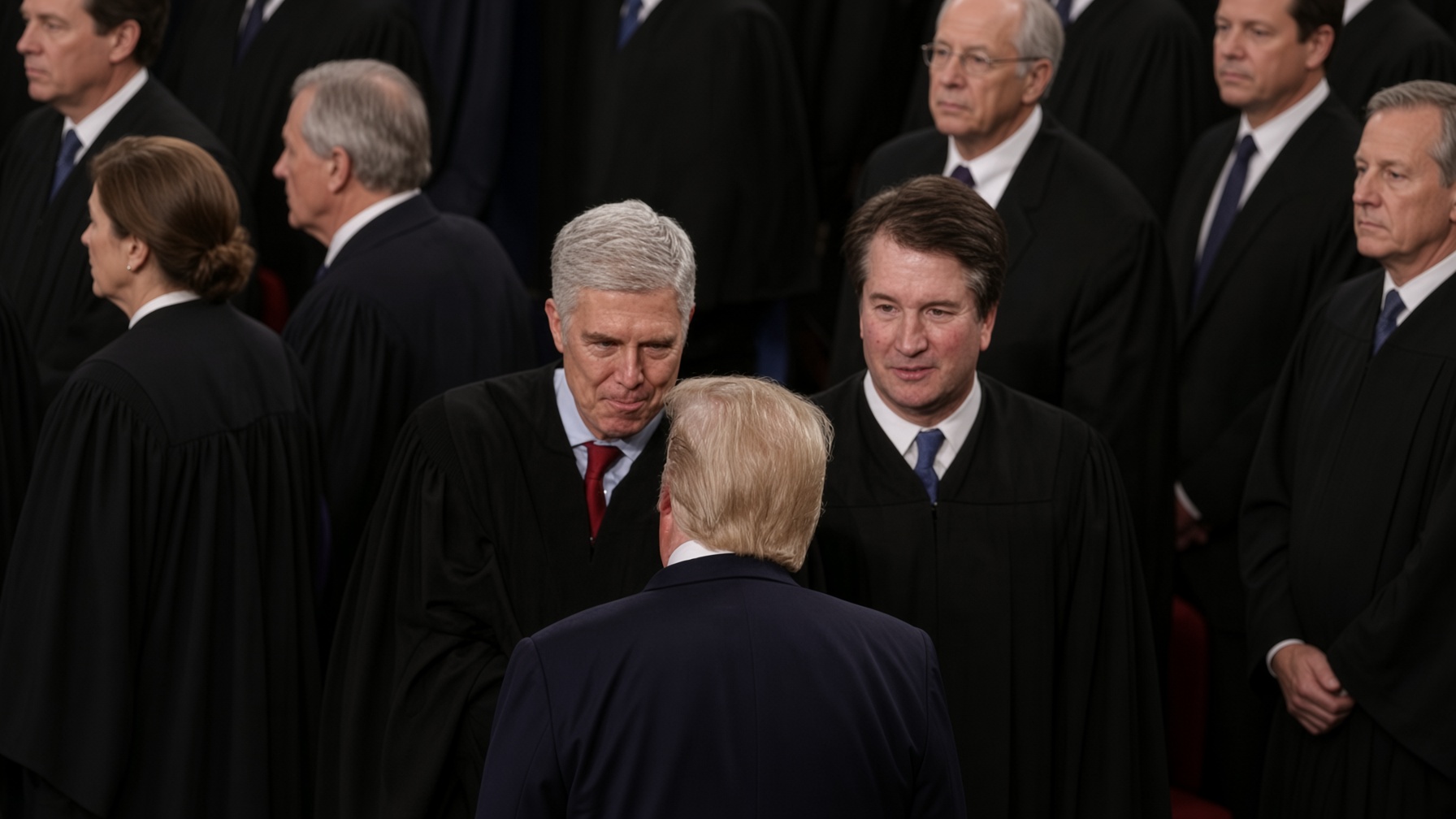
In a 6–3 decision in Cisco Systems, Inc. v. Doe, the Court held that federal courts may not create new causes of action under the Alien Tort Statute for alleged violations of international law and that the Torture Victim Protection Act of 1991 does not authorize aiding-and-abetting liability. Justice Amy Coney Barrett wrote the majority opinion, joined by Chief Justice John Roberts and Justices Clarence Thomas, Samuel Alito, Neil Gorsuch and Brett Kavanaugh.
The decision reversed a Ninth Circuit ruling and sent the case back for further proceedings. The case was decided June 23, 2026, after the justices heard arguments in April.
Case Involved Claims Over Chinese Surveillance
The dispute arose from claims brought by practitioners of Falun Gong, a spiritual movement that has faced persecution by the Chinese government.
The plaintiffs alleged that Cisco Systems and several executives helped Chinese authorities carry out persecution by developing and providing surveillance technology that could be used to identify and apprehend Falun Gong practitioners. Their claims included allegations involving torture and other violations of international law.
The plaintiffs sought to hold Cisco and its executives responsible under the Alien Tort Statute, while one plaintiff also pursued claims under the Torture Victim Protection Act.
Cisco disputed the legal basis for those claims and asked the Supreme Court to reject the use of the statutes to impose aiding-and-abetting liability. The Supreme Court ultimately agreed with Cisco on those questions.
Supreme Court Limits Judicially Created Claims
At the center of the ruling was the Alien Tort Statute, a federal law that gives federal courts jurisdiction over certain civil actions involving violations of the “law of nations.”
The Court’s majority focused heavily on separation-of-powers principles. Barrett wrote that although earlier precedent had described a limited judicial authority to recognize causes of action under the ATS, the Court’s new ruling concluded that such authority does not exist.
The majority stated that allowing courts to create new causes of action could interfere with Congress’s authority to establish legal rights and with the political branches’ responsibility for foreign policy.
“Today, we close the door that Sosa cracked,” Barrett wrote, concluding that courts may not create new causes of action for violations of international norms.
The ruling therefore significantly changes the legal framework surrounding ATS litigation and limits the circumstances in which plaintiffs can rely on the statute to pursue international-law claims in U.S. courts.
TVPA Also Does Not Cover Aiding and Abetting
The justices separately considered the Torture Victim Protection Act, which expressly creates a civil cause of action for certain acts of torture and extrajudicial killing.
The Court concluded that the statute’s text does not extend liability to people accused of merely aiding and abetting those violations.
The majority reasoned that Congress could have expressly included such liability but did not do so. Barrett’s opinion therefore treated the text of the statute as controlling rather than expanding its reach through judicial interpretation.
Justices Disagree Over Scope of Ruling
The decision was not unanimous.
Justice Sonia Sotomayor wrote a dissent, joined by Justices Elena Kagan and Ketanji Brown Jackson in relevant portions. She argued that the majority had departed from the approach established by earlier Supreme Court precedent concerning the Alien Tort Statute.
Sotomayor also disagreed with the majority’s interpretation of the TVPA, arguing that the statutory language could support liability for those who aid and abet torture.
Jackson separately concurred in part and dissented in part. She agreed with the Court’s conclusion concerning the TVPA but joined Sotomayor’s discussion of the Alien Tort Statute.
Implications for U.S. Companies
The ruling could have significant implications for American companies facing lawsuits based on alleged assistance with conduct occurring overseas.
Businesses accused of facilitating foreign human-rights violations will have fewer avenues for claims under the ATS and TVPA when the allegations depend on aiding-and-abetting theories.
Supporters of the ruling have described it as an important protection for companies against expansive litigation involving foreign affairs. Critics, including the dissenting justices, have warned that the decision could make it more difficult for victims of serious international abuses to seek remedies in U.S. courts.
The case also highlights the Supreme Court’s continuing debate over the proper boundaries between Congress, the executive branch and the federal judiciary when lawsuits involve international affairs.
For now, the decision establishes a clear limitation: federal courts cannot create new ATS causes of action for international-law violations, and the TVPA does not provide the aiding-and-abetting remedy at issue in the case. The Ninth Circuit must now apply those conclusions as the litigation continues.