-
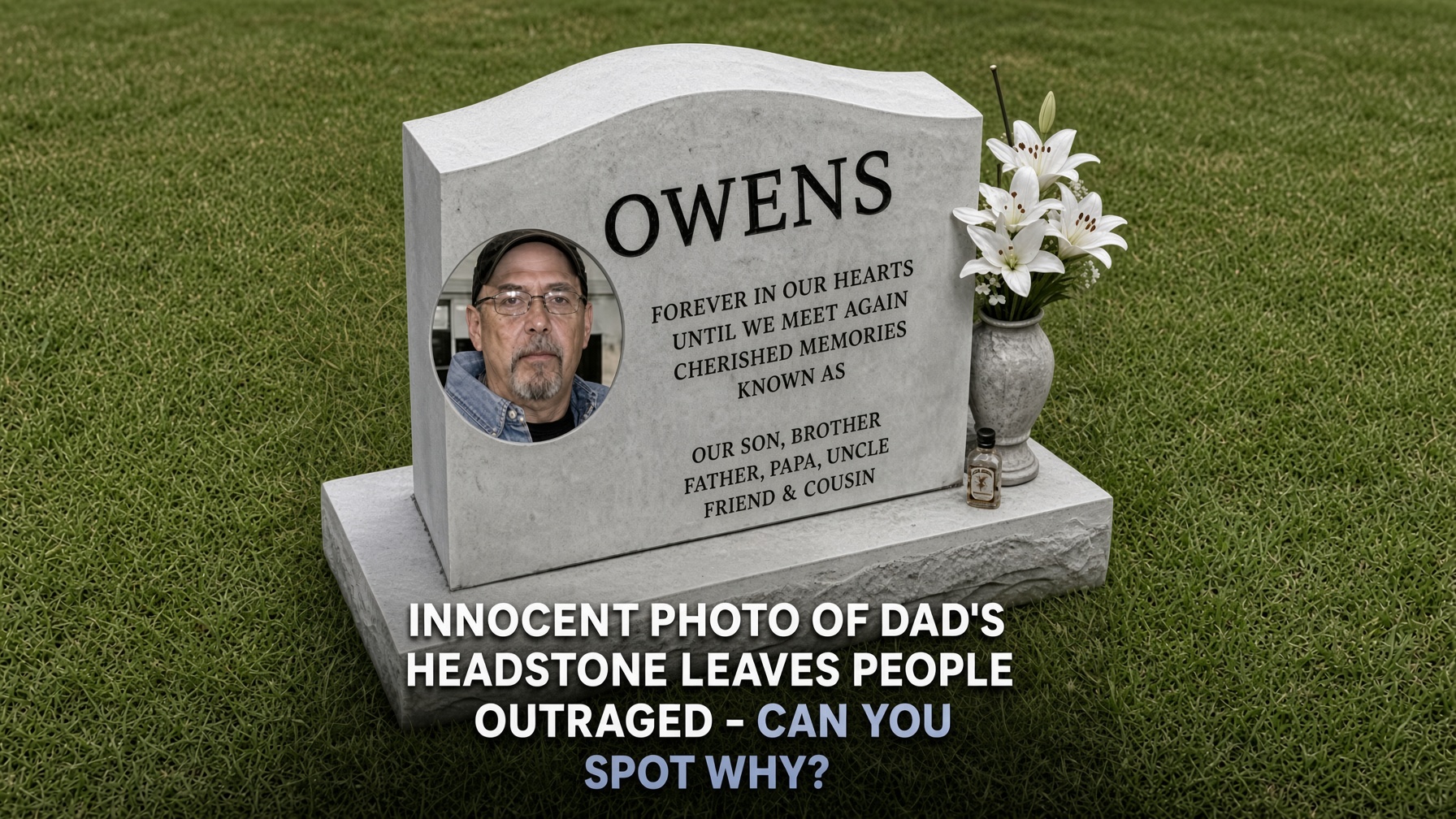
A gravestone was never supposed to start a fight. But one unusual memorial has done exactly that, turning a private family tribute into a public dispute over grief, personal expression and the rules governing cemetery property.
What began as a private joke between a father and his children has now become a deeply divisive controversy after relatives placed a hidden profanity within the inscription on his gravestone.
The message was not immediately obvious. Instead, family members say the words were cleverly incorporated into the memorial through an acrostic, allowing the deceased man’s personality and sense of humor to live on in a form that only those who knew him well would fully appreciate.
To the family, the message is not an act of vandalism or an attempt to offend other mourners. They describe it as a final expression of the man’s personality—a small joke preserved permanently in stone after his death.
For them, removing the inscription would mean more than changing a few letters on a monument. They believe it would erase an important part of the person they loved.
But cemetery officials see the situation differently.
Cemetery Trustees Face Difficult Decision
Trustees responsible for maintaining the cemetery have raised concerns about whether the inscription violates standards governing memorials. Their position centers not only on this particular gravestone but also on the precedent that could be established if the message is permitted to remain.
Cemetery officials argue that memorial grounds are shared spaces visited by people from many different backgrounds, often during some of the most emotional moments of their lives. Rules concerning inscriptions are intended, in part, to maintain a consistent atmosphere of dignity and respect.
That has created a conflict between two competing ideas of what a cemetery should represent.
For the family, a grave marker is deeply personal. It belongs to the memory of the individual being honored and should reflect who that person actually was—including his humor, personality and private relationships.
For cemetery trustees, however, a memorial exists within a larger public setting. They must consider how individual choices affect the appearance and character of the entire cemetery.
The disagreement has now moved beyond the cemetery itself, attracting attention online and generating sharply divided reactions. Some people have treated the controversy humorously, while others argue that memorial spaces should maintain traditional standards of decorum.
Legal questions could further complicate the dispute if the family and cemetery authorities fail to reach an agreement.
At the center of the controversy is a broader question with no simple answer: Who should have the final say over how someone is remembered?
The family believes those closest to the deceased should have considerable freedom to preserve his personality and wishes. Cemetery officials, meanwhile, must enforce whatever rules apply to monuments and inscriptions across the grounds.
Neither side appears eager to surrender its position.
For the family, the hidden message represents a final connection to a father whose voice is no longer present. For the cemetery, the dispute raises concerns about maintaining standards that apply consistently to everyone.
What started as a private joke has therefore become something much larger—a debate about grief, individuality, community standards and the boundaries of personal expression.
And until the disagreement is resolved, one gravestone will continue to stand at the center of a surprisingly public battle over the final word on a life.
🕊️ HIDDEN WORDS ON A GRAVE…