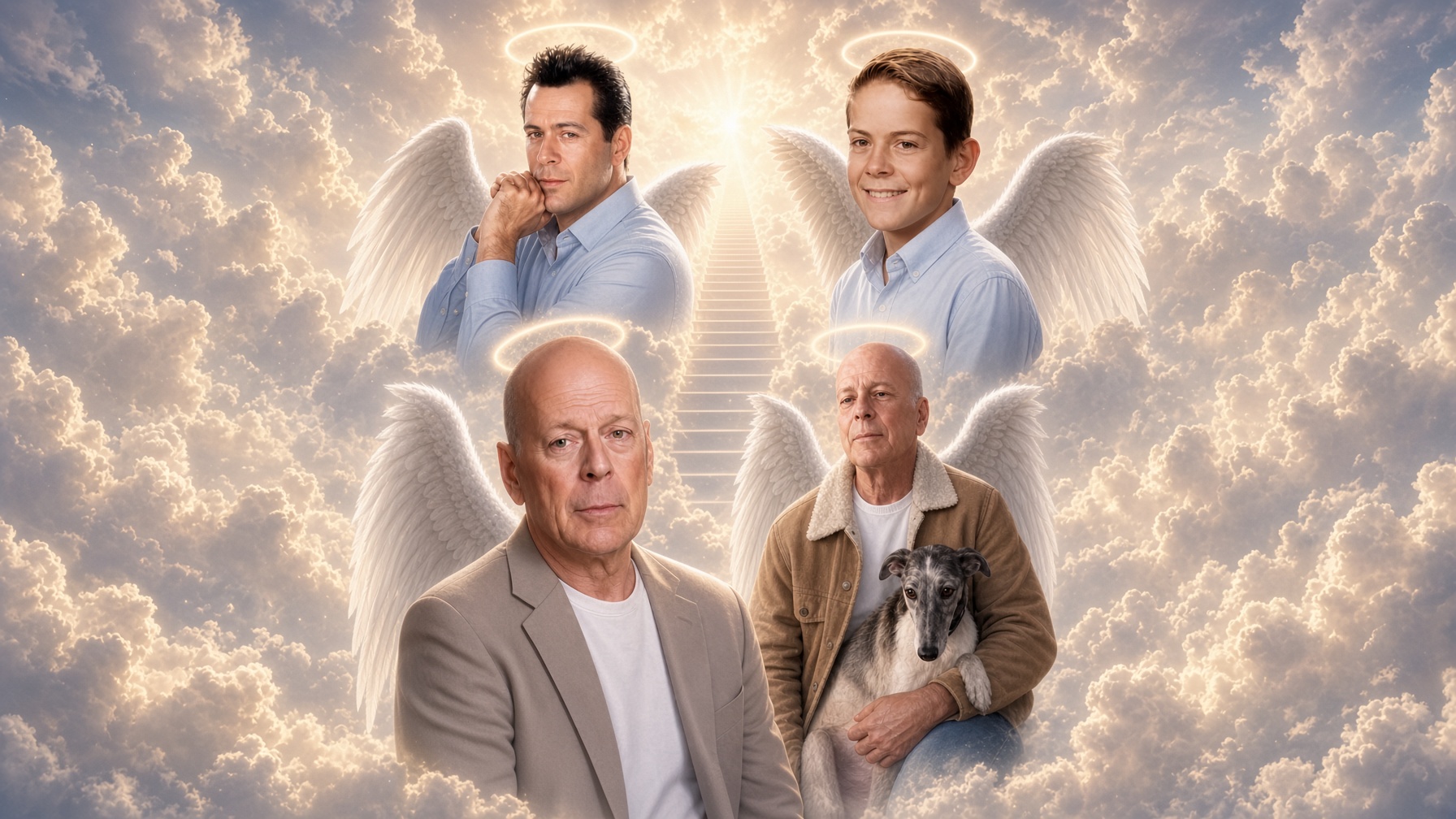
LOS ANGELES — Bruce Willis helped redefine the modern movie hero by proving that an action star did not have to appear invincible to command the screen. He could be tough without being untouchable, funny without diminishing the danger and vulnerable without losing his authority.
Today, Willis lives with frontotemporal dementia, a progressive neurological condition that affects areas of the brain associated with language, behavior and other functions. His family announced in 2022 that he was stepping away from acting after an aphasia diagnosis affected his communication. In February 2023, the family disclosed that his condition had progressed to a diagnosis of frontotemporal dementia, or FTD.
The diagnosis brought renewed attention to the actor’s career and to the performances that made him one of Hollywood’s most recognizable stars.
From Television Breakthrough to Action Icon
Willis first gained widespread attention through the television series Moonlighting, where his portrayal of David Addison showcased his rapid-fire delivery, comic timing and ability to combine confidence with vulnerability.
That combination became central to his film career when he was cast as John McClane in Die Hard.
McClane was unlike the polished action heroes who had dominated Hollywood. He was a New York police officer caught in an extraordinary situation, separated from his wife and forced to confront a heavily armed group of criminals with limited resources.
He was frightened, injured and repeatedly placed in situations beyond his control. Yet Willis gave the character an irreverent sense of humor that made him feel remarkably human.
The success of Die Hard transformed Willis into an international star and produced a franchise that helped establish the template for a different kind of action protagonist.
A Career That Went Far Beyond Action
Willis never remained confined to one genre.
In Pulp Fiction, he played a boxer caught between criminal obligations and a dangerous attempt to escape his circumstances. In The Sixth Sense, he delivered a quieter performance as child psychologist Malcolm Crowe, relying more on restraint and emotional distance than the sarcasm associated with his action roles.
Then came Unbreakable, in which Willis portrayed David Dunn, a subdued man confronting the possibility that he possesses extraordinary abilities. The performance demonstrated his ability to communicate uncertainty and emotional isolation with relatively little dialogue.
His filmography also included 12 Monkeys, The Fifth Element, Armageddon, Death Becomes Her, Looper, Sin City and numerous other productions, allowing him to move between action, comedy, science fiction, drama and darker material.
A Legacy That Remains
Willis’ family has publicly emphasized the importance of compassion, privacy and greater awareness of frontotemporal dementia. FTD is a group of disorders involving degeneration in the brain’s frontal and temporal regions, and symptoms can include language, behavioral and movement difficulties. There is currently no cure, although treatments and therapies can help manage individual symptoms.
His diagnosis also shifted some public attention toward the experiences of families and caregivers confronting progressive neurological diseases.
For audiences, however, Willis’ most lasting connection may remain his body of work.
John McClane remains one of cinema’s defining action characters. Malcolm Crowe continues to represent a more restrained side of Willis’ acting. David Dunn showed how effectively he could communicate emotion through silence and physical presence.
Willis’ illness has changed his life and ended a career that spanned decades, but it has not erased the performances that defined that career.
His films remain available to new generations of viewers, allowing audiences to discover the qualities that made him distinctive: humor under pressure, physical vulnerability, emotional restraint and an unmistakable ability to make extraordinary characters feel human.
That enduring body of work stands as Bruce Willis’ lasting contribution to cinema.