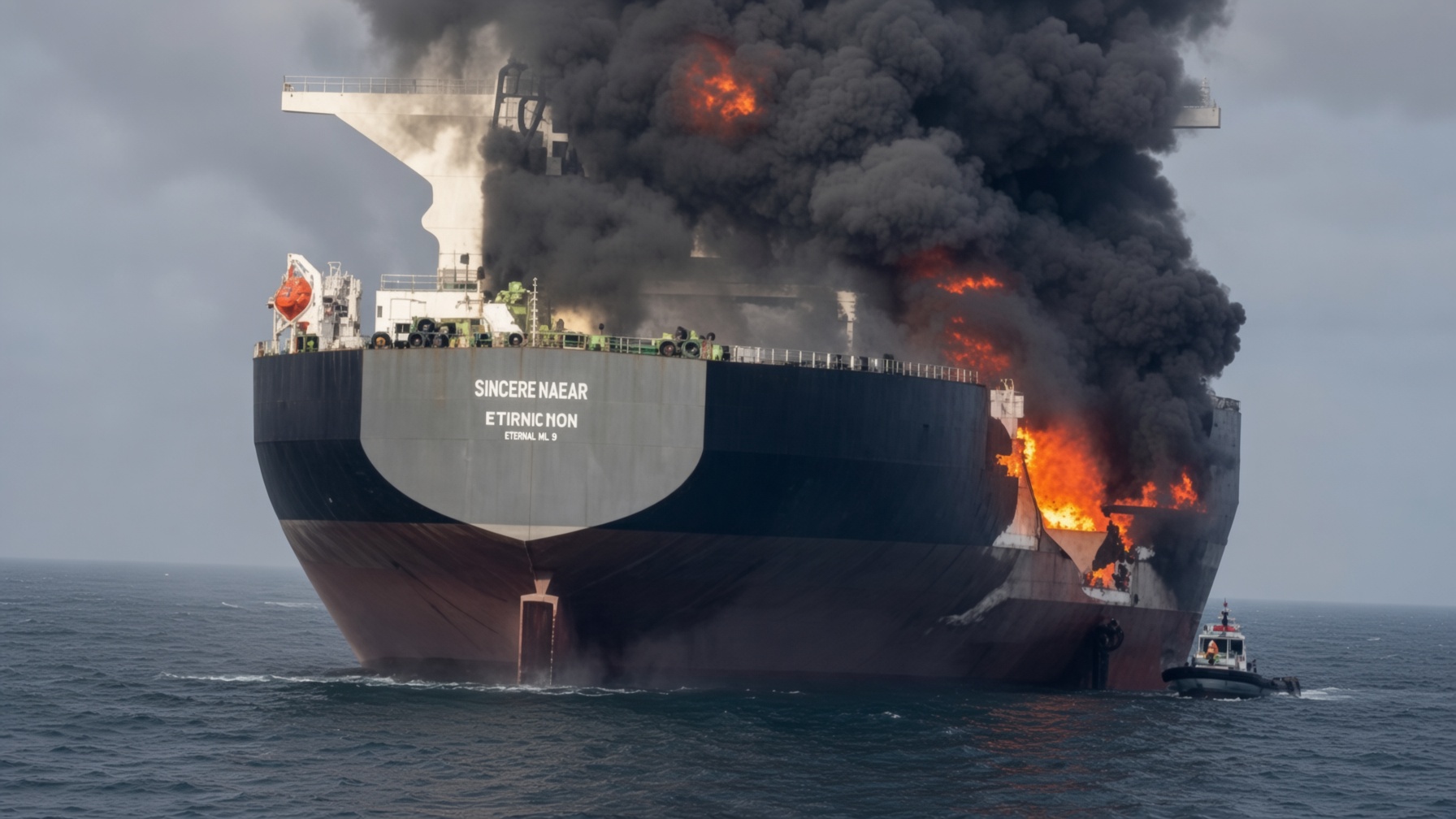
GULF OF OMAN — President Donald Trump has announced that a U.S. Navy guided-missile destroyer intercepted an Iranian-flagged cargo vessel in the Gulf of Oman after the ship allegedly refused repeated orders to stop near the strategically important Strait of Hormuz.
According to the account provided, the USS Spruance confronted the cargo ship TOUSKA after American forces issued multiple warnings over a period of approximately six hours. Trump said the Iranian crew refused to comply with the orders, prompting U.S. forces to take further action.
The incident represents a significant escalation in the increasingly tense maritime environment surrounding the Strait of Hormuz, one of the world’s most important waterways for international energy shipments.
U.S. Forces Take Control of Vessel
According to the account, American sailors eventually used the destroyer’s 5-inch naval gun to fire precise rounds toward the vessel’s engine room, disabling the ship and preventing it from continuing its voyage.
U.S. Marines subsequently boarded the cargo ship and took control of the vessel, according to the same account. Details concerning the condition of the ship, its crew and any potential injuries were not immediately provided.
Trump characterized the operation as the enforcement of a U.S. naval blockade and said the Iranian crew had received repeated warnings before American forces intervened.
“The message was clear,” the account said, with Trump emphasizing that the crew had been given an opportunity to comply before the situation escalated.
The circumstances surrounding the interception, including the precise legal basis for the blockade and the rules of engagement governing the operation, could become important issues as additional information emerges.
Strategic Importance of the Strait of Hormuz
The reported confrontation occurred near the Strait of Hormuz, a narrow maritime passage connecting the Persian Gulf with the Gulf of Oman. The waterway is a critical route for global energy supplies, making any military confrontation in the region potentially significant for international shipping and energy markets.
The United States has maintained a substantial naval presence in the region for decades, while Iran has repeatedly asserted its influence over waters surrounding the strait.
Any confrontation involving American and Iranian naval forces therefore carries the risk of escalating beyond the immediate incident.
Growing Tensions at Sea
The reported interception comes amid broader tensions between Washington and Tehran and follows a series of confrontations involving military forces and commercial shipping in the region.
Supporters of the administration are likely to view the operation as evidence of a more forceful American approach toward threats to maritime security. Critics, meanwhile, could raise questions about the risks associated with enforcing a blockade and the possibility of retaliation.
The reported use of naval gunfire and subsequent boarding operation also underscores the dangers faced by sailors and Marines operating in contested waters.
For now, additional details about the TOUSKA, its crew and its ultimate destination remain limited. Independent confirmation of the reported sequence of events and the precise circumstances surrounding the interception will be important in assessing the incident.
The confrontation highlights the growing strategic importance of the Gulf of Oman and Strait of Hormuz, where even a single encounter between American and Iranian forces can carry consequences far beyond the ships directly involved.