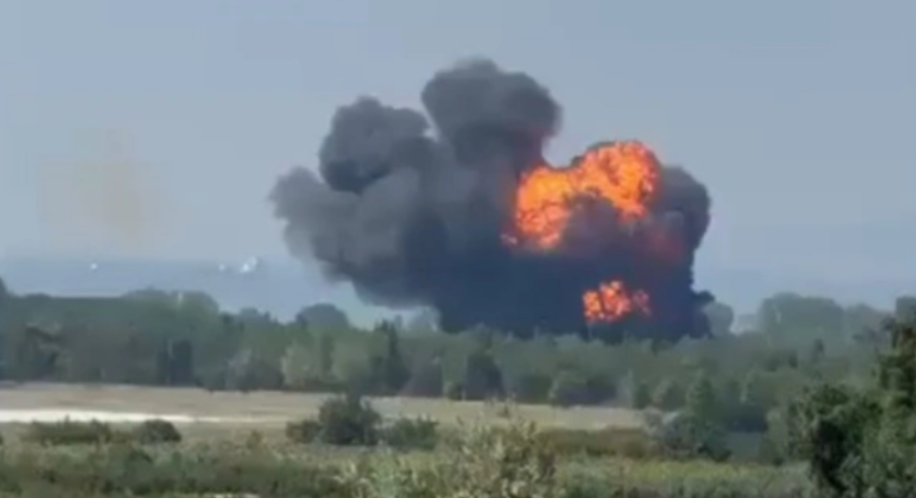
A Turkish Air Force F-16 fighter jet crashed during a training flight in northwestern Türkiye’s Yalova province on Wednesday after reportedly experiencing a malfunction, according to the Turkish Defense Ministry. The pilot successfully ejected from the aircraft and survived the incident.
The ministry confirmed the crash in a statement, saying the aircraft went down during a training operation and that the pilot had managed to escape before the jet struck the ground.
“One of our Air Force’s F-16 aircraft crashed in Yalova during a training flight; the pilot ejected and survived,” the Defense Ministry said.
Officials added that the precise cause of the accident had not yet been established and would be determined through a detailed investigation.
Pilot Safely Ejects Before Crash
The incident occurred near Yalova Airfield Command in the northwestern province. Initial information indicated that the aircraft crashed in the vicinity of the 18th Main Jet Base near Taşköprü, within Yalova’s Çiftlikköy district.
Emergency services were quickly dispatched after the aircraft went down. Firefighters, medical personnel and other response teams moved into the area as authorities secured the crash site and began assessing the situation.
The pilot reportedly ejected from the fighter jet and descended safely by parachute before being located by emergency personnel.
Following the incident, the pilot was transported to Yalova Training and Research Hospital for medical evaluation and treatment. Officials did not immediately provide extensive details about the pilot’s condition, but the Defense Ministry confirmed that the pilot survived the crash.
The successful ejection prevented what could have been a far more serious outcome in an accident involving a high-performance military aircraft.
Investigation Underway
Military authorities have begun an investigation into the circumstances surrounding the crash. Officials have indicated that a technical malfunction may have played a role, although investigators are expected to examine the aircraft, flight data and operational conditions before determining an official cause.
The Defense Ministry emphasized that conclusions would only be reached after a comprehensive technical investigation.
Investigators will likely examine whether the reported malfunction developed suddenly during the training flight, whether there were indications of mechanical problems beforehand and whether weather or other operational factors contributed to the accident.
The crash site was expected to remain under military and emergency-service control while investigators gathered evidence.
Aircraft Linked to Eskisehir-Based Squadron
The F-16 was reportedly assigned to the Ceylan Squadron of the 1st Main Jet Base in Eskişehir, one of Türkiye’s major military aviation facilities.
Training flights are a routine and essential part of maintaining the readiness of fighter pilots and aircraft. However, the high speeds and complex systems involved in military aviation mean that mechanical failures can quickly become life-threatening emergencies.
In this case, the pilot’s ability to eject successfully was critical.
The incident comes as Turkish military aviation continues to operate a large fleet of F-16 aircraft for training, air-defense and operational missions.
For now, authorities have not reported additional casualties from the crash. The investigation will determine what caused the aircraft to malfunction and whether any technical or operational issues contributed to the accident.
The survival of the pilot has provided a measure of relief following the crash, while military investigators continue working to establish exactly what went wrong during the training flight.