Trump Claims U.S. Has “Total Control” of Strait of Hormuz as Iran Sets Conditions for Reopening Waterway
President Donald Trump has claimed that the United States has “total control” over the strategically vital Strait of Hormuz, while simultaneously warning that he does not trust Iran and suggesting Tehran could face severe consequences if it challenges American forces.
Speaking to reporters Wednesday, Trump portrayed the U.S. military position in the region as dominant and insisted that Iran no longer holds the upper hand in the Middle East.
“We have total control over the Strait of Hormuz right now. They don’t have control. We have total control, we own it,” Trump said.
Trump went on to issue an ominous warning about what could happen if Iran takes further action against U.S. forces.
“And at some point, maybe they’ll do something, and then they get blown away,” he said.
He also declared that Iran is “no longer the bully of the Middle East,” reinforcing his broader message that American military power has fundamentally altered the strategic balance in the region.
Trump separately expressed deep skepticism toward Tehran when asked whether he trusted Iran.
“I don’t trust Iran. Why — are you saying I trust Iran!? I’m the last person to trust Iran. They’ve lied to me constantly,” Trump said.
The remarks come as the Strait of Hormuz has become a major focal point in the escalating confrontation between Washington and Tehran.
Iran Says Strait Will Remain Closed
Iranian officials, meanwhile, have issued a sharply different message, indicating that the waterway will remain closed until Tehran’s demands are addressed.
Iran’s newly appointed secretary of the Supreme National Security Council, Mohsen Rezaee, said Tuesday that the Strait of Hormuz would not reopen until the United States ends what he described as the ongoing war and naval blockade, releases frozen Iranian assets and agrees to a broader regional ceasefire.
In a post on X, Rezaee said Iran’s position was clear and that reopening the waterway would depend on meeting all of Tehran’s conditions. He also said any ceasefire would need to extend beyond Iran and include fighting involving Lebanon and Gaza.
Rezaee, a former Islamic Revolutionary Guard Corps commander, presented the closure as part of Iran’s broader effort to pressure Washington and influence the terms of any potential settlement.
The conflicting statements highlight the widening gap between Washington and Tehran. Trump is asserting that the United States controls the waterway, while Iranian officials are insisting that the Strait will remain closed until their political and military demands are met.
Strait of Hormuz Becomes Key Flashpoint
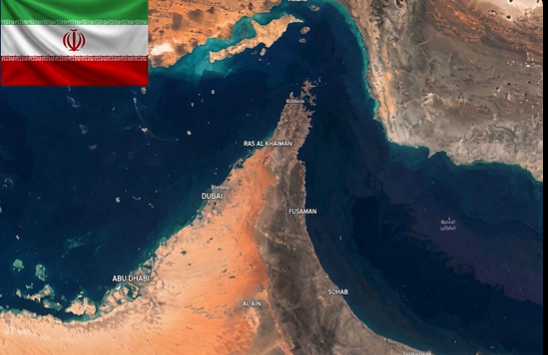
The Strait of Hormuz is one of the most strategically important waterways in the world. Located between Iran and Oman, it connects the Persian Gulf with the Gulf of Oman and serves as a critical passage for international energy shipments.
Any prolonged disruption could have consequences well beyond the Middle East, potentially affecting oil supplies, energy prices, commercial shipping and global markets.
That makes the competing claims over control of the strait particularly significant. For Washington, maintaining freedom of navigation is a major strategic and economic priority. For Tehran, control or disruption of the waterway provides a powerful source of leverage during negotiations and confrontation.
Trump’s latest comments suggest the administration is unwilling to accept Iranian restrictions on the waterway, while Tehran’s statements indicate that it intends to use the closure as bargaining leverage.
For now, the two sides remain far apart. Trump is emphasizing American military dominance and warning Iran against further escalation, while Iranian officials are demanding major concessions before agreeing to reopen the Strait of Hormuz.
With tensions continuing to rise, the future of the waterway could become one of the most consequential issues in determining whether the current confrontation moves toward negotiations—or another dangerous escalation.
The situation remains fluid, with competing claims from Washington and Tehran and potentially major consequences for regional security and the global economy.