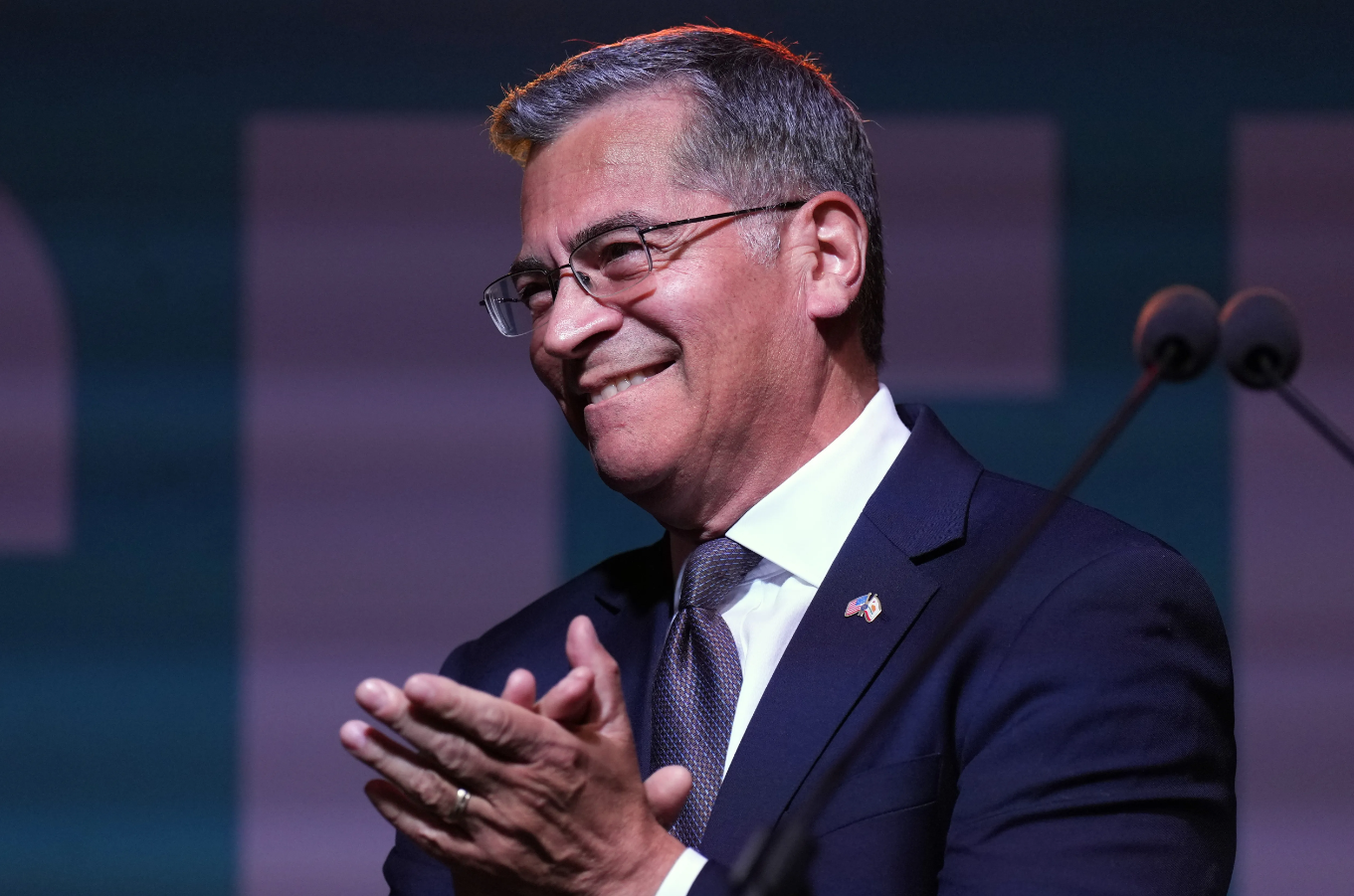
California’s 2026 gubernatorial race is attracting nationwide attention as Democratic candidate Xavier Becerra officially advances to the November general election while federal authorities investigate multiple allegations of election fraud across the state.
According to projections from the Associated Press, Becerra secured enough support in the primary election to move forward to the next stage of the race. The announcement came on the same day that the FBI confirmed it is working on several election-related investigations in California, adding a new layer of controversy to an already highly competitive election season.
As of the latest vote count, Becerra leads the field with more than 1.8 million votes, representing approximately 27 percent of ballots cast. Republican candidate Steve Hilton remains in second place with just over 26 percent, while fellow Democrat Tom Steyer has continued to gain ground, receiving more than 21 percent of the vote.
With approximately 71 percent of precincts reporting, election officials say the race remains closely watched as additional ballots continue to be counted across the state.
Following confirmation that he would advance to the November runoff election, Becerra released a statement celebrating the results and thanking supporters.
“The people of the great state of California, in the greatest nation on Earth, have spoken — loudly and proudly,” Becerra said. “We will not be bought. We will not be bullied. And we are never backing down. November, here we come.”
Meanwhile, attention has also turned to the race for mayor of Los Angeles. Incumbent Mayor Karen Bass has secured a place in the November runoff, while reality television personality Spencer Pratt and Los Angeles City Councilwoman Nithya Raman continue competing for the remaining position. Recent vote totals show Bass leading the field with nearly 35 percent of the vote, followed by Pratt and Raman in a tight contest.
The political atmosphere intensified further after U.S. Attorney Bill Essayli announced that his office is coordinating with the FBI on multiple election fraud investigations. While officials have not publicly identified which races or allegations are being examined, the announcement immediately fueled debate among voters and political leaders.
“Protecting the integrity of California’s elections is a top priority for my office,” Essayli stated. “We will follow the evidence wherever it leads and prosecute any violations of federal election law to the fullest extent.”
The investigations come after President Donald Trump alleged on social media that widespread election irregularities were occurring in California. Trump claimed there was “BIG cheating” by Democrats and later described some election results as “phony.” However, no public evidence has yet been presented to support those allegations.
Election officials have defended California’s vote-counting procedures, noting that state law allows all vote-by-mail ballots postmarked on or before Election Day and received within seven days to be counted. Counties are also given up to 30 days to complete the counting and certification process.
Supporters of the current system argue that the extended counting period ensures every eligible ballot is included. Critics, however, contend that lengthy vote-counting timelines can create uncertainty and reduce public confidence in election outcomes.
As the November election approaches, California voters are expected to hear intense debate over issues such as public safety, immigration, housing affordability, economic growth, and election security. With the governor’s race, mayoral contests, and federal investigations all unfolding simultaneously, the state is likely to remain at the center of national political attention in the months ahead.
Political analysts say the final outcome could have significant implications not only for California’s future leadership but also for broader political trends heading into the next national election cycle.