Questions Follow Presidential Medical Evaluation as White House Offers Limited Details
Questions surrounding a recent presidential medical evaluation continued to draw public attention after comments made aboard Air Force One left several aspects of the examination unanswered, prompting renewed discussion about transparency and the health of national leaders.
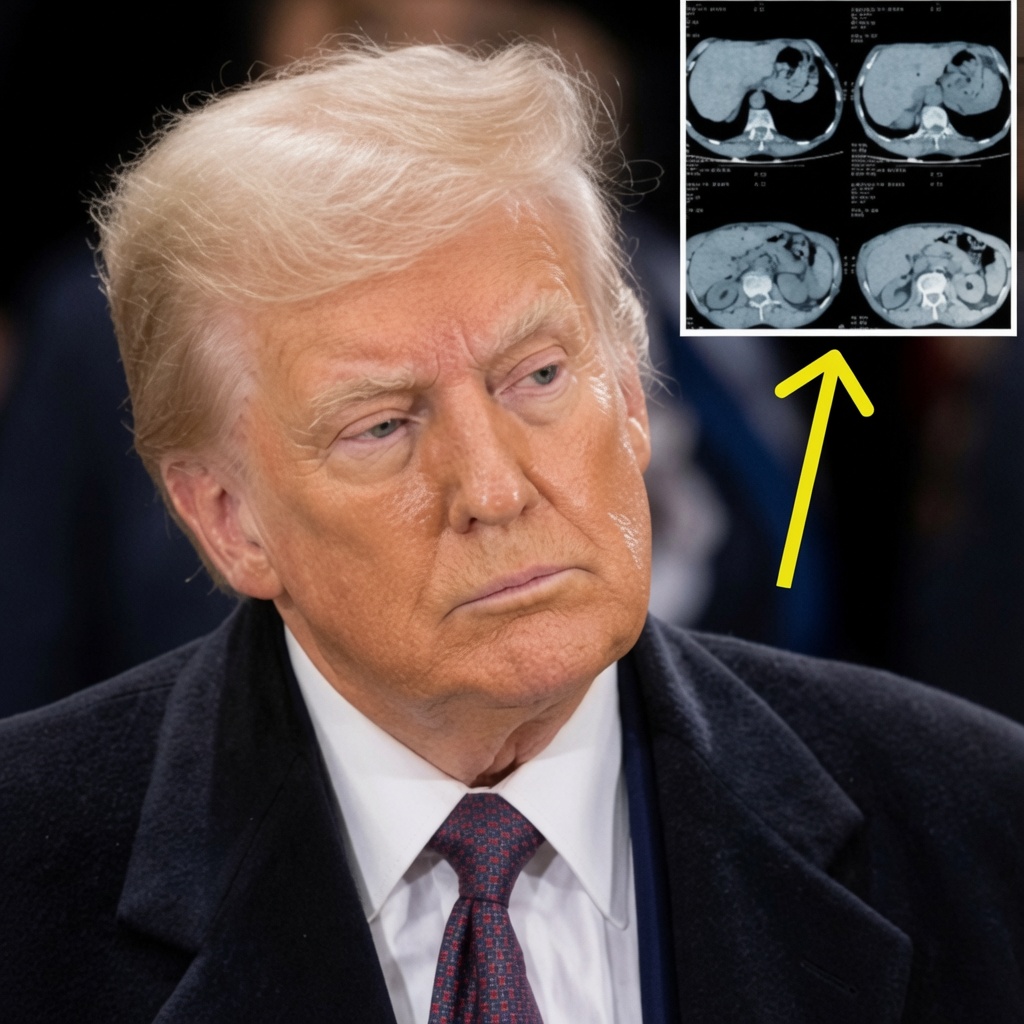
During an exchange with reporters, the President was asked why an MRI had been performed if the visit was part of what the White House described as a routine or expanded wellness evaluation. In response, the President praised the outcome of the examination, describing the results as “outstanding” and “excellent” while expressing confidence in his overall health. However, he did not provide specific details regarding the purpose of the imaging, the body systems evaluated, or the physicians’ findings.
The limited information quickly became the focus of public discussion, with journalists and political observers asking whether additional medical records or a more comprehensive physician’s report would be released. Questions also centered on whether the MRI was part of a standard preventive examination or ordered for a specific medical reason.
The White House has maintained that there is no cause for concern, characterizing the appointment as an expanded wellness evaluation conducted before a demanding schedule of official travel and public appearances. Officials have emphasized that the President remains capable of carrying out the responsibilities of the office but have not released detailed medical documentation beyond their public statements.
The episode has renewed broader conversations about the level of health information presidents should disclose while in office. Medical experts note that there is no legal requirement for presidents to release complete medical records, and the extent of public disclosure has varied significantly across administrations. At the same time, many transparency advocates argue that detailed medical reporting can help build public confidence and reduce speculation.
As discussion continues, commentators from across the political spectrum have offered differing views on whether the available information is sufficient. Some argue that brief summaries from the White House adequately address public concerns, while others believe that more detailed medical documentation would provide greater clarity and reduce uncertainty.
The issue also reflects a larger debate about transparency, privacy, and public accountability. Presidents occupy one of the most demanding positions in government, and questions about their health routinely attract significant public and media attention. Whether additional medical information will be released remains unclear, but the discussion has once again highlighted the balance between protecting personal medical privacy and satisfying the public’s interest in the health of the nation’s chief executive.