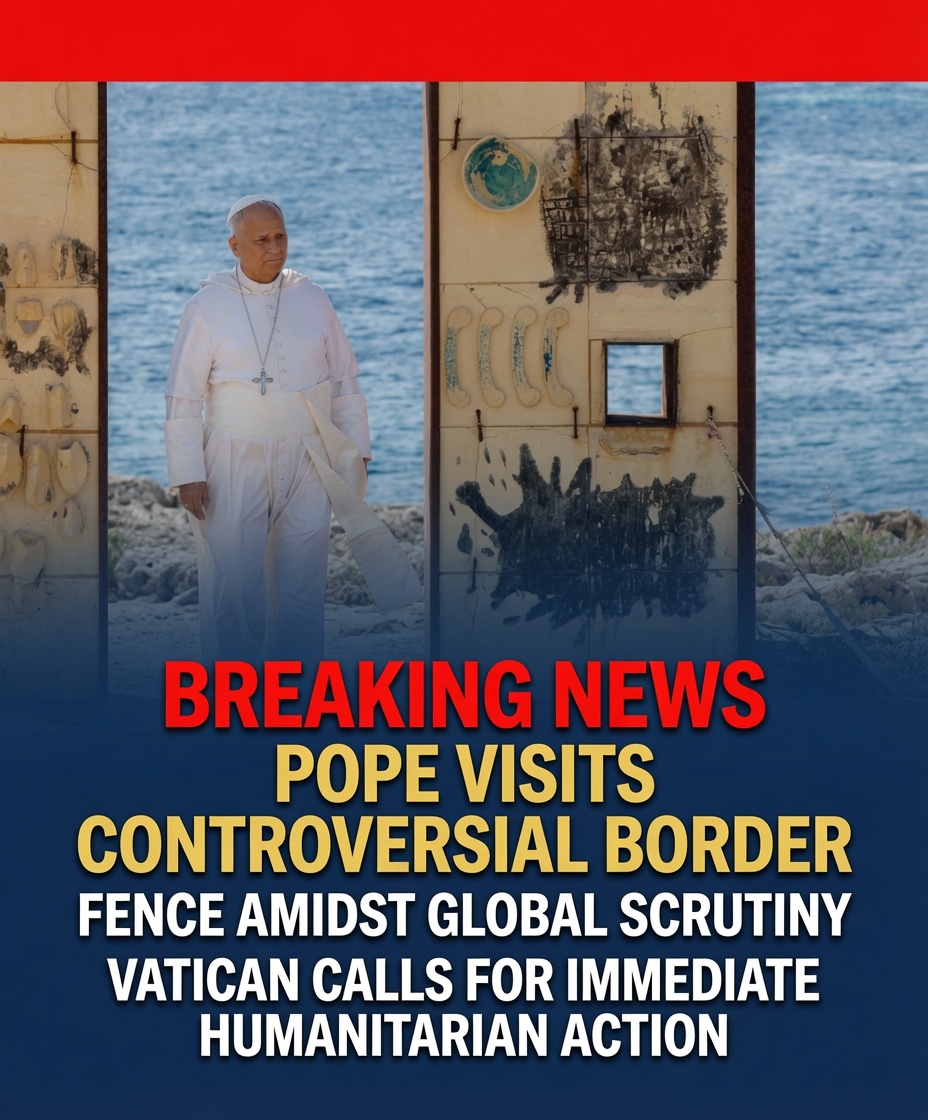
BREAKING: Pope Leo XIV declined an invitation to attend President Trump’s July 4 celebrations in Washington, instead spending the holiday in Lampedusa, Italy, where he honored migrants who have died attempting to cross the Mediterranean Sea.
The decision created a striking contrast between two very different public events. While President Trump presided over festivities marking the beginning of America’s 250th anniversary celebration, complete with patriotic ceremonies and military displays, Pope Leo traveled to one of Europe’s most symbolic migration sites to pray for refugees and commemorate those who never reached safety.
The invitation to the White House celebration was personally delivered by Vice President JD Vance during an earlier Vatican meeting. However, the Vatican later confirmed that Pope Leo had no plans to attend the Independence Day events, opting instead to continue a previously scheduled pastoral visit centered on migration and humanitarian concerns.
During his visit to Lampedusa, the Pope stopped at a cemetery honoring migrants who lost their lives in the Mediterranean. He placed flowers on the grave of a young child who died during the journey and later cast a wreath into the sea in memory of the thousands who have perished attempting the dangerous crossing.
Celebrating Mass on the island, Pope Leo renewed longstanding Vatican calls for greater compassion toward migrants and refugees.
“The globalization of indifference” must not define the world’s response to people fleeing war, persecution, and poverty, the Pope said, urging governments and societies to recognize the dignity of every human life.
As part of the ceremony, he blessed a cross constructed from the wood of a migrant boat that had been destroyed in a shipwreck—a powerful symbol that has come to represent both tragedy and hope for many humanitarian organizations working in the region.
According to humanitarian organizations and international monitoring groups, more than 1,400 people have died or gone missing while attempting to cross the Mediterranean so far this year, including dozens of children, underscoring the continuing dangers faced by migrants seeking refuge in Europe.
The Pope’s visit immediately drew political attention because it occurred as the Trump administration has emphasized stricter immigration enforcement in the United States, including expanded deportation efforts and increased immigration raids. Supporters of the administration argue those policies are necessary to strengthen border security and enforce immigration law, while critics contend they impose significant humanitarian costs on migrant families.
Many commentators viewed the Pope’s decision to spend Independence Day in Lampedusa rather than Washington as carrying symbolic significance, though the Vatican has not characterized the visit as a political rebuke. Instead, Vatican officials have consistently described migration, care for refugees, and protection of vulnerable populations as central priorities of Pope Leo’s pontificate.
Pope Leo’s own family history has also shaped discussion surrounding the visit. The first American-born pope is the descendant of immigrant families, including relatives who emigrated from Sicily to the United States in the early twentieth century. His maternal family also traces roots to the Caribbean, giving him a personal connection to the immigrant experience that he has referenced in broader discussions about human dignity and solidarity.
Since becoming pope, Leo has repeatedly emphasized Catholic social teaching on welcoming migrants, caring for refugees, and protecting human life, while also encouraging governments to pursue policies that respect both national sovereignty and human dignity.
Some Vatican scholars and political analysts have suggested that Pope Leo’s public emphasis on migration, poverty, and humanitarian issues positions the Vatican as an influential moral voice in global debates over nationalism and immigration. Others caution against framing the papacy primarily through a partisan political lens, noting that the Church’s teachings on migration long predate the current political climate.
Regardless of interpretation, the juxtaposition of the two events—America’s Independence Day celebrations in Washington and the Pope’s prayers among migrant memorials in Lampedusa—became one of the day’s most closely watched international images, highlighting the different priorities and messages each leader chose to emphasize on the Fourth of July.