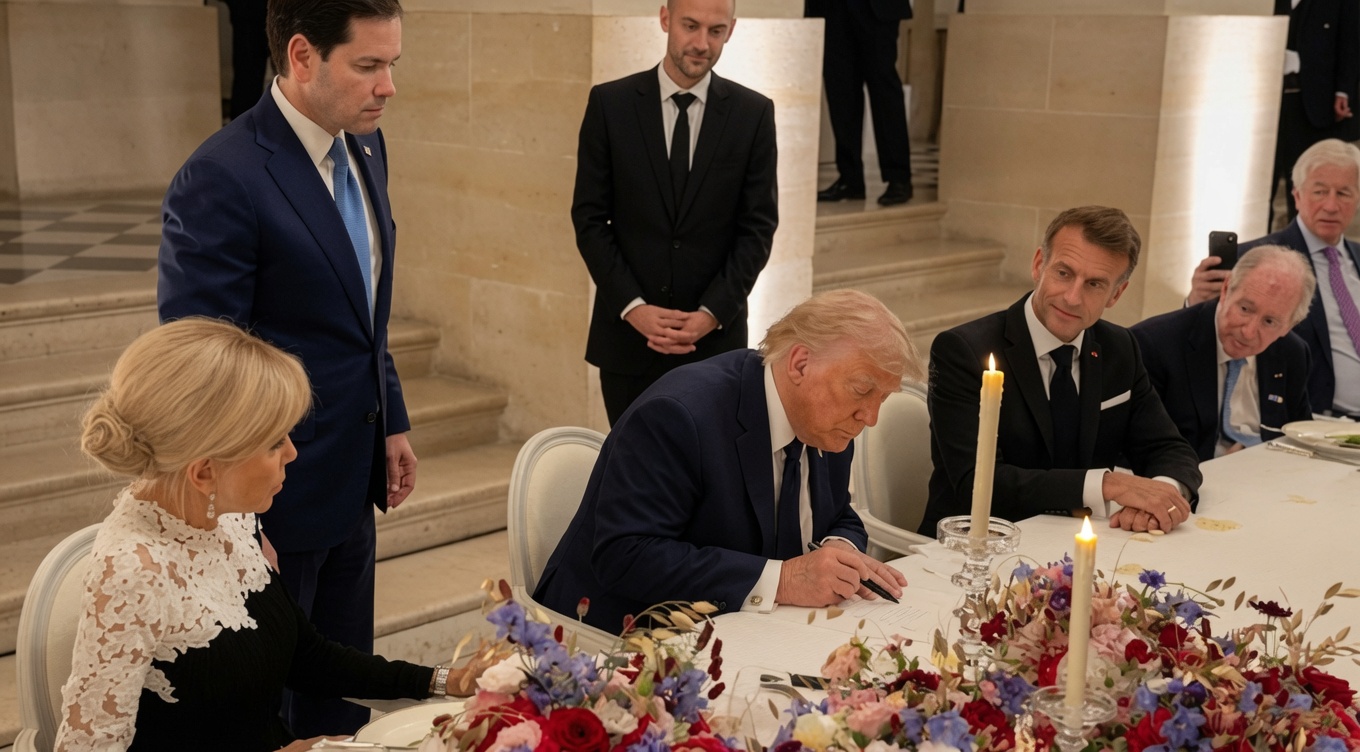
VERSAILLES, France — President Donald Trump signed a memorandum of understanding (MOU) aimed at ending hostilities between the United States and Iran during the G7 Summit in France on Wednesday, marking a significant step toward easing tensions between the two countries. Iranian President Masoud Pezeshkian also signed the agreement remotely, allowing key provisions of the accord to take effect ahead of a planned formal ceremony on Friday.
The early signing accelerates implementation of several measures outlined in the framework, including the reopening of the Strait of Hormuz and the beginning of steps toward reducing restrictions related to the conflict. Officials said the formal signing ceremony will still take place as scheduled, where representatives from both nations are expected to discuss the next phase of negotiations.
The memorandum consists of a 14-point framework intended to halt military operations while creating a roadmap for resolving broader disputes. Rather than immediately settling every issue, the agreement establishes a 60-day negotiation period during which diplomats and technical experts will address complex matters, including Iran’s nuclear program and long-term security arrangements. The negotiation period may be extended if additional time is needed.
Shortly before attending a dinner at the Palace of Versailles, President Trump signed the document, with White House Deputy Chief of Staff Dan Scavino later sharing video of the signing. Iranian state-linked media subsequently released images showing President Masoud Pezeshkian signing the agreement from Tehran, confirming that both governments had completed the process electronically.
Although supporters have described the agreement as a major diplomatic breakthrough, several analysts caution that the memorandum is only an initial framework rather than a comprehensive peace treaty. Important questions—including the future of Iran’s nuclear activities, sanctions policy, and regional security issues—remain unresolved and are expected to be negotiated over the coming weeks.
If successfully implemented, the agreement could reduce tensions in the Middle East, restore stability to one of the world’s most important shipping lanes, and provide an opportunity for further diplomatic engagement after months of conflict. However, officials on both sides have acknowledged that lasting peace will depend on future negotiations and compliance with the commitments outlined in the memorandum.