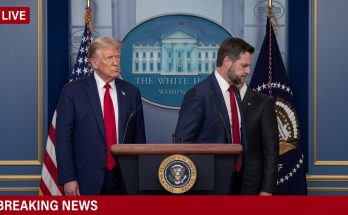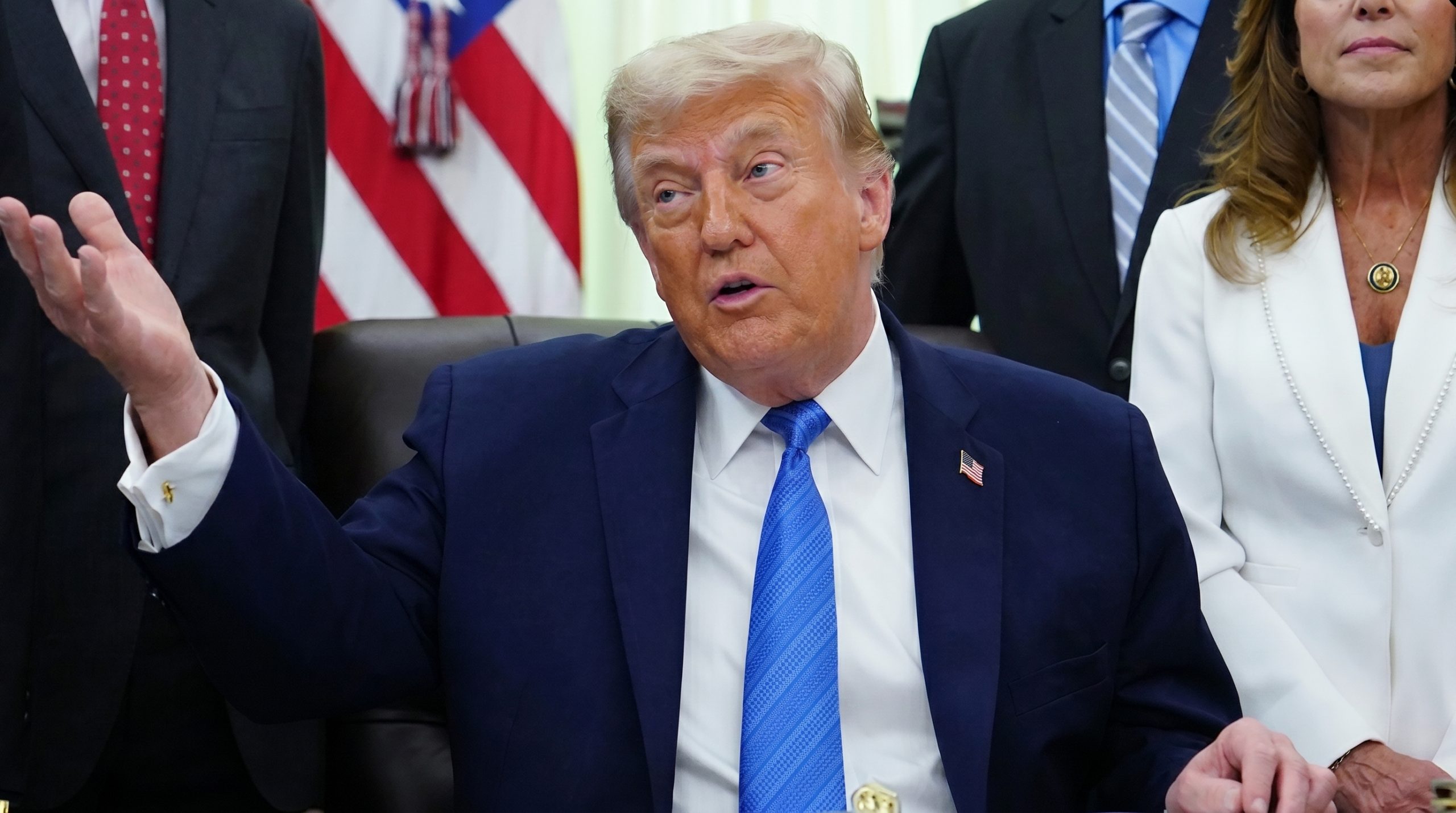
President Donald Trump rejected claims that the United States had agreed to provide Iran with $300 billion in reconstruction funding, dismissing the reports as inaccurate while emphasizing that any future economic benefits would depend entirely on Iran’s compliance with a potential nuclear agreement.
In a post on his Truth Social platform, Trump insisted that Iran had committed to never obtaining a nuclear weapon but strongly denied reports suggesting Washington would directly finance the country’s rebuilding efforts. He characterized the claim as “Fake News,” arguing that the United States would not simply hand over billions of dollars as part of the agreement.
The comments came after senior U.S. officials acknowledged during a briefing that negotiators had discussed several possible incentives that could be considered if Iran fulfills its obligations under a future agreement. Among the ideas reportedly raised were sanctions relief, access to frozen Iranian assets, and the possibility of a large international reconstruction fund intended to help rebuild Iran’s economy. Officials stressed that any such measures would be strictly performance-based and would only become available if Tehran fully complies with the terms of the deal.
Vice President JD Vance echoed that position during an interview with CBS News, explaining that any reconstruction funding would not represent a direct U.S. payment. Instead, he suggested that financial assistance could come from regional partners, including members of the Gulf Cooperation Council, and would only be considered if Iran consistently honors every commitment outlined in the agreement.
The discussion follows reports that negotiators recently signed a preliminary memorandum of understanding, which officials described as an initial framework rather than a final agreement. According to the administration, the memorandum establishes the basis for more detailed technical negotiations that are expected to begin later this week under Vance’s leadership.
Before the preliminary agreement was finalized, Vance also sought to address speculation surrounding the negotiations by stating that Iran would not receive immediate cash payments simply for participating in talks or signing a document. He emphasized that any future economic relief would be tied to measurable compliance with nuclear commitments and designed to address the security concerns of the United States and its allies.
Administration officials have repeatedly maintained that discussions remain in the early stages and that no reconstruction funding, sanctions relief, or access to frozen assets will be implemented unless Iran demonstrates sustained adherence to the terms of a final agreement. As negotiations continue, questions surrounding the scope of potential economic incentives are expected to remain a central point of debate both in Washington and among U.S. allies in the Middle East.