LONDON — Strip away the ceremonial grandeur, the state heraldry, and the centuries-old machinery of the British Crown, and the House of Windsor confronts the same fragile human dynamics that govern any family in the wake of tragedy.
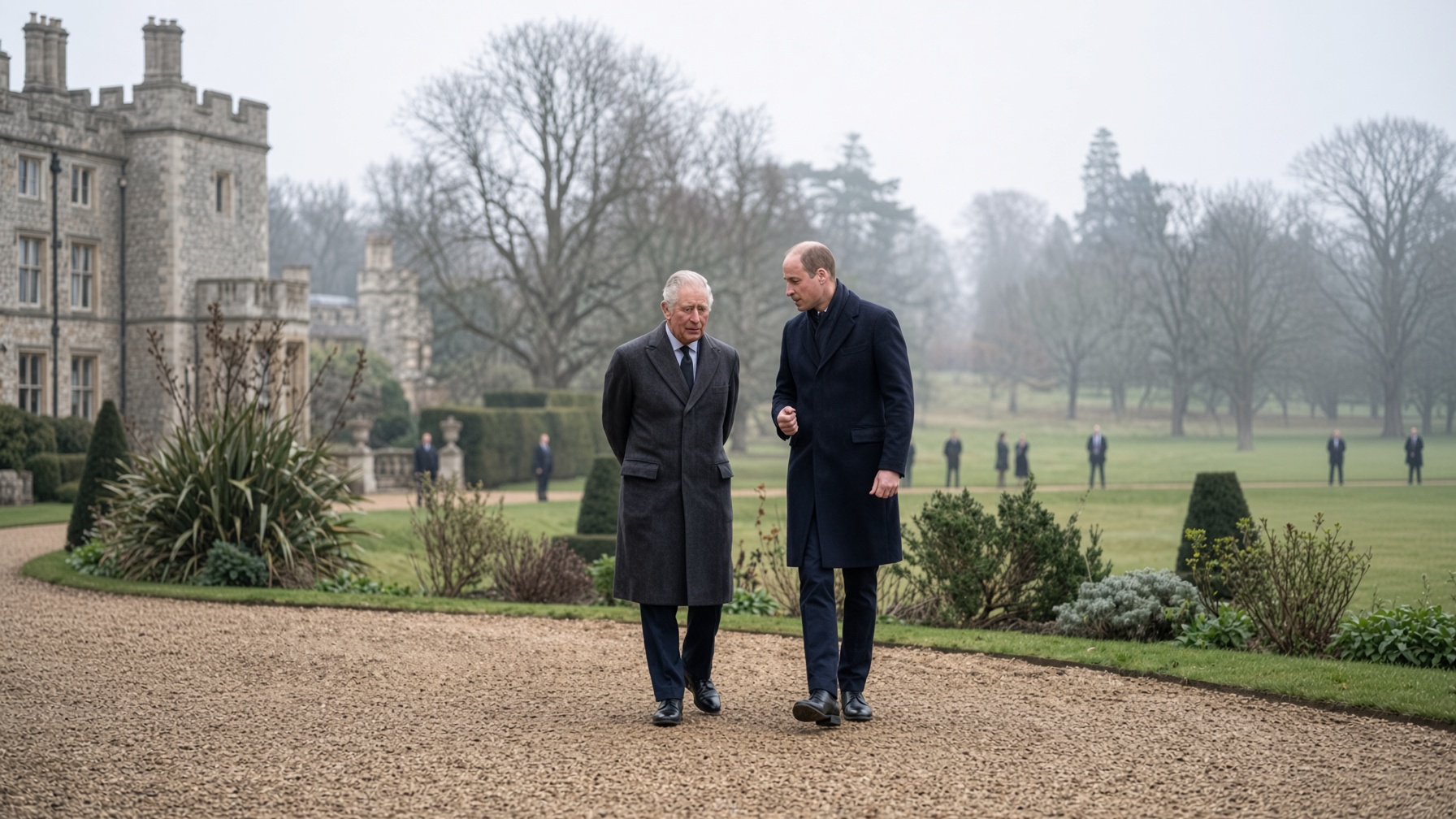
Recent accounts surrounding unscripted, private exchanges between King Charles III and the Prince of Wales point toward an overdue reckoning—one conducted without courtiers, cameras, or rehearsed palace syntax. Rather than a monarch addressing his heir, the dialogue reflects an aging father and his eldest son coming to terms with decades of suppressed grief, institutional pressures, and the long shadow cast by Diana, Princess of Wales.
The House of Windsor has long maintained its authority through emotional restraint and unwavering continuity. Private fractures were historically subsumed by duty, while personal heartache was organized to withstand constant media exposure. Yet behind the palace facade, the personal cost of sustaining the institution has left deep emotional fractures across two generations.
THE DISCIPLINE OF PUBLIC GRIEF
For Prince William, now 43 and increasingly assuming core duties of statecraft, the burden of royal discipline was forged during the defining crucible of his youth. When Diana died in a Paris underpass in August 1997, William was 15; Prince Harry was just 12.
The enduring visual record of that tragedy remains etched in global memory: two young princes walking in stoic silence behind their mother’s coffin, draped in the Royal Standard, through a vast sea of public sorrow. While onlookers openly wept along London’s streets, royal protocol imposed strict emotional containment upon the bereaved sons: stand tall, keep moving, and never surrender composure to the assembled press.
That forced restraint forged distinct adult trajectories for the two brothers. William chose to anchor himself within the institution, shaping his adult life around marital stability, institutional preservation, and preparation for eventual kingship. Harry, by contrast, pursued an exit, ultimately stepping back from senior royal duties and relocating across the Atlantic to California.
What began as shared childhood grief evolved into adult estrangement. The brothers who once walked side by side are now divided by thousands of miles, conflicting loyalties, and fundamentally incompatible perspectives on what survival within the royal apparatus demands.
RECKONING WITH INSTITUTIONAL REGRET
Standing between them is Charles: father, sovereign, and an architect of the family circumstances his sons inherited.
Reports from royal observers suggest that Charles has, in private, expressed heartfelt remorse regarding decisions made during his younger decades—choices shaped by marital turmoil, public pressure, and the rigid expectations of the crown. Acknowledging such regret aloud represents an unusual and delicate shift within an institution designed around the myth of infallibility.
Monarchies survive through uninterrupted transition. Reopening past emotional fractures rarely aligns with state priorities. Yet personal reconciliation does not follow the orderly rules of royal succession. For William, hearing his father openly confront the past cannot undo the public disintegration of his parents’ marriage, nor can it return his mother.
Nevertheless, breaking decades of institutional silence carries profound significance. Refusing to address documented fractures does not heal them; it simply obliges each family member to carry the emotional burden in isolation.
THE CALIFORNIA SHADOW
Any internal reckoning between Charles and William inevitably resonates across the Atlantic. From his home in Montecito, Prince Harry has spoken candidly about ancestral pain, royal isolation, and the lingering trauma of his mother’s loss.
Those public declarations generated unprecedented friction with Buckingham Palace, creating an impasse between Sussex and the central royal household. Yet distance cannot alter shared history. California remains far from London, but memory bridges the geographical divide. Both brothers lost the same mother, experienced the same public glare, and endured the same formative trauma.
If Charles is prepared to acknowledge past missteps to his eldest son, unresolved questions inevitably surface regarding his relationship with Harry. Whether an authentic dialogue between the King and his younger son remains possible—or whether years of media skirmishes, mistrust, and defensive briefings have foreclosed that path—remains one of the central dilemmas confronting the modern monarchy.
BEYOND THE MONARCHY
Royal narratives frequently assign rigid roles to family members: the dutiful heir, the estranged rebel, the distant monarch. Yet beneath the titles of King, Prince of Wales, and Duke of Sussex remain ordinary human beings navigating unresolved grief.
True reconciliation within the House of Windsor will not emerge from an orchestrated balcony appearance, an official portrait, or a formal palace bulletin. It requires the difficult, unheralded work of honest personal communication: acknowledging fault without caveat, enduring hard truths without immediate defensiveness, and recognizing that different family members process shared trauma through divergent choices.
The future of the royal family’s private bonds will not be determined by constitutional precedence or public relations campaigns. It will ultimately hinge on whether a father and his two sons can look past their competing versions of history long enough to forge a path forward together.