😢 ‘CHARLIE KIRK’S WIFE COLLAPSED IN A SCREAM’: Tragedy of Erika Kirk After Husband’s Fatal Shooting Shakes America
OREM, Utah — The fatal shooting of conservative activist Charlie Kirk on September 10, 2025, transformed a campus political appearance into a national tragedy, leaving his family devastated and sparking renewed debate over political violence and public-event security in the United States.
Kirk, the 31-year-old founder and CEO of Turning Point USA, was addressing a crowd at Utah Valley University in Orem as part of his “American Comeback Tour” when a gunshot struck him in the neck. The attack unfolded in seconds, sending attendees scrambling for safety as panic spread across the outdoor gathering.
Witnesses described a horrifying scene as people screamed, ducked for cover and rushed away from the stage. Video recorded at the event showed Kirk collapsing beneath a tent bearing the tour’s name while people nearby attempted to escape the gunfire.
The shooting shocked supporters, political allies and observers across the country. For Kirk’s wife, Erika Kirk, and their two young children, the loss marked the beginning of an unimaginable personal tragedy.
Although emotional descriptions of Erika’s immediate reaction circulated widely online, individual accounts should be treated cautiously unless confirmed by reliable sources. What is clear is that Kirk’s death left his family facing a devastating loss while the criminal investigation moved forward.
🔎 Investigators Trace Fatal Shot to Campus Rooftop
Authorities investigating the shooting determined that the fatal shot came from an elevated position on the roof of the Losee Center, a university building approximately 200 yards from where Kirk had been speaking.
Investigators subsequently identified Tyler Robinson, then 22, as the suspect. The case prompted an extensive investigation involving law enforcement agencies, forensic evidence, surveillance footage and efforts to reconstruct the suspect’s movements before and after the attack.
Officials also examined how the shooter allegedly accessed the rooftop and whether the event’s security arrangements were sufficient to protect the speaker and the thousands of people attending.
The outdoor setting presented particular challenges. Elevated buildings and open sightlines can create security vulnerabilities at public gatherings, especially when large crowds assemble in spaces that are difficult to secure completely.
Questions about screening procedures, access to surrounding structures and coordination between event organizers and law enforcement became central to the broader discussion surrounding the shooting.
Authorities initially detained another individual for questioning, but that person was subsequently released after investigators determined that the individual was not the shooter.
The investigation ultimately focused on Robinson, whose case proceeded through Utah’s criminal justice system.
⚖️ Death Penalty Remains a Central Issue in Court
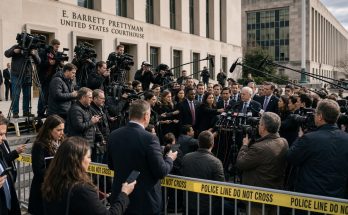
The legal proceedings surrounding Kirk’s killing have continued to attract national attention, particularly because prosecutors are pursuing a case involving allegations of aggravated murder.
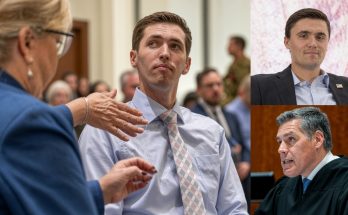
In a recent development, a Utah judge ruled that Robinson remains eligible for the death penalty if convicted of aggravated murder. The ruling rejected an effort by the defense to have the potential punishment removed from consideration.
The judge also addressed separate questions involving statements made by a prosecutor about the evidence and whether those comments violated a court order.
The distinction is important: a ruling that preserves death-penalty eligibility does not establish guilt or determine the eventual punishment. Robinson remains entitled to the legal protections and due-process rights afforded to criminal defendants.
The proceedings are being closely watched by Kirk’s supporters, political commentators and members of the public who want accountability for the killing.
As the case advances, court decisions concerning evidence, prosecutorial conduct and potential penalties are likely to remain major points of public discussion.
🇺🇸 Political Leaders Condemn the Killing
Kirk’s death sent shock waves through American political life.
Utah Gov. Spencer Cox condemned the killing and described it as a political assassination. President Donald Trump also publicly mourned Kirk, highlighting his influence among young conservatives and his role in the broader political movement.
Leaders from across the political spectrum condemned the violence, renewing calls for political disagreements to be resolved without threats or physical attacks.
Kirk had built Turning Point USA into a prominent conservative youth organization through campus events, political campaigns, podcasts and social media. His appearances frequently attracted large audiences and generated intense debate over American politics, culture and public policy.
His influence extended well beyond university campuses, making him one of the most recognizable figures in conservative youth activism.
For his supporters, his death represented the loss of a prominent political organizer whose work had helped mobilize a generation of young conservatives.
For others, the tragedy underscored the dangers facing public figures in an increasingly polarized political environment.
💔 A Family Left to Grieve
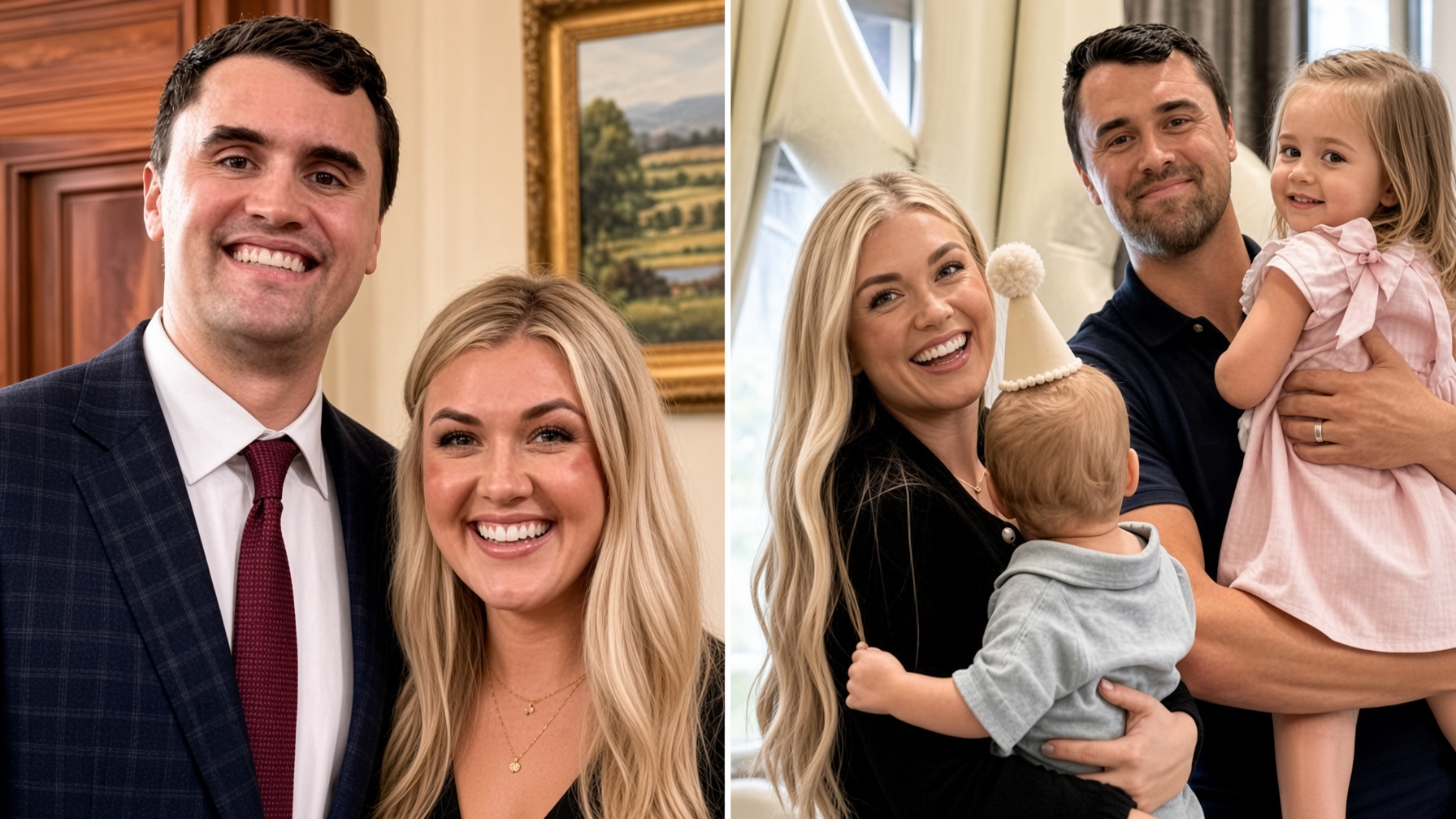
Beyond the political headlines, Kirk’s death left his wife, Erika, their two children and their extended family to confront life without him.
Public attention has frequently focused on Erika’s grief, but the private experience of losing a spouse and parent cannot be fully captured by viral headlines or dramatic social-media descriptions.
The family has had to navigate an intensely public tragedy while the criminal case continues to unfold. Supporters have expressed condolences, and gatherings honoring Kirk have reflected the emotional impact his death had on many people who followed his work.
For his children, the loss is deeply personal and separate from the political arguments surrounding their father’s career.
The attention surrounding the case also highlights the challenges families face when a loved one’s death becomes the subject of continuous national coverage.
🕊️ Political Violence Remains a National Concern
The killing has intensified discussions about political hostility, event security and the protection of public speakers.
The incident has prompted questions about how organizers can safeguard attendees without unnecessarily restricting public access or peaceful political expression.
Security experts have long warned that outdoor events involving prominent figures require careful assessments of surrounding buildings, crowd movement, emergency response procedures and potential vulnerabilities.
At the same time, political leaders and community organizations face the challenge of encouraging vigorous debate without allowing disagreement to become a justification for violence.
Kirk’s death remains a sobering reminder of the consequences of an attack at a public gathering.
As the legal proceedings continue, the case will be judged through the evidence presented in court rather than speculation circulating online.
For Erika Kirk and her children, however, the central reality is not a political debate or courtroom ruling. It is the permanent loss of a husband and father.
And for a nation still grappling with political division, the tragedy has renewed an urgent question: How can Americans protect the right to speak freely while ensuring that political disagreements never again end in such devastating violence?