🌍 Obama Takes Aim at Trump After Hungary Election as Political Tensions With Trump Intensify
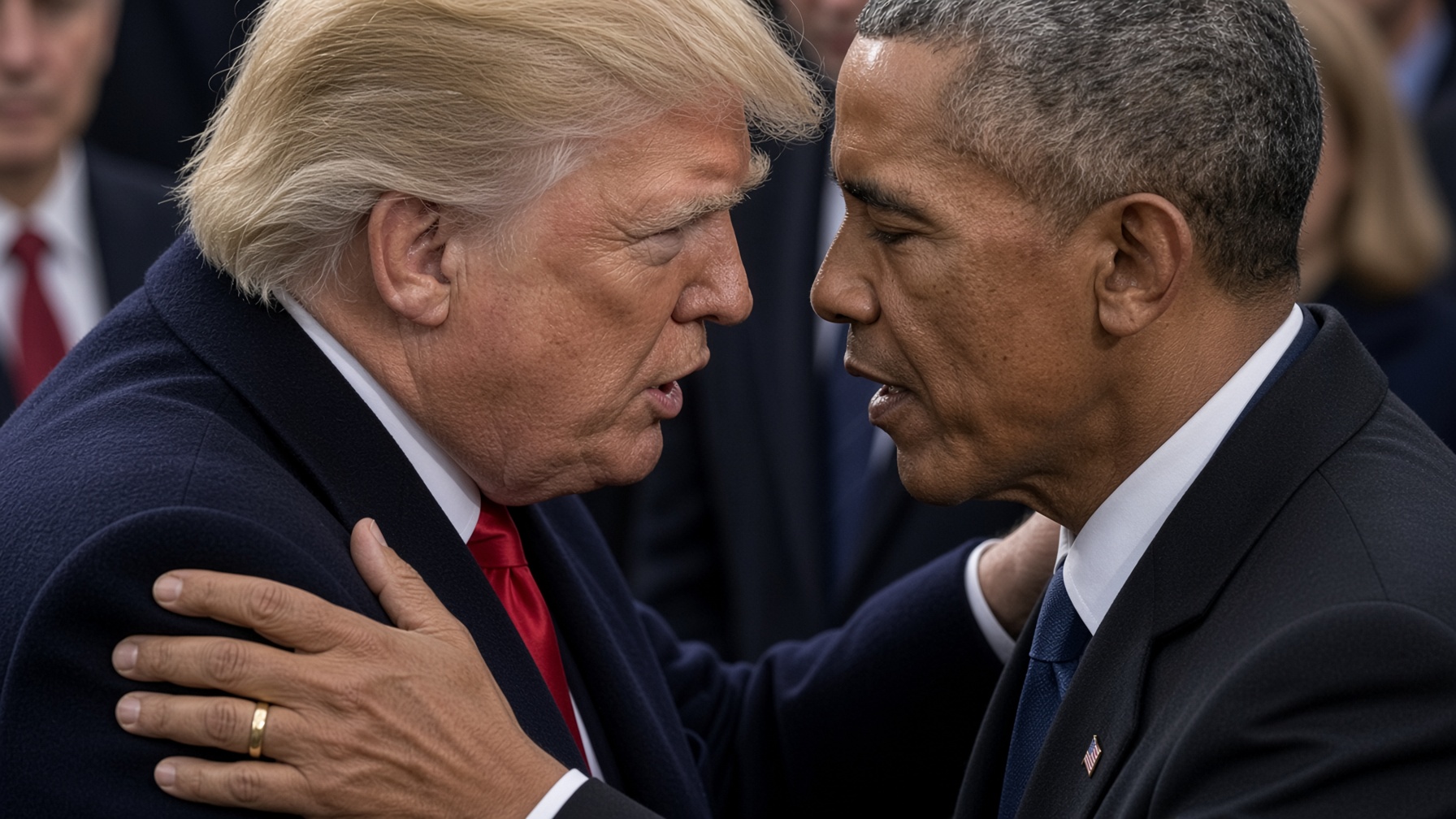
WASHINGTON, D.C. — Former President Barack Obama has renewed his criticism of President Donald Trump following a major political shift in Hungary, where longtime Prime Minister Viktor Orbán suffered an election defeat that has drawn international attention and reignited debate over democracy, political leadership, and the influence of American politics abroad.
Obama responded to the Hungarian election results with a public message celebrating the opposition’s victory, presenting the outcome as a demonstration of democratic resilience. His comments came amid continuing tensions between the former president and Trump, whose political movements have increasingly clashed over domestic policy, international relations, and the future direction of Western democracies.
The Hungarian election marked a significant turning point after Orbán’s 16 years in power. His defeat by opposition leader Péter Magyar represented a major challenge to the political system that had defined Hungary for more than a decade.
In a statement posted on X, Obama compared the result with Poland’s 2023 election, which ended the governing party’s hold on power after years of political controversy.
“The victory of the opposition in Hungary yesterday, like the Polish election in 2023, is a victory for democracy, not just in Europe but around the world,” Obama wrote.
He praised Hungarian voters for their determination and described the result as a reminder of the importance of fairness, equality, and the rule of law.
Although Obama did not directly mention Trump in his post, the timing of his remarks added another dimension to the ongoing political rivalry between the two presidents. Orbán had developed close ties with Trump and attracted support from American conservatives who viewed his leadership as a model of nationalist politics and resistance to progressive policies.
The election outcome therefore carried implications beyond Hungary, highlighting the competing political visions that continue to shape debates across Europe and the United States.
🇺🇸 Obama and Trump Remain Divided Over American Politics
The disagreement over Hungary is only one part of a broader political conflict between Obama and Trump.
Domestically, the two political camps have clashed over congressional redistricting, voting rights, and the future of American political representation. Obama has supported redistricting efforts in Democratic-led states, including Virginia and California, while criticizing similar initiatives pursued by Republicans in states such as Texas and Missouri.
The disputes reflect a larger national struggle over how electoral boundaries are drawn and whether partisan redistricting undermines fair representation.
The controversy has also intensified disagreements about the role former presidents should play in contemporary political debates. Obama has remained an influential voice within the Democratic Party, frequently weighing in on major national issues, while Trump has continued to portray his political opponents as defenders of a failed establishment.
Their competing messages have helped keep the rivalry between the two administrations in the national spotlight.
Obama also drew criticism following remarks connected to the death of civil rights leader Reverend Jesse Jackson. His comments reportedly addressed the political climate and the actions of Republicans, prompting a response from Jackson’s son, Jesse Jackson Jr.
The episode illustrated how even moments of national mourning can become entangled in the country’s deeply polarized political environment.
⚠️ Trump’s Renewed Attack on Obama’s Iran Nuclear Deal
Foreign policy has provided another major source of conflict.
Earlier this month, Trump and Defense Secretary Pete Hegseth criticized Obama’s handling of Iran, arguing that the 2015 nuclear agreement and the financial arrangements associated with it failed to prevent Tehran from pursuing activities that threatened American interests and regional security.
Their criticism comes amid escalating tensions involving the United States, Israel, and Iran. The administration has defended its approach as necessary to weaken Iran’s military capabilities and prevent the country from developing nuclear weapons.
Trump has repeatedly argued that Obama’s nuclear agreement gave Tehran too much financial relief without adequately addressing its broader military ambitions.
During remarks at the FII PRIORITY Summit, Trump revisited one of the most controversial aspects of the agreement: the settlement involving approximately $1.7 billion owed to Iran in connection with a dispute over a pre-1979 arms transaction.
Trump described the payment in dramatic terms, recalling reports of cash being transported by aircraft.
“That Barack Hussein Obama, did you ever hear of him? Barack Hussein Obama, he had the Iran nuclear deal. He went to Iran, he paid them,” Trump said.
He continued by claiming that two Boeing aircraft had been used to transport the money after their seats were removed to accommodate the cash.
Trump presented the episode as an example of what he considers a serious failure of Obama’s foreign policy, arguing that the arrangement demonstrated how presidential authority could be used to make controversial international decisions.
However, the financial settlement requires important context. The $1.7 billion arrangement involved the return of Iran’s principal payment for military equipment purchased before the 1979 Islamic Revolution, along with interest. The United States and Iran had been involved in a longstanding legal dispute over the transaction.
The Obama administration maintained that settling the claim was legally justified and separate from the nuclear agreement itself, even though the settlement and the implementation of the nuclear deal occurred at the same time.
🌐 A Continuing Debate Over Iran’s Nuclear Ambitions
Trump also renewed his argument that withdrawing from the nuclear agreement during his first term was essential to preventing Iran from acquiring nuclear weapons.
He claimed that, without his decision to terminate the agreement, Tehran would have obtained a nuclear weapon and potentially used it against Israel or other countries in the Middle East.
That assertion reflects Trump’s longstanding criticism of the deal. Supporters of the agreement, however, have argued that it imposed restrictions and international monitoring on Iran’s nuclear program, while critics questioned its duration, enforcement mechanisms, and failure to address Iran’s missile program and regional activities.
The disagreement remains central to American foreign policy debates, particularly as Washington confronts renewed security challenges in the Middle East.
Together, the Hungarian election and the renewed dispute over Iran illustrate how Obama and Trump continue to represent sharply contrasting approaches to political leadership and international affairs.
For Obama, Hungary’s election offered an opportunity to celebrate what he described as a victory for democratic values. For Trump, the Iran dispute provided another occasion to challenge his predecessor’s record and defend his own foreign-policy decisions.
As both men continue to influence their respective political movements, their public disagreements remain part of a larger struggle over America’s role in the world, the meaning of democratic leadership, and the legacy of competing presidential administrations.