🚨 Obama Takes Aim at Trump After Hungary Election Defeat, Reigniting Political Clash Over Democracy and Foreign Policy
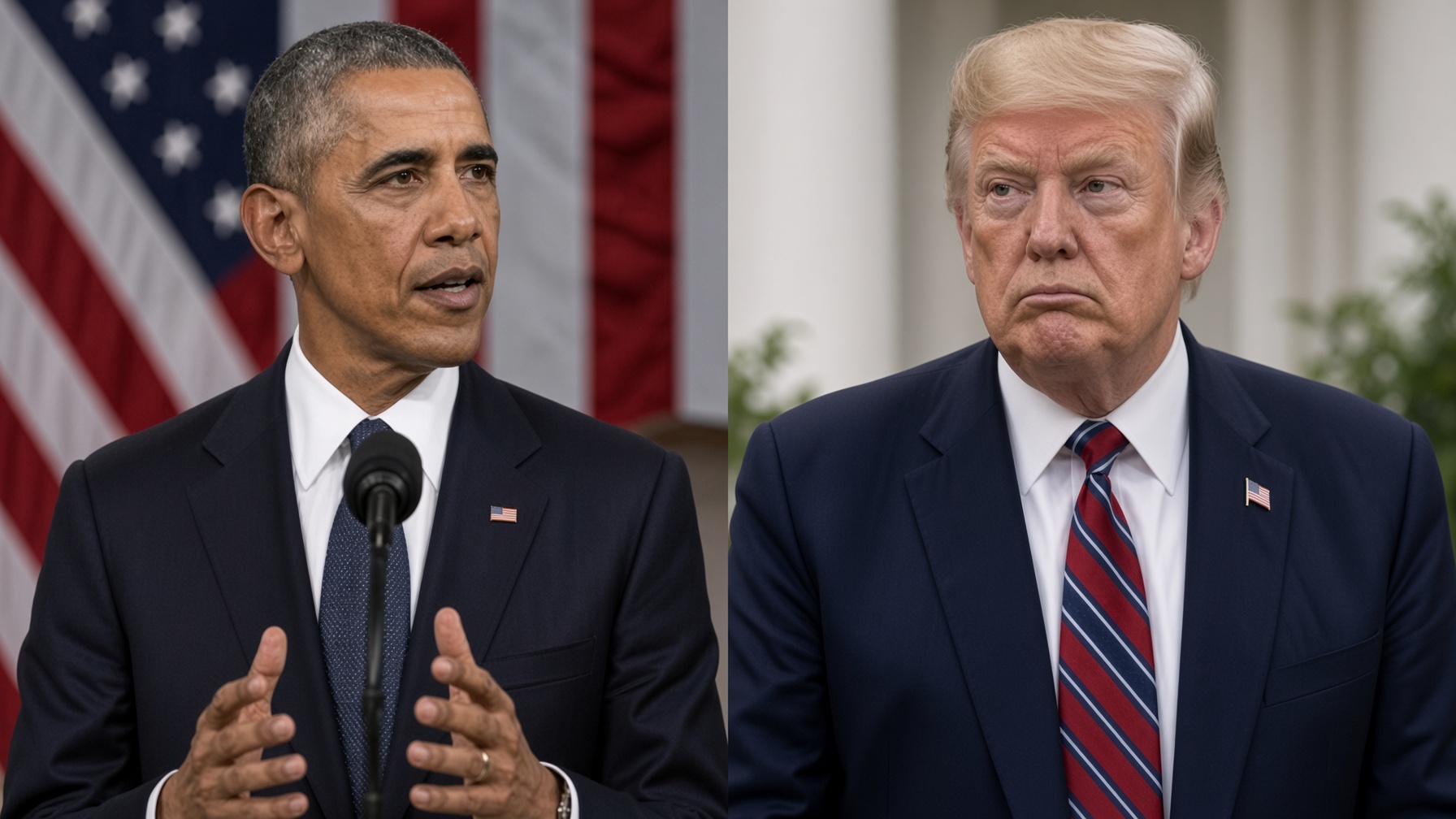
WASHINGTON, D.C. — Former President Barack Obama has reignited the political debate surrounding President Donald Trump after Hungary’s reported election results dealt a major blow to longtime conservative leader Viktor Orbán, highlighting the continuing divide over democracy, political leadership, and America’s role in international affairs.
The Hungarian election became an international political flashpoint after opposition leader Péter Magyar and his political movement reportedly secured a victory over Orbán, whose leadership had attracted support from Trump and several prominent conservative figures around the world.
The result carried significance beyond Hungary’s borders, raising questions about the influence of international political alliances and the ability of foreign leaders to shape domestic electoral outcomes.
According to the account, Vice President JD Vance traveled to Hungary ahead of the election to demonstrate support for Orbán. However, that show of political solidarity did not prevent the opposition from prevailing, setting the stage for renewed debate over the future of conservative movements in Europe and their relationships with American leadership.
🇭🇺 Obama Praises Hungary’s Political Shift
Following the reported election outcome, Obama took to X to praise Hungarian voters, describing the result as a victory for democratic principles and drawing a comparison with Poland’s 2023 election, when voters helped bring an end to the governing Law and Justice party’s eight-year rule.
“The victory of the opposition in Hungary yesterday, like the Polish election in 2023, is a victory for democracy, not just in Europe but around the world,” Obama wrote.
His remarks emphasized the importance of democratic participation, equal treatment under the law, and political accountability.
Although Obama did not need to mention Trump directly for the message to carry broader political implications, the statement arrived against the backdrop of an ongoing ideological struggle between the former Democratic president and his Republican successor.
Orbán had developed close ties with Trump and frequently attracted praise from conservatives who viewed his leadership as a model of nationalist politics, stricter immigration policies, and opposition to progressive social movements.
Critics, however, have raised concerns about democratic institutions, media independence, and the concentration of political power under Orbán’s government.
The reported election result therefore became a symbolic moment for both sides, with supporters of the opposition presenting the outcome as an opportunity for political change and Orbán’s allies facing renewed questions about their approach to governance.
⚖️ Redistricting Dispute Adds to Domestic Political Tensions
Obama’s criticism of Trump’s broader political agenda also intersects with an increasingly contentious battle over congressional redistricting in the United States.
Both major parties have pursued strategies intended to protect or expand their representation in Congress, often through disputes over how electoral district boundaries are drawn.
Democrats have supported redistricting efforts in certain states, including California and Virginia, while Republicans have pursued their own initiatives in states under GOP control.
These competing efforts have intensified concerns about partisan gerrymandering and whether electoral maps accurately reflect voters’ preferences.
The issue has become particularly important as both parties prepare for future elections and seek to strengthen their positions in the House of Representatives.
Obama’s involvement in Democratic political debates has also drawn criticism from opponents who argue that former presidents should exercise greater restraint after leaving office. His supporters, meanwhile, maintain that former presidents have a legitimate role in defending democratic institutions and participating in public discussions about the country’s political direction.
Separately, remarks attributed to Obama following the death of civil rights leader Reverend Jesse Jackson reportedly prompted a response from Jackson’s son, Jesse Jackson Jr., adding another layer to the political discussion.
🇮🇷 Trump Revives His Longstanding Criticism of Obama’s Iran Deal
While Obama highlighted developments in Europe, Trump continued criticizing his predecessor’s foreign policy, particularly the 2015 Iran nuclear agreement.
The agreement, formally known as the Joint Comprehensive Plan of Action, was negotiated during Obama’s presidency with the goal of restricting Iran’s nuclear program in exchange for sanctions relief.
Trump has long argued that the arrangement was fundamentally flawed and gave Tehran economic benefits without sufficiently preventing its future pursuit of nuclear weapons.
During remarks at the FII PRIORITY Summit, Trump revisited a controversial $1.7 billion payment to Iran made in January 2016, using the transaction to reinforce his criticism of the Obama administration.
The payment was connected to a longstanding dispute over Iranian funds paid to the United States before the 1979 Islamic Revolution for military equipment that was never delivered.
The United States and Iran settled the dispute through a negotiated arrangement. The settlement coincided with the implementation of the nuclear agreement, although the payment was legally separate from the nuclear deal itself.
Trump and other critics have portrayed the transaction as an unnecessary concession to Tehran. Supporters of the settlement have argued that resolving the dispute helped address a longstanding financial and legal obligation.
The distinction remains important because the payment was not itself part of the nuclear agreement, despite the political controversy surrounding its timing.
🌎 Rivalry Continues Amid International Tensions
Trump withdrew the United States from the Iran nuclear agreement in 2018, arguing that it failed to adequately protect American interests. The decision became one of the defining foreign-policy disputes between his administration and Obama’s legacy.
Debates over Iran have continued amid regional tensions involving the United States, Israel, and Tehran. However, claims that the $1.7 billion settlement directly financed specific weapons systems or individual attacks require independent evidence and should not be presented as established fact.
The latest developments illustrate how disagreements over democracy, international alliances, and foreign policy continue to shape the political relationship between the two presidents.
Although Obama left the White House years ago, his public statements remain influential among Democrats, while Trump continues to use his predecessor’s record as a point of contrast when defending his own policies.
As political divisions deepen in Washington and international rivalries continue, the clash between Obama and Trump remains a reflection of two competing visions of American leadership—one that continues to influence political debate well beyond the boundaries of the United States.