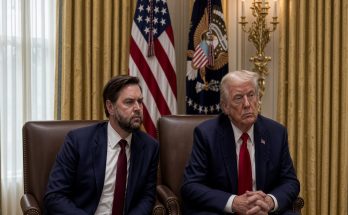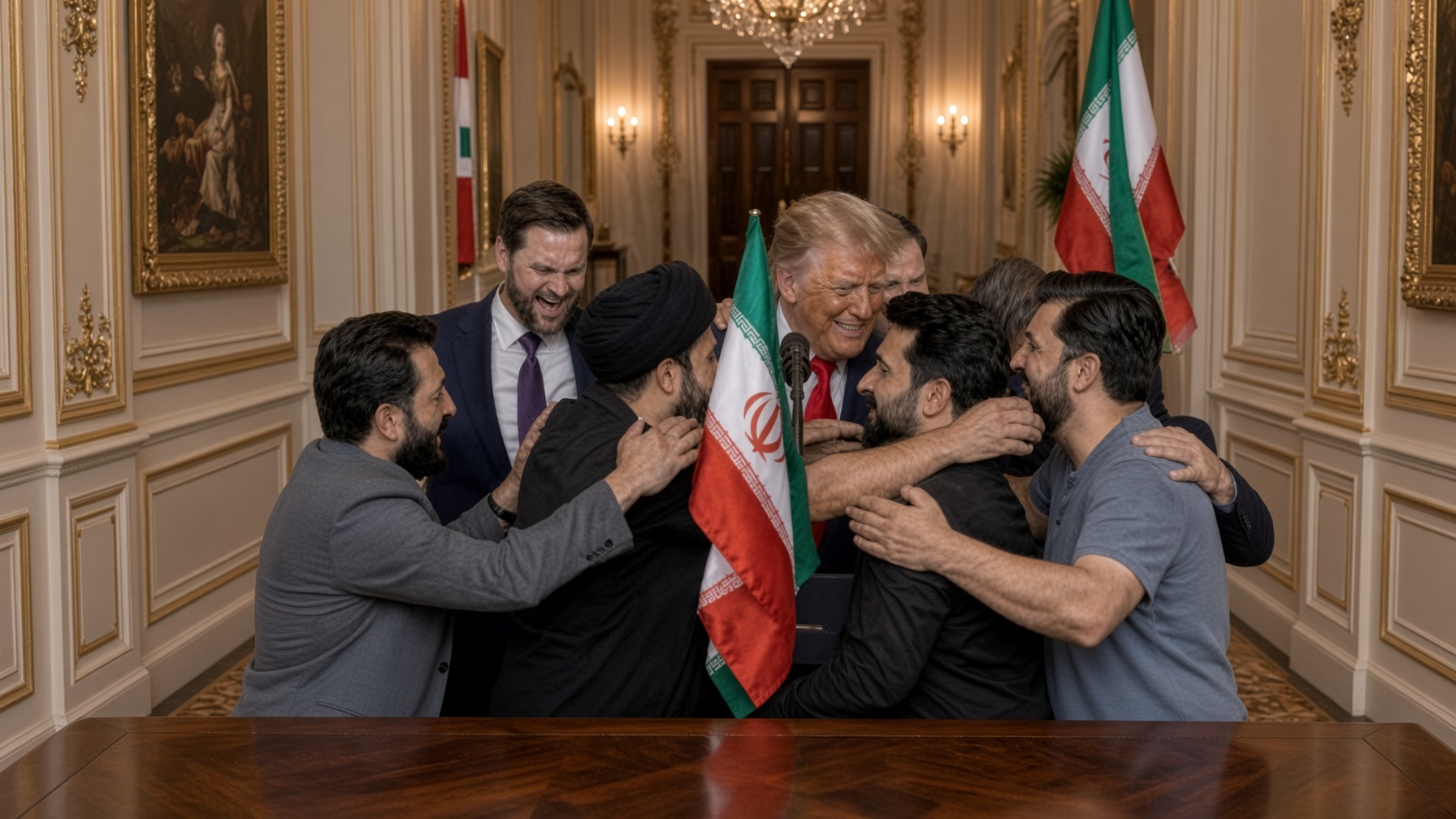
WASHINGTON — Senior officials across the Trump administration are engaged in delicate, high-stakes diplomacy aimed at brokering a comprehensive settlement to end the military confrontation with Iran, balancing mediated working sessions in Doha with an assertive naval interdiction blockade across the Persian Gulf littoral.
President Donald Trump, Vice President JD Vance, and Secretary of State Marco Rubio are directing the formulation of a multi-tiered accord engineered to permanently curtail Tehran’s fissile enrichment capacity and restore unrestricted commercial navigation through the Strait of Hormuz. Yet even as diplomatic delegations exchange draft texts through Qatari intermediaries, the operational environment remains volatile, marked by direct military engagements between U.S. carrier air wings and Iranian coastal defense batteries.
Diplomatic Ultimatums From New Delhi to Doha
Speaking to reporters during an official diplomatic mission in New Delhi, Rubio issued an unyielding posture regarding commercial navigation through the world’s most critical energy transit corridor, declaring that the maritime passage will be reopened regardless of Tehran’s resistance.
“The straits have to be open, they’re going to be open,” Rubio said. “What’s happening there is unlawful, it’s illegal, it’s unsustainable for the world, it’s unacceptable.”
Addressing the diplomatic channel hosted by Qatari mediators, Rubio confirmed that working-level technical communications remain active, though he emphasized that converting high-level understandings into legally binding protocols will require meticulous drafting.
“There were some talks going on in Qatar today, so we’ll see if we can make progress,” Rubio said. “I think it’s a lot of talking back and forth going on about specific language in the initial document, so it’ll take a few days. The president expressed his desire to make it. He’s either going to make a good deal or no deal.”
Maritime Blockade and Coastal Clashes
While diplomatic teams trade draft language in Doha, coalition and regional naval forces remain deployed in an active combat posture.
According to a senior U.S. defense official, an armada of nearly two dozen American warships—spearheaded by two nuclear-powered aircraft carrier strike groups and their guided-missile escorts—alongside dozens of frontline combat aircraft, continues to enforce a maritime interdiction blockade. The coordinated cordon is designed to suppress naval mining assets and choke off commercial maritime traffic into and out of sovereign Iranian terminals along the Gulf of Oman and northern Arabian Sea.
The standoff escalated on Monday when Iranian surface-to-air missile batteries targeted American strike fighters and maritime reconnaissance craft monitoring the perimeter of the interdiction zone. U.S. naval aviation and shipboard strike systems answered with precision strikes, neutralizing coastal launch complexes and radar nodes.
The exchange represents the latest breach of an uneasy, six-week-old pause in broad theater strikes. While both capitals consented to a provisional halt in wide-scale aerial operations to accommodate negotiations, continuous tactical flare-ups in international airspace and coastal sea lanes continue to threaten the talks.
Tehran Cites Progress While Opposing Accelerated Timetables
In Tehran, government officials offered a measured appraisal of the negotiations, acknowledging substantial alignment on overarching principles while cautioning against assumptions that a treaty signing is imminent.
During a weekly press briefing, Iranian Foreign Ministry spokesman Esmaeil Baqaei affirmed that working groups have bridged numerous technical divides, yet he criticized Washington for introducing shifting stipulations late in the negotiations.
“It is correct to say that we have reached a conclusion on a large portion of the issues under discussion,” Baqaei said. “But to say that this means the signing of an agreement is imminent—no one can make such a claim.”
Iranian negotiators are reportedly insisting on immediate, front-loaded sanctions relief and verified security assurances before authorizing structural drawdowns of their domestic nuclear infrastructure, citing frustrations with American demands regarding intrusive verification protocols and the staggered release of frozen sovereign currency reserves.
Structural Parameters of the Proposed Settlement
Diplomatic sources familiar with the Doha sessions indicate that the prospective agreement relies on an interlocking sequence of maritime de-escalation and nuclear concessions:
Maritime Access and Demining: Iran would dismantle naval minefields, restrict fast-attack boat patrols, and guarantee unimpeded navigation through the Strait of Hormuz. Reciprocally, the U.S. Navy would terminate its maritime interdiction blockade across the Gulf of Oman, allowing commercial cargo to enter Iranian ports.
Nuclear Caps and Verification: Tehran would agree to dilute its highly enriched uranium stockpiles, cap future enrichment far below weapons-grade thresholds, and grant the International Atomic Energy Agency expanded monitoring access.
Economic Relief and Asset Access: Following verified compliance certification, Washington would suspend select secondary energy sanctions and unfreeze targeted foreign currency reserves.
White House officials indicate that the administration remains confident in its dual-track posture, arguing that sustained naval pressure has driven Iranian concessions. Nonetheless, with two carrier strike groups operating within strike range of Iranian coastal positions, the coming days will determine whether backchannel diplomacy produces a durable treaty or yields to expanded theater warfare.