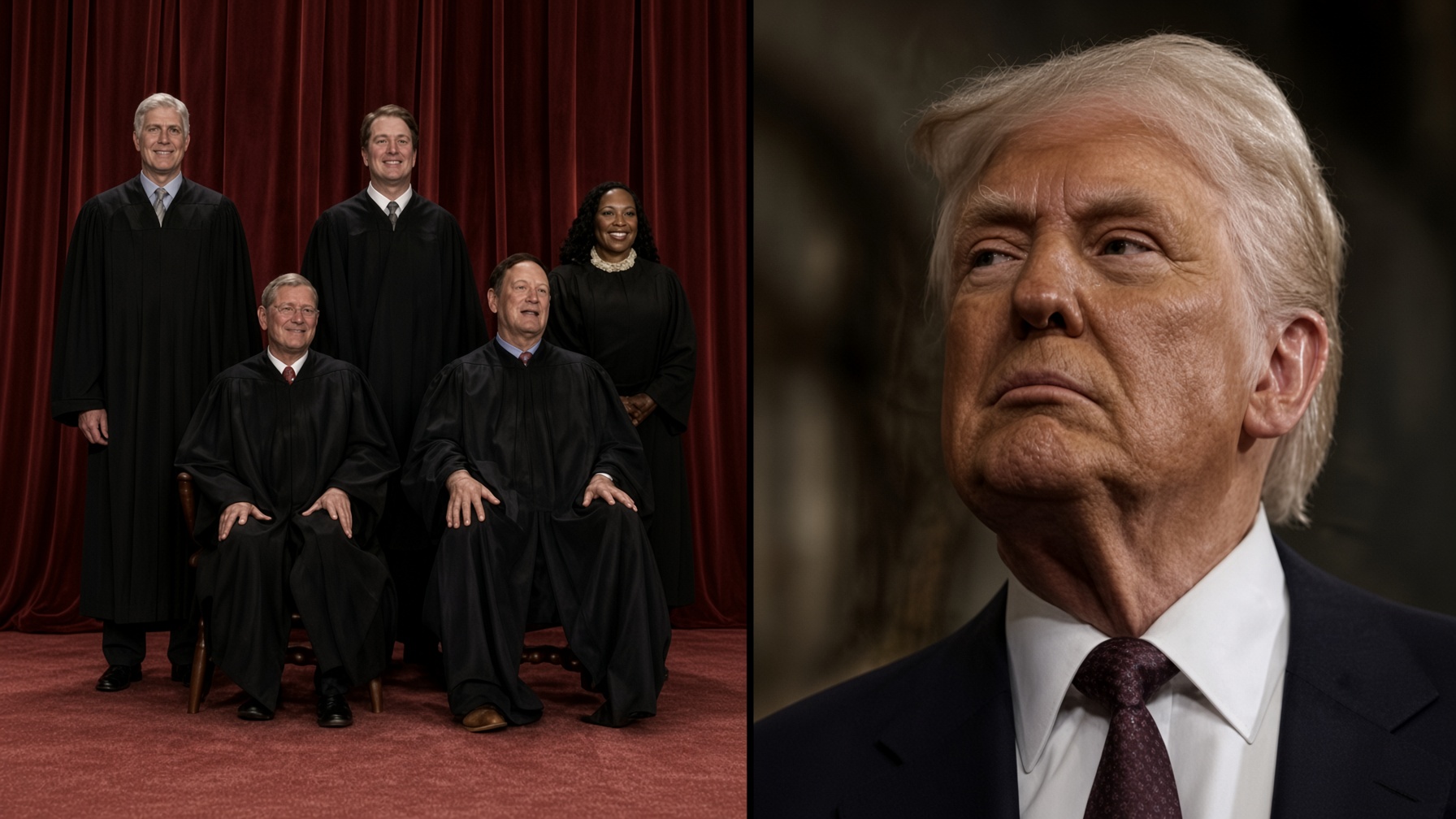
⚖️ SUPREME COURT SHOCKWAVE! Major Ruling Limits Human Rights Lawsuits Against U.S. Companies Over Alleged Abuses Abroad
WASHINGTON, D.C. — A major Supreme Court decision involving American technology companies, international human rights claims and the limits of federal judicial power has intensified debate over corporate accountability and the role of U.S. courts in addressing alleged abuses overseas.
At the center of the controversy is Cisco Systems, Inc. v. Doe, a case concerning allegations that Cisco Systems helped Chinese authorities develop technology used to identify and persecute members of Falun Gong, a spiritual movement banned in China. The plaintiffs argued that the company knowingly provided specialized networking and surveillance capabilities that could facilitate arrests, imprisonment and torture.
Cisco denied wrongdoing, maintaining that its products were commercial technology and disputing the legal basis for holding the company responsible for alleged abuses committed by foreign authorities.
The case raises a fundamental question: How far should American courts go in allowing foreign victims to seek compensation from U.S. companies accused of assisting human rights violations in other countries?
⚖️ Two Federal Laws at the Heart of the Dispute
The litigation centers on two federal statutes: the Alien Tort Statute (ATS), dating to 1789, and the Torture Victim Protection Act (TVPA), enacted in 1991.
The ATS allows certain claims involving violations of international law to be brought in federal court, although its application to conduct occurring overseas has been sharply restricted by previous Supreme Court decisions. The TVPA expressly provides a civil cause of action for victims of torture and extrajudicial killing committed under the authority of a foreign nation.
The plaintiffs sought to establish that corporate defendants could face liability for allegedly aiding and abetting such abuses. Their lawsuit challenged the boundaries between commercial activity, technological development and responsibility for how products are ultimately used by government agencies.
The dispute also raised questions about whether federal judges can recognize legal claims that Congress has not expressly authorized.
🏛️ The Legal Battle Over Judicial Authority
The majority’s reasoning emphasized the separation of powers, arguing that federal courts must exercise caution before creating new legal remedies under federal statutes.
Under this approach, recognizing additional forms of liability for violations of international norms could improperly transfer legislative authority from Congress to the judiciary. The majority also expressed concern about the diplomatic consequences of lawsuits involving foreign governments and activities conducted beyond U.S. borders.
The Trump administration supported a restrictive approach, arguing that expansive cross-border litigation could expose American companies to unpredictable legal risks and complicate U.S. foreign relations.
That position reflects a broader policy debate over whether corporations should face greater legal exposure when their products are allegedly used by foreign governments to commit serious abuses.
💻 Why American Technology Companies Are Watching
For technology businesses operating internationally, the dispute illustrates the legal challenges associated with products that can serve both legitimate commercial purposes and government surveillance operations.
Networking equipment, cybersecurity systems, data-management platforms and other digital infrastructure can be used by private businesses, public institutions and law enforcement agencies. Determining when a supplier should be held responsible for a customer’s alleged misconduct can involve difficult questions about knowledge, intent and the relationship between a product’s design and its eventual use.
Companies facing similar claims have argued that broad secondary-liability rules could expose them to expensive litigation over decisions made by foreign customers. Human rights advocates counter that corporations should not automatically escape scrutiny when they knowingly provide assistance that enables persecution or torture.
The outcome of this legal dispute therefore carries implications beyond a single company, potentially influencing future arguments over corporate responsibility, international commerce and access to civil remedies.
⚖️ Strong Concerns From Human Rights Advocates
Critics of a restrictive legal approach warn that narrowing the availability of lawsuits could leave victims with fewer practical options for holding powerful corporations accountable.
In cases involving alleged abuses abroad, victims may face substantial obstacles in obtaining evidence, pursuing claims against foreign officials or securing compensation within the country where the alleged conduct occurred. U.S. litigation has sometimes been viewed as an alternative route, although existing legal restrictions already limit which overseas claims can proceed.
Human rights advocates argue that corporations should be evaluated according to their knowledge and conduct rather than receiving broad protection simply because the alleged abuses were carried out by a foreign government.
Supporters of tighter limits respond that accountability must be grounded in laws enacted by Congress, not new legal standards developed through individual lawsuits.
🇺🇸 A Broader Debate Over Corporate Accountability
The controversy surrounding Cisco Systems, Inc. v. Doe highlights a continuing struggle between two important principles: preventing corporate complicity in serious human rights violations and preserving clear limits on the authority of federal courts.
For lawmakers, the central challenge is determining whether existing statutes adequately address corporate assistance in overseas abuses or whether Congress should establish more explicit standards for civil liability.
For technology companies, the debate concerns the legal consequences of supplying products that may be repurposed by customers for harmful purposes. For victims and their advocates, it concerns whether meaningful avenues for justice remain available when alleged abuses occur beyond American borders.
Ultimately, the case underscores a question that extends well beyond Silicon Valley: Who should decide when American businesses can be held responsible for alleged human rights violations overseas—the courts interpreting existing statutes or Congress writing new laws?
The answer will shape future discussions about international accountability, technological innovation and the limits of American legal authority.