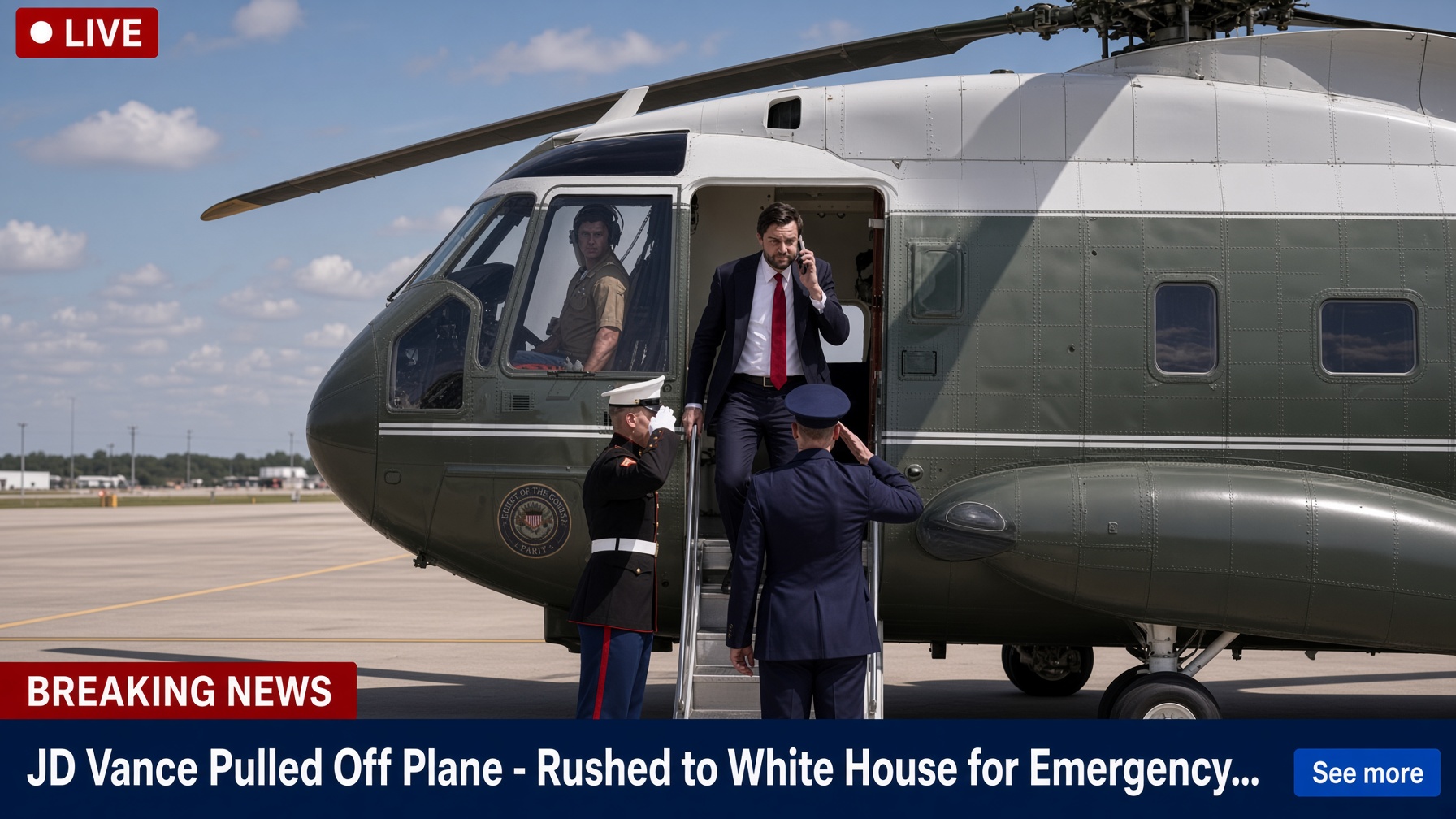
🚨 JD VANCE RECALLED TO WHITE HOUSE AS IRAN TALKS IN PAKISTAN FACE UNCERTAINTY
WASHINGTON — Vice President JD Vance was unexpectedly called back to the White House on Tuesday, disrupting plans for him to travel to Islamabad, Pakistan, to lead a high-level U.S. delegation in diplomatic discussions linked to the ongoing conflict with Iran. The sudden change raised fresh questions about the future of the negotiations as uncertainty continued to surround Tehran’s willingness to participate.
Vance had been expected to board a U.S. government aircraft and travel to the Pakistani capital, where American officials were preparing for discussions aimed at addressing escalating tensions in the Middle East. His planned participation was viewed as a significant signal of Washington’s commitment to pursuing a diplomatic path amid a volatile regional situation.
However, the vice president’s unexpected return to Washington introduced a new complication into the diplomatic process. With Iranian participation still uncertain, questions quickly emerged about whether the proposed meetings would proceed as planned or whether the administration would need to reconsider its immediate strategy.
The precise reason for Vance’s recall was not immediately clear. Without an official explanation, it remained uncertain whether the decision reflected a change in diplomatic calculations, emerging security considerations or other developments within the administration.
🇺🇸 High-Stakes Diplomacy Faces New Questions
The potential negotiations in Islamabad have drawn attention because of the broader implications for relations between Washington and Tehran. Any meaningful diplomatic engagement could create an opportunity to reduce tensions, address outstanding disputes and prevent the conflict from expanding further across the region.
Vance’s anticipated role underscored the importance the administration appeared to attach to the initiative. As vice president, his presence would have placed a senior American official directly at the center of discussions involving one of the most consequential foreign policy challenges facing the United States.
His absence from the expected travel schedule, however, does not necessarily mean the diplomatic effort has been abandoned. High-level negotiations can change rapidly as governments evaluate new information, coordinate positions and determine whether the conditions are suitable for productive discussions.
Still, the uncertainty surrounding Iran’s participation presents a fundamental obstacle. Negotiations cannot advance meaningfully without clarity about whether the parties are prepared to engage, what issues they are willing to discuss and whether either side believes an agreement is achievable.
For American officials, the immediate challenge is determining whether the Islamabad initiative can produce substantive progress or whether additional diplomatic groundwork will be required before formal discussions can begin.
🌍 Pakistan’s Potential Role in the Diplomatic Effort
Islamabad’s proposed role highlights the importance of international diplomatic channels in efforts to manage tensions between Washington and Tehran. A meeting hosted in a third country could provide a setting for officials to exchange proposals, communicate concerns and explore possible areas of agreement.
Yet the success of such an initiative would depend on more than the location or seniority of the delegations involved. Clear objectives, credible commitments and a willingness to address difficult disagreements would be essential to moving the process forward.
The uncertainty also illustrates the difficulty of conducting diplomacy during an active conflict. Military developments, political pressures and competing security priorities can quickly reshape negotiations, leaving officials with limited time to assess changing circumstances.
Washington must therefore balance its interest in preventing further escalation with its responsibility to protect American personnel, regional partners and broader national security interests.
⚠️ What Happens Next?
Attention is now focused on the White House and whether the administration will provide further clarification about Vance’s schedule and the status of the planned discussions. The key questions remain whether Iranian representatives will participate, whether the meetings will be postponed or restructured, and whether another American delegation could take part if the vice president does not travel.
Until officials provide additional information, the reasons behind Vance’s recall and its implications for the negotiations remain uncertain.
The development nevertheless places renewed attention on the fragile diplomatic landscape surrounding Iran. If talks move forward, they could offer an opportunity to pursue de-escalation through negotiations. If they stall, efforts to establish a workable diplomatic channel may become more difficult.
For now, Vance’s return to Washington marks a significant development in the unfolding diplomatic effort, but it does not, by itself, establish that negotiations have collapsed.
The next announcements from Washington, Tehran and Islamabad will help determine whether the proposed talks can move ahead or whether the diplomatic initiative faces another delay at a critical moment in the Middle East crisis.



