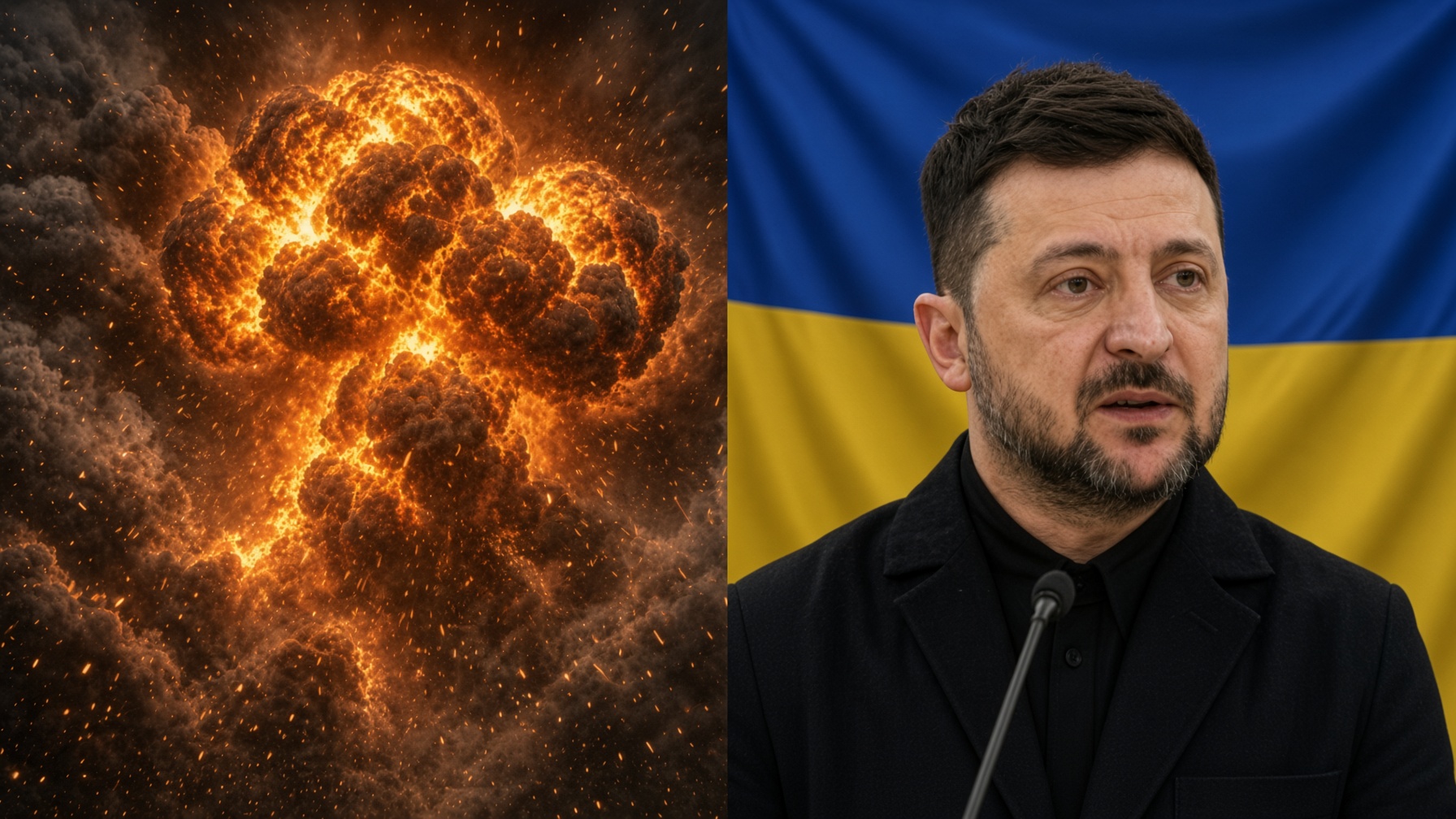
Widespread Russian Drone Barrage Hits Ukraine Amid Debunked Online Rumors Targeting Zelenskyy
KYIV, Ukraine — A massive wave of Russian drone and missile strikes swept across at least 10 Ukrainian administrative regions overnight, leaving civilian casualties, igniting commercial structures, and battering municipal infrastructure. The extensive overnight bombardment triggered immediate emergency response operations across southern and eastern Ukraine, coinciding with a flurry of unverified online claims alleging the death of Ukrainian President Volodymyr Zelenskyy—reports that were swiftly discredited as wartime disinformation.
The strikes represent another fierce exchange in an escalating war of long-range aerial attrition, following what Russian defense officials described as one of Ukraine’s largest drone operations to date over the preceding weekend.
Overnight Assault Breads Havoc Across Ten Regions
According to Ukrainian regional administrations and the State Emergency Service, the overnight offensive targeted key logistics hubs and residential sectors from Kharkiv in the northeast to Zaporizhzhia in the south.
In Zaporizhzhia, multiple drone detonations damaged multi-story residential blocks, commercial shopping centers, and educational buildings. Regional military authorities reported that at least five individuals sustained blast-related injuries, while emergency responders worked through dense smoke and debris to contain localized fires and secure weakened structural frameworks.
Further north in the Kharkiv region, regional officials confirmed that an incoming strike hit residential property, killing a woman and injuring three others. Emergency personnel across Poltava and Chernihiv similarly battled infrastructural blazes sparked by intercepted and detonating unmanned aerial vehicles (UAVs). In total, verified domestic reports confirmed at least one fatality and eight wounded nationwide, with damage assessments ongoing.
The overnight operation highlights an entrenched tactical shift by Russian forces, targeting power grids, administrative facilities, and transport nodes far behind active trench lines to strain Ukraine’s air defense architecture and exhaust civil emergency capacities.
Social Media Surge and the Anatomy of a Death Hoax
As air raid sirens wailed and emergency crews deployed across Ukraine, an aggressive burst of viral posts appeared across major digital platforms, asserting that a high-precision Russian strike had targeted a bunker complex and killed President Zelenskyy. Several channels amplified fabricated screenshots claiming Ukrainian state broadcasters had confirmed his death.
The narrative collapsed within hours under standard open-source verification:
Official Public Statements: Zelenskyy issued scheduled video briefings and official press updates detailing the civilian toll of the overnight strikes, condemning the continued targeting of municipal hubs.
Diplomatic Engagements: Far from being trapped in an air-raid shelter, international wire services documented the Ukrainian president actively engaged in high-level diplomatic transit, stopping in Ireland for bilateral consultations before heading to New York for the United Nations General Assembly.
Absence of Independent Corroboration: No credible international intelligence agency, diplomatic post, or recognized press outlet verified any direct strike on Ukrainian executive command facilities.
The episode mirrors a persistent pattern observed throughout the conflict, in which kinetic strikes are coupled with coordinated informational campaigns intended to create leadership vacuums, panic domestic populations, and depress military morale.
The Information Battlefield in High-Intensity Warfare
Wartime information environments present acute verification challenges. Kinetic strikes inherently produce temporary communication blackouts, localized security cordons, and fluid casualty figures. These conditions create information voids that bad actors exploit through digital sensationalism and coordinated psychological operations (PsyOps).
Security analysts emphasize that unverified claims regarding heads of state or high-ranking military commanders require rigorous secondary verification before publication. In an era where algorithmic amplification and synthetic media can propagate false assertions globally within minutes, institutional verification remains the critical buffer against psychological disruption.
Ukrainian defense and communications officials routinely caution the public against unverified alerts, urging reliance on authenticated administrative and defense channels during active aerial alerts.
Escalating Long-Range Duels Ahead of Diplomatic Summits
The latest strikes underscore the intensifying nature of reciprocal deep-strike campaigns. Russian authorities recently reported intercepting hundreds of Ukrainian long-range drones targeting industrial refineries, airfields, and logistical depots inside Russian territory. In return, Moscow has sustained periodic, multi-axis salvos combining Iranian-designed Shahed loitering munitions with cruise and ballistic missiles.
The sharp uptick in cross-border strikes unfolds against the backdrop of critical multilateral diplomatic maneuvers. As world leaders convene for the United Nations General Assembly, Kyiv continues to advocate for expanded air defense interceptors, long-range precision strike authorizations, and tighter sanctions enforcement.
Despite the digital fog of war and ongoing aerial bombardments, Kyiv’s political and military command apparatus remains fully operational, confronting both physical destruction on the ground and fabricated narratives in the digital sphere.



