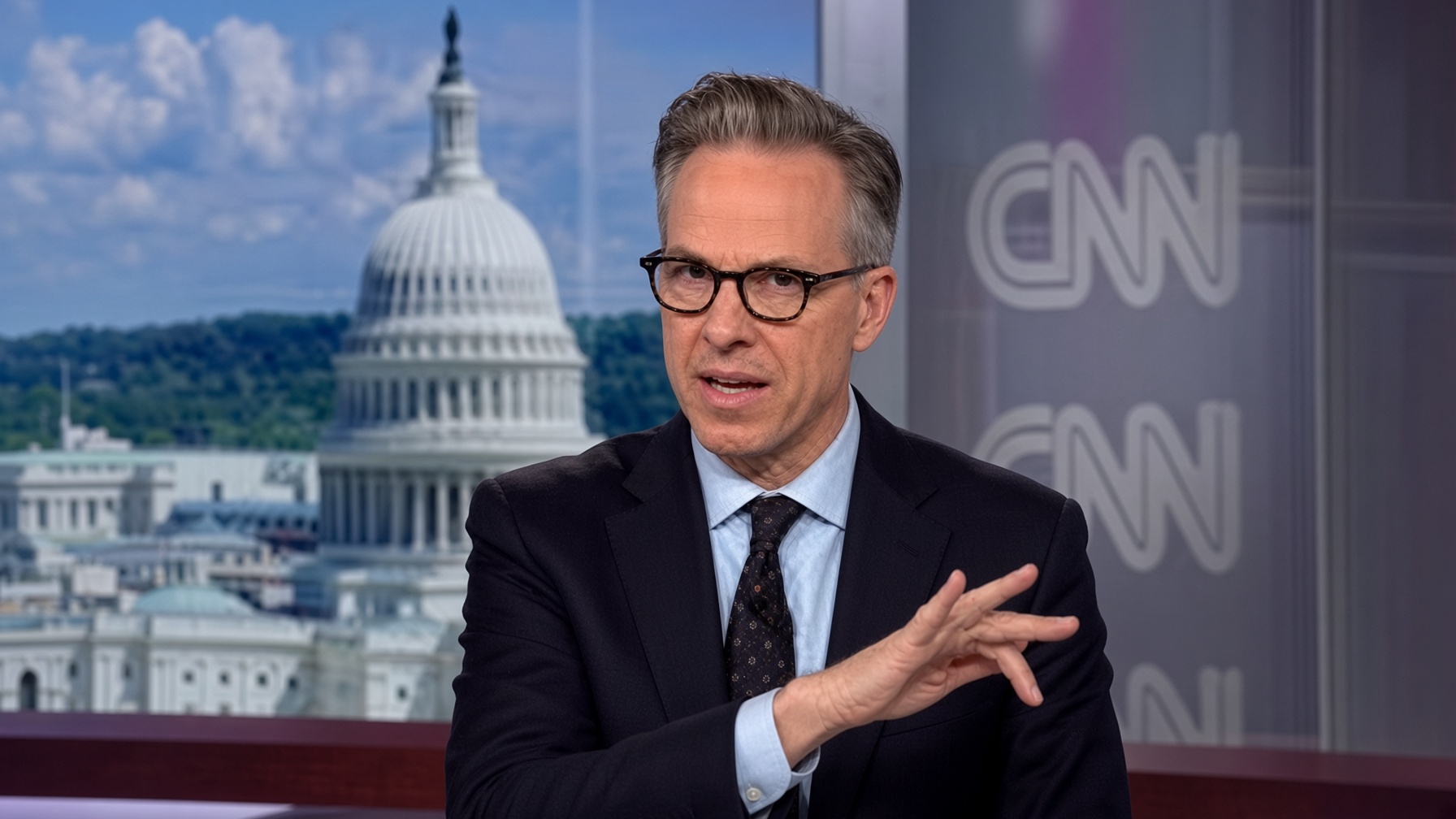
WASHINGTON — In an extraordinary live broadcast exchange that has reignited fierce debate over executive influence and media independence, President Donald Trump asserted Sunday that his administration is actively working to alter the editorial direction of CNN, declaring during an unscripted telephone interview that officials are seeking to push the network onto a “normal path.”
The remarks came during a live appearance on CNN’s flagship Sunday public affairs programming, when Trump dialed into the network to deliver an on-air tribute following the sudden death of South Carolina Senator Lindsey Graham.
As anchor Jake Tapper concluded the segment, Trump offered a candid assessment of the network’s editorial posture, directly linking his administration’s efforts to changes in the cable channel’s operations.
“We’re trying to have CNN go on a normal path, and we’ll do that,” Trump said.
Rather than challenging the assertion or pressing the commander-in-chief on the mechanisms of such administrative efforts, Tapper allowed the comment to pass without an adversarial follow-up.
“Well, I’m on a normal path right here, sir, and I appreciate your time. And thank you for calling in,” Tapper responded, adding that the network “would love to have you back sometime.”
Limits on Questioning Draw Swift Scrutiny
The exchange immediately sparked intense public and professional scrutiny, not only for the president’s assertion of influence over an independent newsroom, but also for the tight constraints surrounding the interview itself.
According to broadcast details, the president consented to the live phone call on the condition that questioning remain strictly confined to the passing and political legacy of Graham, a longtime confidant and key foreign policy ally. Despite major breaking developments overseas—including ongoing U.S. carrier strikes and retaliatory military engagements with Iran—the anchor adhered strictly to the requested boundary, posing no questions on escalating regional hostilities or domestic policy battles.
The deferential tone of the segment drew an immediate, impassioned reaction across digital platforms and media ethics circles. Critics and viewers accused the network of conceding editorial sovereignty to the White House, arguing that an unvetted assertion of executive sway over an independent news organization demanded immediate, rigorous scrutiny on the air.
Commentators noted the stark departure from Tapper’s prior public stances. Just months earlier, the anchor had forcefully defended journalistic detachment on air, stating that the primary duty of an independent press “is not to try and please the president or only report the statements he likes.”
Media watchdogs argued that by declining to interrogate what Trump meant by placing the network on a “normal path,” the broadcast risked signaling compliance with political pressure.
Corporate Consolidation and Regulatory Leverage
The controversy arrives at a particularly sensitive moment for CNN and its corporate leadership, unfolding against the backdrop of significant corporate consolidation across the entertainment and news industries.
The exchange follows recent Department of Justice antitrust approval regarding Paramount Skydance’s acquisition of Warner Bros. Discovery, CNN’s corporate parent company. Media industry analysts have long pointed out that massive broadcast mergers require navigating intricate federal regulatory hurdles, an environment where high-level corporate executives frequently seek stable, non-adversarial relationships with federal regulators and the executive branch.
Press-freedom advocates warned that executive remarks about reshaping an outlet’s editorial focus carry far greater weight when the administration wields direct or indirect regulatory oversight over corporate ownership. Under such conditions, critics argue, rhetoric aimed at adjusting a network’s tone can function less like casual political commentary and more like coercive institutional pressure.
The Strained Dynamic of Presidential Access
The incident illustrates the ongoing institutional dilemma facing legacy broadcast networks attempting to navigate access journalism in a hyper-polarized political environment.
For years, the Trump administration has maintained a combative stance toward legacy cable channels, routinely labeling mainstream reporting as biased while prioritizing appearances on conservative-leaning channels, digital talk formats, and podcasts. For networks seeking to balance adversarial journalism with direct access to the sitting president, live interviews present significant operational risks:
Conditional Access: Securing high-profile live interviews often involves implicit or explicit boundaries regarding subject matter, restricting an anchor’s ability to pivot toward breaking national security crises.
Editorial Sovereignty: Allowing executive assertions of political management to pass without on-air clarification risks compromising the network’s reputation for impartiality and independence.
Public Perception: Viewers increasingly view institutional deference not as polite protocol, but as an abdication of the press’s constitutional watchdog function under the First Amendment.
Neither representatives for the White House nor spokespersons for CNN issued immediate formal clarifications regarding what operational or editorial measures the administration claimed to be pursuing.
Yet as the video circulated widely across global news desks, the episode laid bare the deepening friction between state power and the Fourth Estate—a stark reminder that when political leaders claim authority over the press, the silence of the interviewer can reverberate just as loudly as the words of the president.