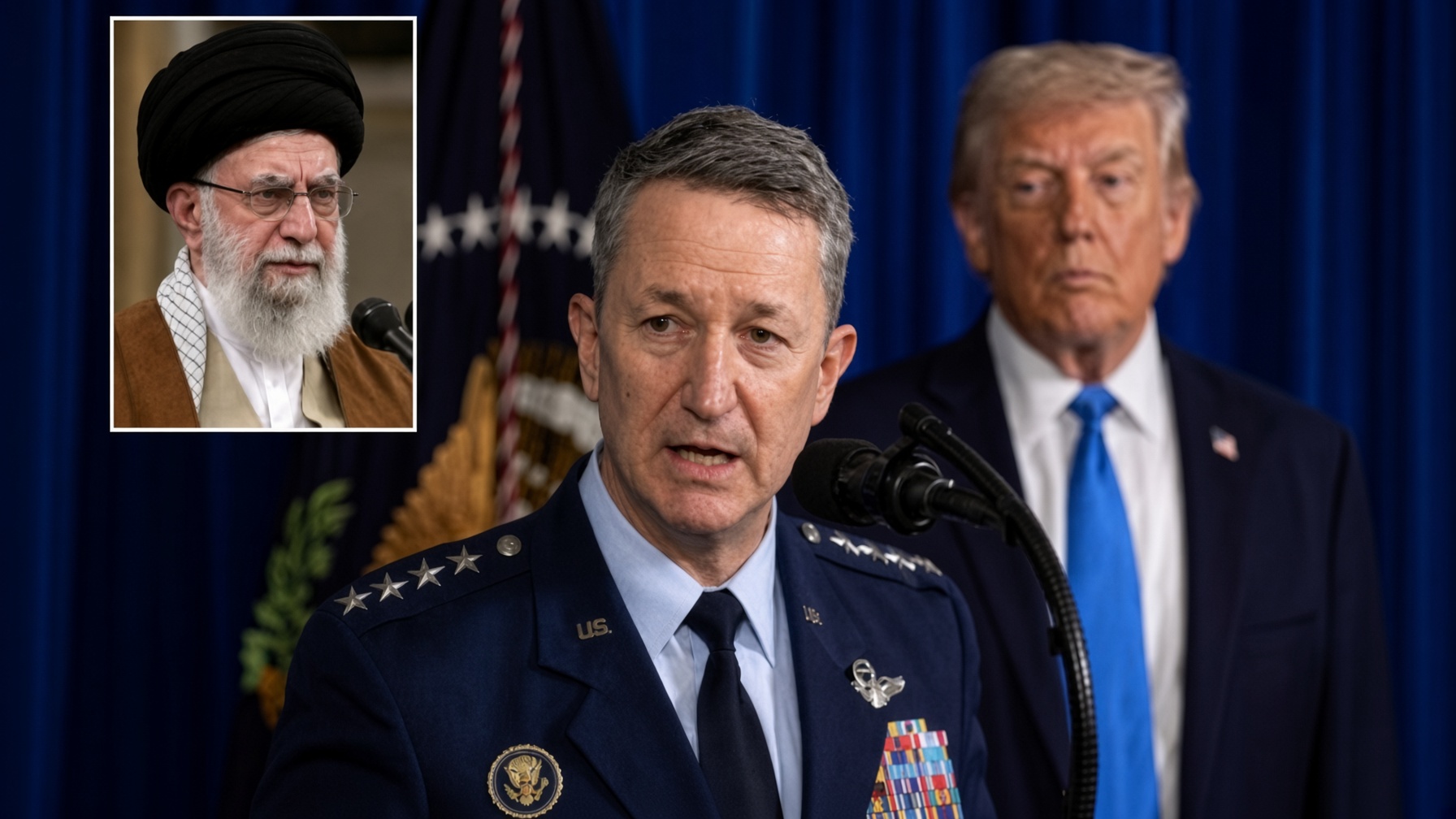
WASHINGTON — In one of the most significant joint combat operations in the Middle East in recent years, American and Saudi fighter jets executed a series of coordinated precision strikes across eastern Iraq on Tuesday evening, decimating Iranian-backed logistics hubs and weapons depots shortly after regional air defenses intercepted an incoming salvo of Iranian ballistic missiles.
The retaliatory strikes, confirmed by U.S. Central Command (CENTCOM), signal an aggressive evolution in Washington’s regional posture, characterized by immediate kinetic counterpunches carried out in direct military partnership with Gulf allies.
The Interception and the Rapid Reprisal
According to defense officials and operational disclosures released by CENTCOM, the confrontation erupted at approximately 5:45 p.m. Eastern, when the Islamic Revolutionary Guard Corps (IRGC) launched multiple ballistic missiles toward positions housing U.S. and coalition personnel across the region.
Integrated regional missile defense networks tracked the projectiles upon launch and successfully engaged the threats aloft. CENTCOM confirmed that every incoming missile was intercepted, resulting in zero American casualties and no reported infrastructure damage.
The response from coalition forces was nearly instantaneous. Within hours, American strike aircraft, operating in close tactical formation with the Royal Saudi Air Force, carried out sweeping precision strikes against several fortified positions across eastern Iraq.
CENTCOM stated the targeted sites served as critical logistical nodes and weapons storage hubs for IRGC-directed militias. Military officials tied the facilities directly to a major surge in hostile activity, indicating the installations were responsible for coordinating more than 30 uncrewed aerial vehicle (UAV) strikes launched against coalition outposts over the preceding 72 hours.
“U.S. forces remain vigilant, at a high state of readiness, and fully capable of defending our personnel and regional partners,” military officials said in a statement, emphasizing that the strikes were designed to degrade the operational architecture supporting proxy attacks.
An Unprecedented Proximate Campaign
The kinetic exchange follows months of relentless friction across the Iraqi and Syrian theaters. According to U.S. defense tracking data, Iran-aligned militias executed more than 600 attempted rocket, missile, and one-way drone strikes against American facilities, personnel, and allied commercial assets between February and April 2026 alone.
Defense analysts stress that the sheer volume of these attacks reflects an organized, centralized strategy orchestrated by the IRGC rather than rogue actions by local paramilitary cells. The strikes have systematically targeted American garrisons maintaining no-fly zones and counter-terrorism mandates, testing Washington’s operational redlines.
Tuesday’s escalation marked a pronounced shift: Tehran bypassed intermediary proxy forces to fire ballistic ordnance directly, while concurrently engaging in indirect diplomatic backchannels in hopes of securing sanctions relief.
Riyadh’s Kinetic Escalation Alongside Washington
A pivotal element of Tuesday’s operation was the conspicuous operational role played by Saudi Arabia. Historically, Riyadh has limited its participation in American-led counter-proxy strikes to intelligence sharing, airspace clearance, and basing permissions.
During Tuesday’s retaliatory sorties, however, Saudi multirole fighters flew combat runs shoulder-to-shoulder with American aircraft over eastern Iraq, delivering live munitions onto Iranian-directed command points.
The joint combat mission follows a series of drone and missile threats targeting Saudi domestic infrastructure and energy hubs. Security experts view the combined air campaign as a major milestone in Gulf security architecture, demonstrating a unified military front designed to counter Iranian regional dominance.
The joint strikes underscore a renewed coalition doctrine, signaling that Gulf capitals are prepared to employ direct kinetic force beyond their borders when shared economic and national security interests are jeopardized.
Deterrence Put to the Test
The exchange arrives days after President Donald Trump issued an explicit, public ultimatum warning that any attacks on maritime traffic or coalition personnel would trigger disproportionate strikes against critical Iranian assets and proxy infrastructure.
The IRGC’s ballistic launch was widely viewed by defense observers as a direct test of the administration’s willingness to follow through on that operational guidance.
The swift, dual-track outcome—complete defensive interception followed immediately by decisive offensive strikes—delivers an unambiguous message to Tehran. Senior military officials have maintained that the administration’s defensive posture is strictly non-negotiable and that future salvos will encounter an identical, calibrated escalation.
Conservative lawmakers and national security strategists welcomed the rapid response, contrasting it with past eras of diplomatic deference. Proponents argued that Tuesday’s operation established clear-cut tactical deterrence, moving away from protracted diplomatic appeals that adversaries historically exploited to expand uranium enrichment stockpiles and reinforce regional proxy footholds.
With CENTCOM maintaining enhanced readiness and coalition air patrols active along the Iraqi-Syrian border, Washington and Riyadh have signaled that ballistic threats will no longer be met solely with diplomatic demarches, but with immediate, collaborative force.



