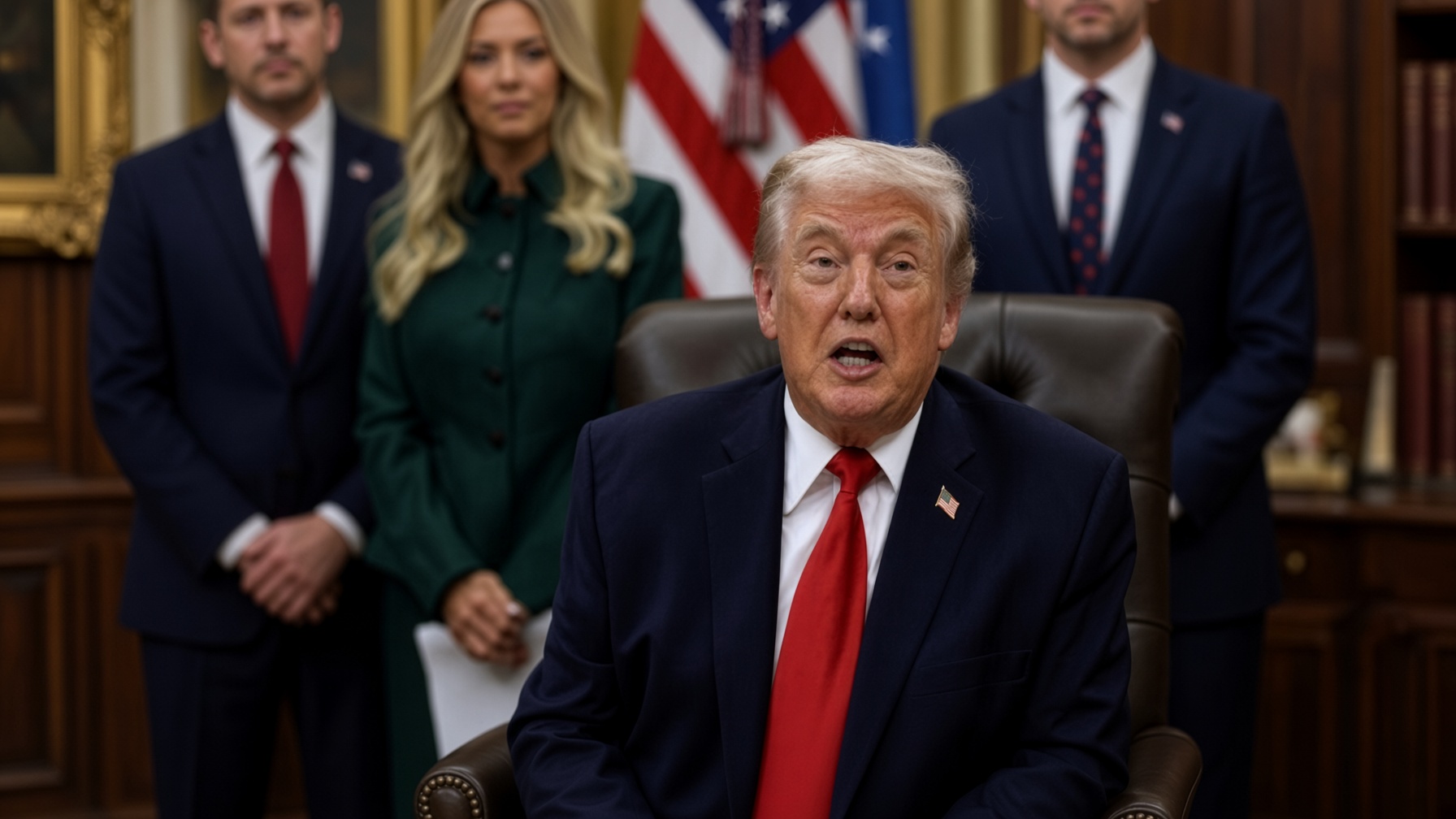
WASHINGTON — A barrage of weekend gun violence in Chicago has reignited an acrimonious national debate over urban crime, drawing a scathing rebuke from President Donald Trump alongside renewed calls for direct federal intervention into municipal law enforcement.
The bloodshed in the nation’s third-largest city—which left at least six people dead and 39 others wounded across dozens of separate incidents—arrives at an extraordinarily fraught moment for national crime policy. Even as the White House points to municipal turmoil as proof of failed local leadership, the official statistics used to measure urban safety face unprecedented skepticism following sweeping disciplinary actions inside Washington, D.C.’s police department over doctored crime records.
Mass Ambush Shatters Juneteenth Gathering
The grim centerpiece of Chicago’s violent weekend unfolded late Friday night on the city’s South Side, where a Juneteenth holiday observance turned into a chaotic mass casualty event.
According to preliminary findings from the Chicago Police Department, an SUV pulled alongside a crowd gathered outdoors in the Princeton Park neighborhood before multiple occupants leveled firearms and opened fire indiscriminately into the assembly.
Within seconds, 13 people were struck by gunfire before the vehicle accelerated away from the scene. First responders converged on the neighborhood, triaging victims on residential sidewalks before transporting them to regional Level 1 trauma centers throughout Cook County. While all 13 survived the initial hail of bullets, several victims remain hospitalized in critical condition.
Chicago Mayor Brandon Johnson condemned the ambush in a public statement, mourning the devastation visited upon a neighborhood gathering meant to honor historical liberation.
“I am heartbroken by the violence in Princeton Park,” Johnson stated. “What should have been a night of celebration and community reflection for Juneteenth was shattered by a horrific act of violence. My thoughts and prayers are with the victims and their loved ones.”
Detectives with the Area Two Detective Division confirmed that no suspects have been taken into custody, and ballistic evidence recovery remains ongoing across the multi-block crime scene.
Trump Demands Federal Troop Deployment
Reacting rapidly on Truth Social, Trump seized on the escalating casualty count to attack Illinois Democrats, framing the incident as emblematic of an administrative collapse in major American cities.
“Lots of Killing going on in Chicago,” Trump wrote as preliminary weekend counts mounted. “Why isn’t Governor Pritzker calling me for help. I could make Chicago a safe City in ONE MONTH, in ONE YEAR, it would be one of the safest!!! D.C. went from one of the worst, to one of the safest cities in the U.S.”
Trump pointed directly to his administration’s historic willingness to deploy federal law enforcement and National Guard units to municipal streets, positioning militarized intervention as an indispensable remedy for persistent gang violence and open-air drug markets.
Neither Illinois Governor JB Pritzker nor Mayor Johnson signaled any willingness to solicit federal military assets. Both leaders have consistently rejected unilateral federal intervention, warning that deploying federalized troops or outside agents onto city streets constitutes an unconstitutional usurpation of local governance that risks inflaming community tensions rather than resolving underlying drivers of violence.
D.C. Police Command Purged Over Manipulated Crime Metrics
While Trump invoked the nation’s capital as an exemplar of rapid pacification, the foundational integrity of the District’s public safety statistics collapsed under intense scrutiny on Capitol Hill.
More than a dozen high-ranking officials within the Metropolitan Police Department (MPD) face termination or severe disciplinary action following an exhaustive internal affairs inquiry into systemic falsification of official crime ledgers.
The investigation, amplified by findings delivered to the House Oversight Committee, established that supervisory personnel routinely recategorized serious felony violent crimes as low-level infractions inside municipal databases. By reclassifying aggravated assaults as simple batteries and downgrading armed carjackings and robberies to non-index property offenses, department officials systematically depressed reported violent crime totals.
The resulting personnel purge reached deep into the department’s command staff. Termination proceedings have been initiated against Second District Commander Tatjana Savoy and former Third District Commander Michael Pulliam, who had previously been sidelined after internal whistleblowers detailed widespread ledger adjustments. Multiple captains and supervisory lieutenants have also received disciplinary notices.
Congressional investigators concluded that pressure emanating from the department’s upper echelon under former Chief of Police Pamela Smith cultivated an environment where district commanders were tacitly incentivized to manipulate blotters to fabricate the impression of an historic crime drop across the District.
The disclosure carries sweeping legal and political repercussions. For months, local leaders and federal officials cited plummeting violent crime figures to assure the public that stabilization strategies were succeeding. Critics now argue that the manipulated data concealed persistent danger, misallocated vital patrol resources, and potentially skewed federal law enforcement grant awards.
The crisis deepened further when legal analyst Jeanine Pirro disclosed that federal prosecutors reviewing District arrest dockets had intervened to systematically upgrade numerous local charging documents, determining that local authorities had repeatedly undercharged violent felony offenders at intake.
Taken together, the carnage in Chicago and the data scandal in Washington have shattered the prevailing narrative surrounding urban public safety, leaving lawmakers and citizens caught between rising street violence and the institutional manipulation designed to hide it.



