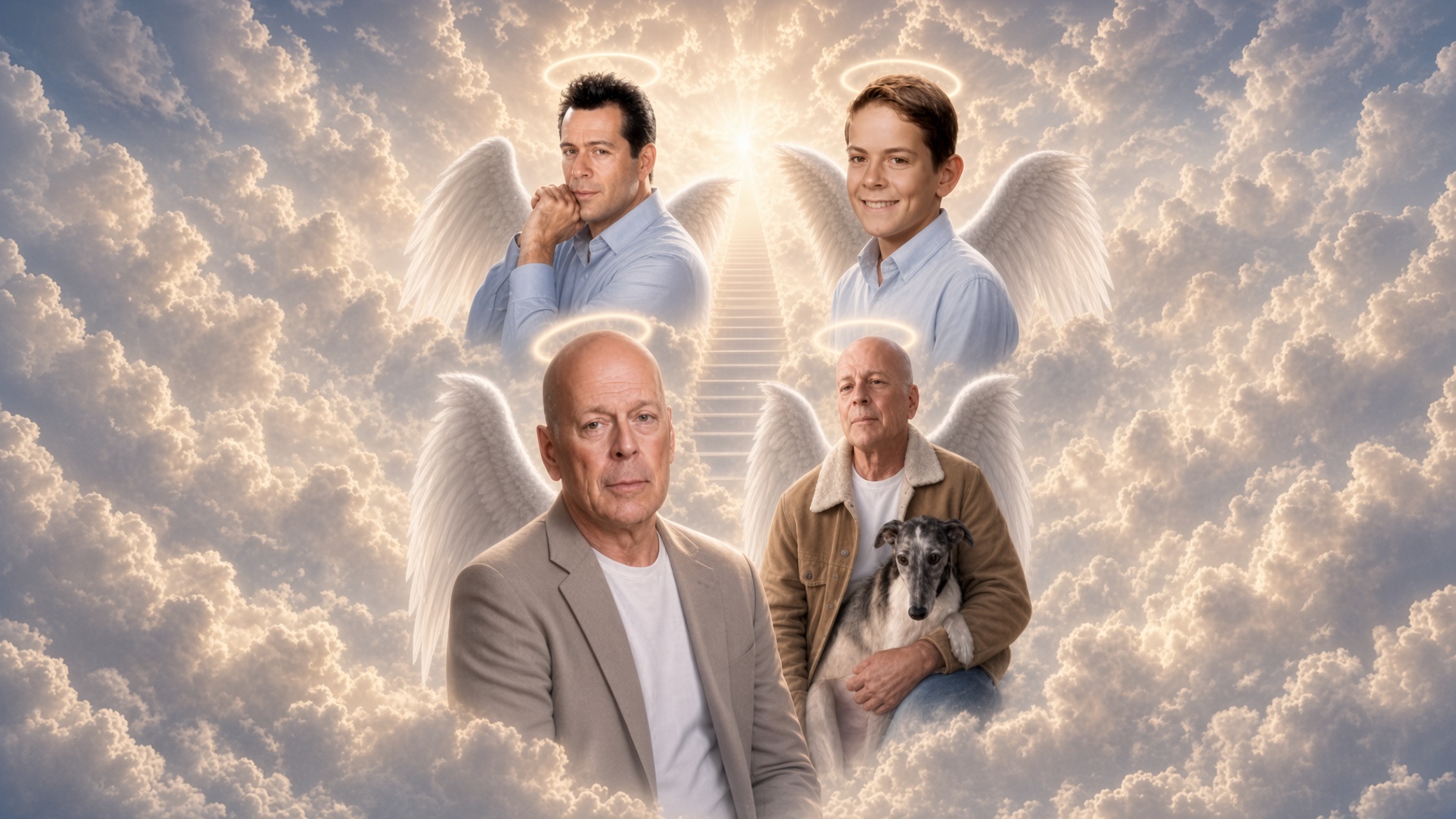
LOS ANGELES — Before Bruce Willis climbed through the air ducts of Nakatomi Plaza, Hollywood’s action cinema was ruled by stone-faced, invincible titans. Stars like Arnold Schwarzenegger and Sylvester Stallone projected an aesthetic of industrial invulnerability—bulletproof, hyper-muscular, and emotionally impervious. Willis shattered that mold. He gave audiences a new kind of protagonist: a man who bled, complained, limped, and ran out of bullets, but kept going anyway. He proved that true screen authority does not require superhuman detachment, but deep, recognizable humanity.
Today, Willis lives away from the cameras, navigating frontotemporal dementia (FTD), a progressive, incurable neurodegenerative disorder affecting the brain’s frontal and temporal lobes. His family first announced his retirement from acting in 2022 following an initial aphasia diagnosis; in early 2023, they confirmed his condition had progressed to FTD. The news provoked a profound outpouring of affection across the industry, sparking vital public awareness for a rare neurological condition while prompting a retrospective look at a career that fundamentally reshaped modern American cinema.
Willis first broke through into the cultural mainstream on the small screen in ABC’s Moonlighting. Playing opposite Cybill Shepherd, his David Addison was a whirlwind of screwball charisma, rapid-fire banter, and smirking irreverence. That deft blend of sharp comedic timing and authentic charm caught the eye of director John McTiernan, who took an enormous gamble by casting a television funnyman as the lead in 1988’s Die Hard.
As NYPD detective John McClane, Willis dismantled the invincible hero archetype in a single barefoot sprint over shattered glass. McClane was physically bruised, deeply terrified, and nursing a strained marriage. His cynical wit was not a parade of triumph, but a survival mechanism. The film became an instant touchstone of the genre, establishing a ground-level archetype that filmmakers still chase decades later.
Yet Willis refused the easy path of playing the same character in different uniforms. Throughout the 1990s and 2000s, he operated as a daring chameleon, moving fluidly between explosive studio tentpoles and boundary-pushing independent auteur pieces. In Quentin Tarantino’s Pulp Fiction, he traded McClane’s smirk for the haunted, quiet desperation of Butch Coolidge, an aging boxer refusing to throw a fight.
When director M. Night Shyamalan tapped him for The Sixth Sense, Willis delivered a masterclass in quiet interiority. As Dr. Malcolm Crowe, he dialed his explosive energy down to a whisper, carrying the weight of emotional disconnection and grief with gentle, understated grace. He reunited with Shyamalan for Unbreakable, offering an even more subdued portrait of David Dunn—a blue-collar security guard wrestling with alienation, sorrow, and extraordinary strength, communicating profound isolation through physical posture and heavy silence rather than dialogue.
His broader body of work remains astonishingly eclectic: the frantic temporal displacement of Terry Gilliam’s 12 Monkeys, the neon pulp excess of Luc Besson’s The Fifth Element, the bleak neo-noir grit of Sin City, and the high-concept science fiction of Rian Johnson’s Looper. Across every genre, Willis carried an unmistakable authenticity that bridged high-concept storytelling with working-class grit.
While Willis’s battle with frontotemporal dementia has ended his creative output and altered his daily life, his family’s transparent stewardship has shone a compassionate, necessary spotlight on the realities faced by millions of neurodegenerative caregivers worldwide.
On screen, his legacy remains untouched by time. The characters he built—sweating through undershirts, mumbling under their breath, carrying the weight of the world with an irreverent grin—remind cinema audiences of an essential truth: heroism is most compelling when it feels entirely, fragrantly human.