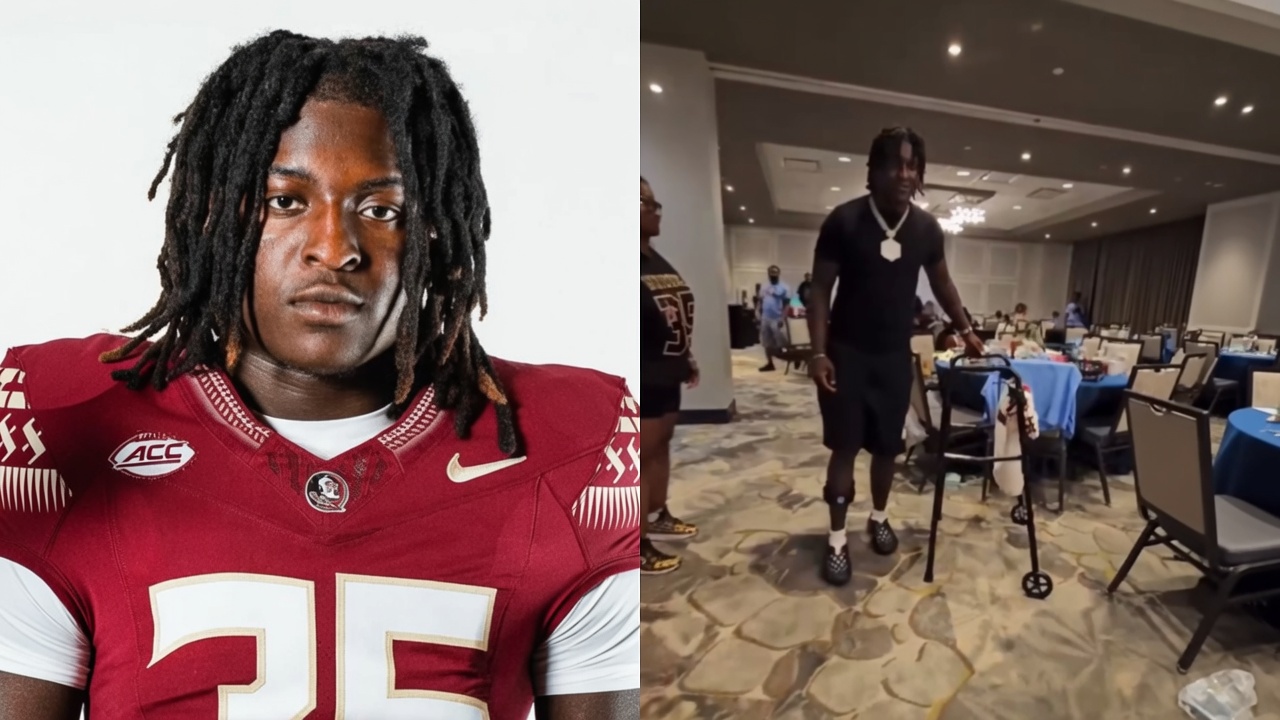
Florida State University linebacker Ethan Pritchard is continuing a remarkable and closely followed recovery journey nearly 10 months after a shooting that left him critically injured with a gunshot wound to the head. The incident placed him in life-threatening condition and required immediate emergency surgery, followed by an extended period of intensive care and neurological monitoring.
In the weeks and months following the attack, Pritchard underwent a highly structured rehabilitation program focused on restoring brain function, mobility, and basic motor skills. His treatment has included ongoing neurological therapy, physical rehabilitation, and specialized recovery support designed for severe traumatic brain injury cases. Medical professionals have described such recoveries as unpredictable and often slow, requiring sustained effort and continuous evaluation over time.
Throughout this period, his progress has been described as gradual but meaningful. Early stages of recovery reportedly involved regaining basic responsiveness and small motor improvements, followed by increasingly complex physical therapy aimed at rebuilding strength, balance, and coordination. Each stage has required consistent medical supervision due to the severity and sensitivity of his injury.
The case drew significant attention from the Florida State athletic community, college football fans, and broader public audiences, many of whom have followed his condition closely and expressed ongoing support. While the shooting was investigated by authorities at the time, detailed public information regarding the circumstances has remained limited, with officials releasing few specifics.
Despite the seriousness of his condition, recent developments have marked a significant milestone in his recovery. During a family celebration of his 19th birthday, Pritchard reportedly managed to take his first steps without the assistance of a walker. Medical observers and family members described the moment as both emotional and encouraging, representing a breakthrough in his long and uncertain rehabilitation process.
This achievement is being viewed as a major indicator of neurological and physical improvement, particularly given the nature of traumatic brain injuries and the challenges associated with restoring independent mobility. Specialists emphasize that such milestones often reflect not only physical healing but also significant progress in brain recovery and neuromuscular coordination.
While his rehabilitation is far from complete, Pritchard’s journey continues to be seen as one of resilience and determination. His recovery remains ongoing, with continued therapy expected in the months ahead. Still, each milestone—including his recent return to walking—underscores a steady and hard-earned path forward from a life-threatening injury that once carried deeply uncertain outcomes.