WASHINGTON — An aggressive surge of federal law enforcement assets across the District of Columbia has intensified a high-stakes national debate over municipal sovereignty, public safety, and civil liberties, exposing long-standing constitutional fault lines unique to the nation’s capital.
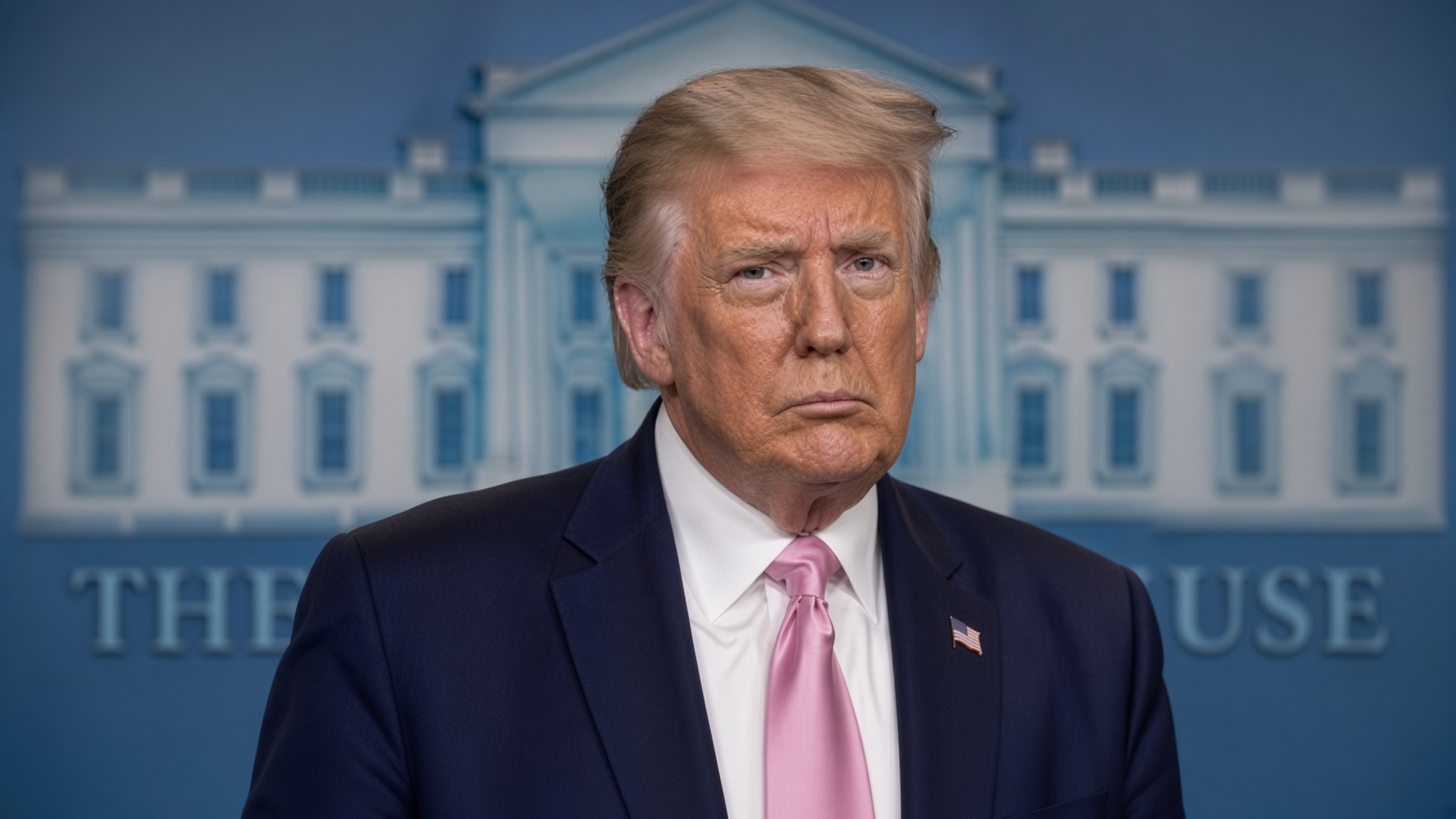
Directed by President Donald Trump, the initiative has mobilized a multifaceted array of federal agencies—including the Department of Justice, the Department of Homeland Security, and specialized federal tactical units—to assume an expanded, high-visibility role operating alongside the Metropolitan Police Department (MPD). The White House has framed the intervention as an urgent law-and-order imperative designed to suppress violent crime, disrupt narcotics distribution networks, and reinforce public order across federal enclaves and residential corridors alike.
The expanded federal footprint has drawn starkly contrasting reactions across District neighborhoods, sharply dividing residents between those who welcome the enhanced security cordon and those who view the surge as an alarming federal overreach that threatens local autonomy.
Conflicting Perceptions of Neighborhood Security
In several commercial corridors and transit hubs, business owners and neighborhood associations have commended the intensified tactical presence. Supporters maintain that years of elevated rates of carjackings, armed robberies, and public disturbances necessitated a decisive interagency intervention.
Advocates of the surge report an immediate deterrent effect, pointing to increased foot patrols, coordinated vehicular checkpoints, and the rapid dispersal of open-air illicit activity as evidence that visible enforcement restores municipal stability. From their vantage point, the deployment delivers critical manpower to an understaffed local police force struggling to maintain response times and secure high-density corridors.
Conversely, civil liberties litigators, community organizers, and legal aid societies argue that the operation has introduced an atmosphere of intimidation that disproportionately impacts marginalized and immigrant communities.
Advocacy groups warn that mixing federal immigration enforcement apparatuses with street-level municipal policing creates a severe chilling effect, discouraging vulnerable residents from reporting crimes, accessing municipal social services, or cooperating as witnesses in criminal investigations. Residents in heavily patrolled sectors have also reported confusion regarding jurisdictional boundaries, citing difficulty distinguishing between MPD officers answerable to local oversight and federal agents operating under distinct rules of engagement and use-of-force policies.
The Home Rule Dilemma and Constitutional Friction
The federal intervention has reignited fundamental questions regarding the District’s unique constitutional framework. Unlike the 50 states, where the Tenth Amendment reserves broad police powers to state governments, Washington operates under the direct constitutional purview of Congress pursuant to Article I, Section 8, Clause 17 of the U.S. Constitution.
While the District of Columbia Home Rule Act of 1973 granted the city an elected mayor and a 13-member council, the statute leaves local self-governance vulnerable to executive and legislative preemption. Under federal law, the president retains emergency statutory authority to federalize local police operations under specific conditions, while Congress maintains ultimate legislative veto power over District laws and budgetary allocations.
Municipal leaders and home rule advocates argue that bypassing local elected officials to deploy federal squads undermines the democratic self-determination of the District’s roughly 700,000 residents. Legal analysts observe that the current deployment tests the outer statutory limits of the Home Rule Act, renewing calls from congressional Democrats to advance D.C. statehood legislation to insulate the municipal government from federal command.
“The fundamental principle of self-governance is being challenged in our streets,” a District councilmember stated. “When external federal forces are sent to police our neighborhoods without local accountability or local consent, it reduces our elected municipal government to spectators in our own city.”
Oversight and Interagency Accountability
A primary concern among oversight panels centers on operational transparency. In contrast to municipal law enforcement, which is subject to local civilian complaint boards, Freedom of Information Act disclosures, and municipal council oversight, federal protective agencies operate under separate administrative review structures that offer limited avenues for direct community redress.
Civil rights litigators note that deploying federal tactical units to conduct routine urban policing creates critical operational and legal vulnerabilities:
Use-of-Force Disparities: Federal tactical personnel often operate under operational doctrines engineered for facility perimeter defense and border interdiction rather than community-oriented de-escalation in dense, multi-family residential neighborhoods.
Body-Worn Camera Access: Discrepancies between MPD’s mandatory body-camera disclosure policies and the more restrictive evidentiary release standards of federal agencies complicate transparency following controversial or lethal encounters.
Accountability Channels: Pursuing civil rights claims against federal agents under the qualified immunity doctrine presents substantially higher procedural hurdles in federal court than claims brought against municipal officers under 42 U.S.C. Section 1983.
Furthermore, legal watchdogs warn that the ambiguous lines of command risk creating operational blind spots during mass demonstrations, where tactical decisions made by federal units could clash with local policing strategies focused on crowd mitigation and speech facilitation.
A Defining Test for the Capital
As interagency operations continue throughout the capital, policymakers, congressional committees, and independent observers are monitoring the deployment’s long-term implications. Proponents contend that federal authority in the federal district is paramount and that preserving federal security infrastructure requires stable, crime-free surrounding neighborhoods.
Opponents, however, maintain that transforming the capital into an armed federal garrison corrodes the civil rights of its citizens while offering only temporary suppression rather than long-term community solutions.
The standoff extends far beyond statistical fluctuations on local crime blotters, representing a fundamental constitutional test over how the nation’s capital balances aggressive public safety measures with the preservation of civil liberties and the fragile framework of local democracy.