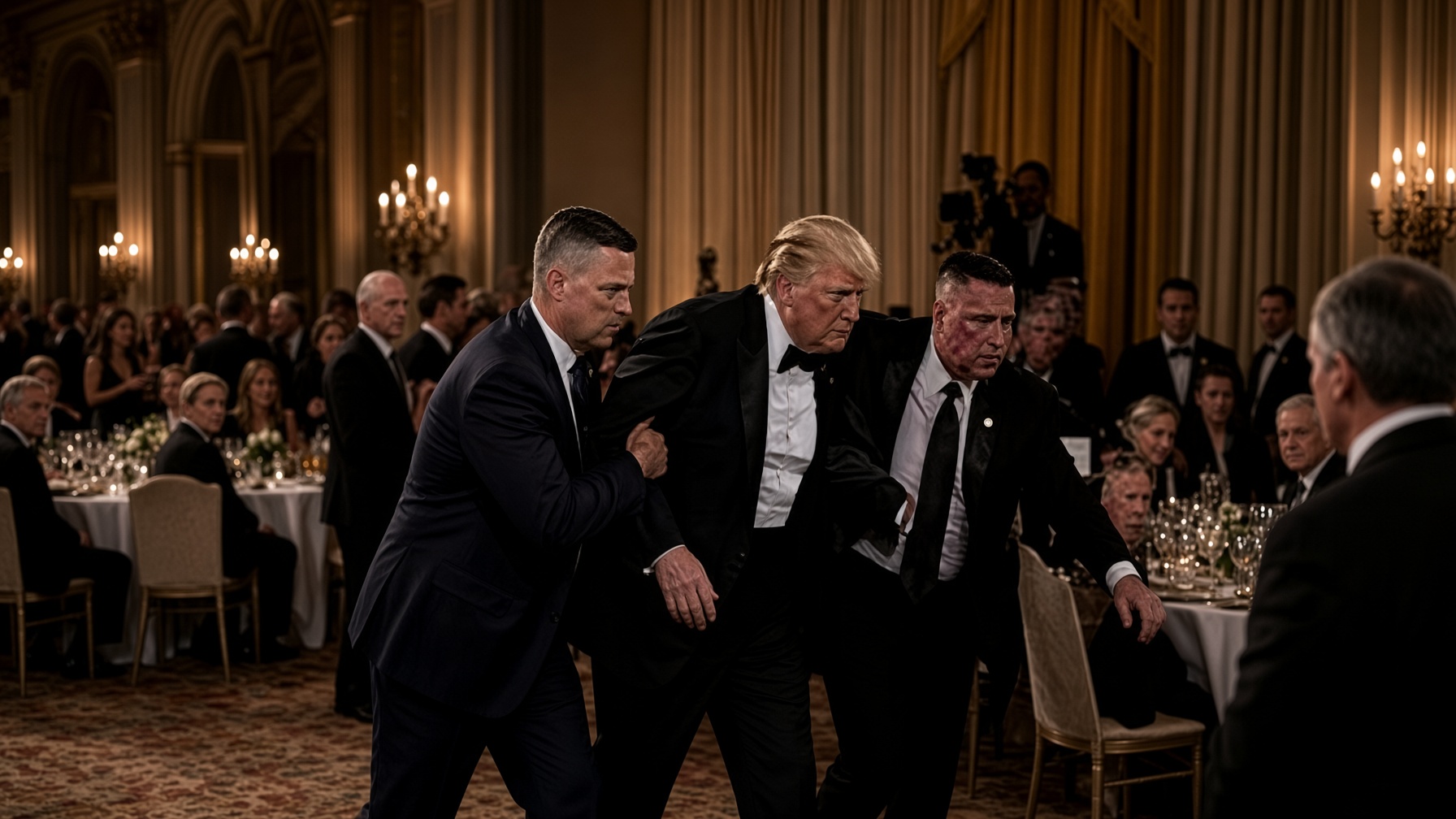
WASHINGTON — A wave of alarm reverberated across digital platforms following the rapid circulation of unverified claims alleging that Donald Trump had been “shot again” in Washington, D.C. The sensational assertions spread swiftly across major social media networks, triggering public anxiety, financial market jitters, and a surge of conflicting reactions before federal authorities and news organizations dismantled the rumor as entirely baseless.
Despite the viral reach of the posts, no law enforcement agency, municipal emergency department, or healthcare facility reported any security breach or shooting incident involving Trump. The United States Secret Service, which maintains 24-hour executive protection details and provides immediate operational notifications during genuine emergencies, issued no alert. Major domestic and international news agencies—which mobilize breaking news coverage within seconds of any credible threat against a current or former president—found no underlying factual basis for the reports.
Federal law enforcement sources subsequently confirmed that the day’s activities proceeded without disruption and that no assassination attempt or gunfire had occurred anywhere in the capital region or at Trump properties nationwide.
Anatomy of a Digital Disinformation Cycle
Digital forensic analysts tracing the trajectory of the claim found that the rumor gained traction through a familiar mix of recycled multimedia, manipulative headlines, and engagement-driven algorithmic amplification.
The falsehood appeared to originate within obscure digital message boards and non-credentialed social accounts before migrating onto mainstream platforms. Several viral posts repurposed archival video footage from past security scares, pairing the clips with urgent, present-tense captions framed as “breaking news.” Automated bot networks and engagement-farming aggregators quickly amplified the narrative, leveraging inflammatory phrasing to maximize retweets, shares, and algorithmic visibility.
Media researchers noted that the rumor exploited the heightened sensitivities surrounding political violence in the United States. In an information ecosystem where sensational claims routinely outrun official verification, bad-faith actors frequently capitalize on the initial vacuum to capture public attention, drive traffic to monetization channels, or foster political discord.
Context and Security Realities
The viral claims gained unearned credibility largely because of genuine, well-documented historical threats against Trump. In July 2024, Trump was wounded in an assassination attempt during an open-air campaign rally in Butler, Pennsylvania—an attack that claimed the life of a spectator, critically injured two others, and initiated sweeping congressional inquiries into executive protection standards. Later that year, federal authorities arrested a suspect in Florida following a thwarted rifle ambush along the perimeter of Trump International Golf Club in West Palm Beach.
Those authentic incidents prompted lasting overhauls in federal protection doctrines, including expanded perimeter cordons, advanced counter-unmanned aerial systems (C-UAS), and reinforced protective details.
However, security officials stressed that the historical existence of actual threats does not validate modern, unsourced online chatter. Protective agencies continuously monitor potential threat vectors, and any genuine incident triggers immediate, multi-agency containment protocols that cannot remain hidden from the public or the press.
The Real-World Costs of Viral Falsehoods
National security experts and public safety officials caution that fabricated breaking news events present serious real-world consequences beyond online noise:
Distraction of Emergency Services: Law enforcement dispatchers, local police precincts, and agency public affairs offices are frequently inundated with media inquiries and panicked citizen calls, drawing manpower and resources away from authentic emergencies.
Economic and Market Volatility: Algorithmic trading systems and financial desks often react to geopolitical and executive security rumors, causing brief, damaging swings in currency and equity markets before corrections occur.
Erosion of Public Trust: Repeated false alarms undermine general confidence in credible news reporting and desensitize the public to legitimate warnings during real-time crises.
Political analysts emphasize that prominent figures remain prime targets for digital disinformation campaigns, particularly during volatile political cycles. Headlines engineered to generate instantaneous shock are explicitly designed to bypass the critical thinking of readers, encouraging rapid reposting before basic verification can take place.
Government spokespersons and counter-disinformation advocates continue to urge internet users to cross-reference sensational claims against credentialed newsrooms, verified agency communiqués, and primary on-the-record documentation before amplifying unvetted content. The day’s events underscore that in a fractured media landscape, critical skepticism remains the most effective defense against manufactured panic.