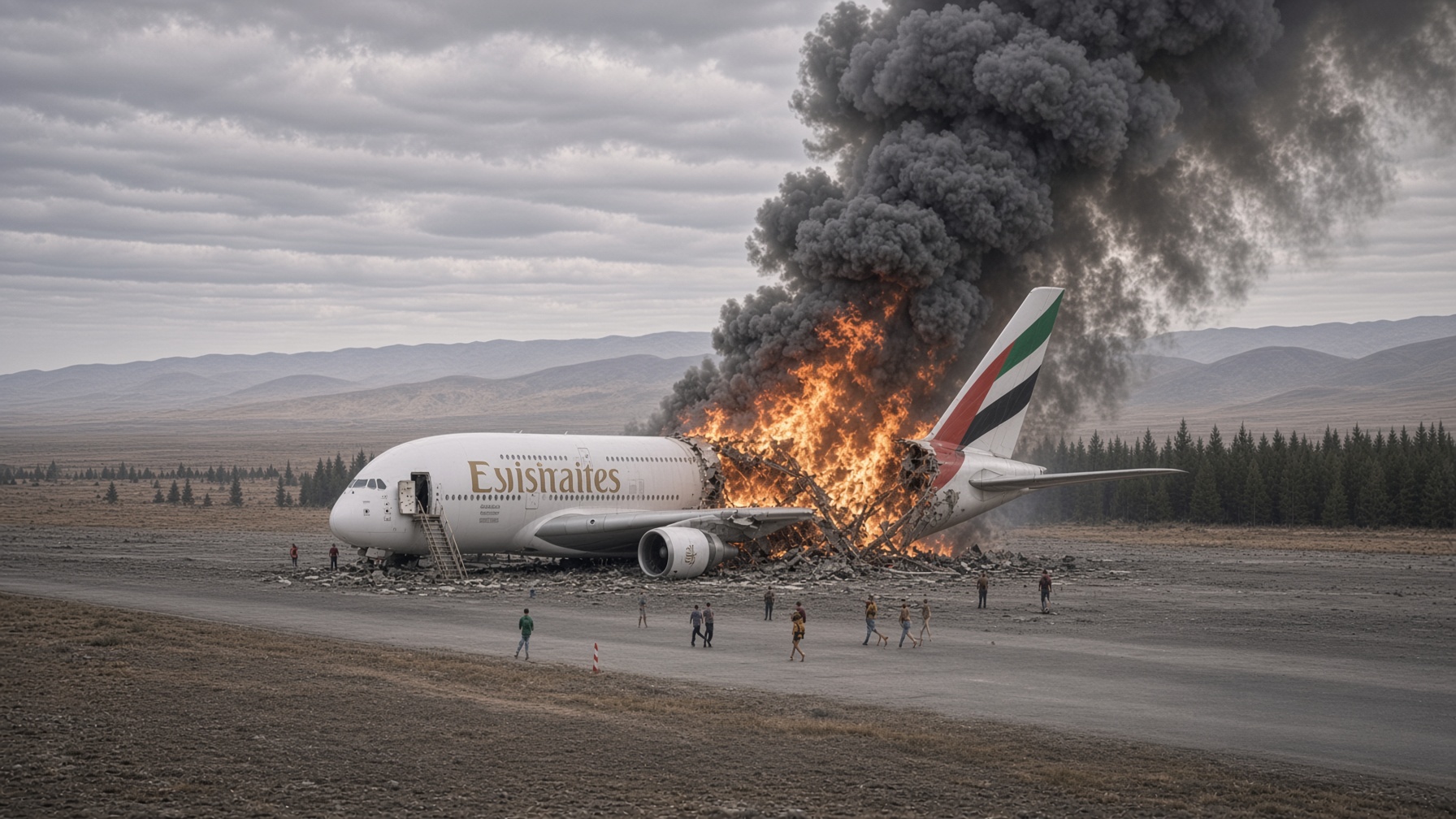
✈️🔥 Emirates Flight EK521 Crash-Lands in Dubai: All 300 Escape Burning Plane as Firefighter Dies
DUBAI, United Arab Emirates — A terrifying aviation emergency at Dubai International Airport turned a routine international journey into a desperate fight for survival on August 3, 2016, when Emirates Flight EK521 crash-landed and burst into flames. All 300 people aboard the Boeing 777 — 282 passengers and 18 crew members — escaped the burning aircraft, but the dramatic rescue operation came at a tragic cost: a firefighter lost his life while responding to the blaze.
The incident became one of the most widely reported aviation emergencies of 2016, drawing international attention to aircraft evacuation procedures, airport emergency preparedness, and the dangers faced by first responders confronting a major aircraft fire.
⚠️ Routine Flight Ends in Terrifying Landing Emergency
Flight EK521 was operating a scheduled service from Thiruvananthapuram, India, to Dubai. The journey had appeared routine until the aircraft approached its destination and encountered a serious landing emergency.
At approximately 12:45 p.m. local time, the aircraft touched down at Dubai International Airport. The landing quickly developed into a major incident, and the aircraft came to rest on the runway as emergency crews mobilized.
Thick smoke and flames soon engulfed the aircraft, prompting airport authorities to activate emergency response procedures. Firefighters, rescue personnel, and airport teams rushed to the scene as the situation deteriorated.
For passengers inside the cabin, the sudden emergency was a frightening and disorienting experience. What should have been the final moments of an ordinary flight instead became a race to escape before the fire could spread further.
With 300 people aboard, the immediate priority was clear: evacuate the aircraft as quickly and safely as possible.
🚨 Desperate Evacuation Saves Every Passenger and Crew Member
Cabin crew members directed passengers toward emergency exits while evacuation slides were deployed. Amid alarms, smoke, and urgent instructions, passengers began leaving the aircraft as quickly as conditions allowed.
Aircraft evacuations are carefully designed to move occupants outside within a limited period, even when some exits cannot be used. Cabin crew training, clear commands, and passengers following instructions can make the difference between a successful escape and a catastrophic outcome.
Investigators and aviation safety experts have repeatedly emphasized the importance of leaving personal belongings behind during an emergency evacuation. Retrieving luggage can block narrow aisles, delay other passengers, and expose people to additional danger.
In the Dubai incident, all 300 occupants managed to escape the aircraft. The successful evacuation was the defining aspect of the emergency, particularly given the severity of the fire that followed.
Images of the burning Boeing 777 circulated around the world, showing extensive damage to the aircraft and the scale of the emergency response. The plane was ultimately destroyed, bringing an abrupt end to its service.
Although the evacuation prevented fatalities among passengers and crew, the incident was not without consequences. Some passengers reportedly required medical attention, and airport operations were significantly disrupted as emergency teams worked to control the blaze.
🕯️ Firefighter’s Death Casts a Shadow Over the Rescue
The survival of everyone aboard was an extraordinary outcome, but the emergency also claimed the life of a firefighter involved in the response.
The firefighter died while carrying out duties at the scene, underscoring the risks faced by emergency personnel who rush toward danger while others are trying to escape it.
Aircraft fires present particularly difficult conditions for rescue teams. Aviation fuel can sustain intense flames, while heat, smoke, damaged structures, and the possibility of further hazards can make firefighting operations exceptionally dangerous.
Airport firefighters receive specialized training to respond to aircraft emergencies, including procedures designed to suppress fires and create safe evacuation routes. Even with that preparation, rapidly changing conditions can place responders in life-threatening situations.
The firefighter’s death became a sobering reminder that successful rescue operations can come at a personal cost to those responsible for protecting others. While hundreds of passengers and crew members escaped, one of the people working to manage the emergency did not return home.
🔎 Investigation Focuses on the Circumstances of the Crash Landing
The incident prompted detailed scrutiny of the aircraft’s final approach, landing sequence, and the events that followed touchdown.
Weather conditions and the possibility of wind shear were among the factors discussed in coverage of the accident. Wind shear involves a sudden change in wind speed or direction and can affect an aircraft’s performance during critical stages of flight, including landing.
However, establishing the precise cause of an aviation accident requires evidence rather than speculation. Investigators typically examine flight data recorder information, cockpit voice recordings, aircraft systems, maintenance records, meteorological conditions, and other technical evidence to reconstruct the sequence of events.
Any explanation involving wind shear, landing gear, or another mechanical or environmental factor must be assessed against the findings of the official investigation.
Beyond the cause of the accident itself, the emergency also highlighted the importance of understanding how quickly a fire can develop after an aircraft comes to a stop and how evacuation procedures perform under real-world conditions.
🛫 A Lasting Reminder of Aviation Safety and Sacrifice
The crash landing of Emirates Flight EK521 remains a striking example of an aviation emergency in which every passenger and crew member survived despite the destruction of the aircraft.
The incident demonstrated the importance of coordinated action among pilots, cabin crew, airport authorities, and emergency responders. It also reinforced the need for regular training, effective communication, properly maintained safety systems, and rapid firefighting capabilities at major international airports.
For the passengers, the experience was a frightening reminder of how quickly an ordinary journey can become life-threatening. For the firefighter who died, the tragedy underscored the risks accepted by those who respond when disaster strikes.
Ultimately, the Dubai emergency left behind a powerful lesson: preparation and decisive action can save hundreds of lives, but the people who protect others during a crisis may face extraordinary dangers themselves.
The aircraft was lost, and a firefighter’s life was tragically cut short. Yet the escape of all 300 people aboard remains the central outcome of an incident that continues to illustrate both the importance of aviation safety and the human cost of emergency response.