⚖️ BREAKING: Supreme Court Issues 6–3 Ruling Restricting Corporate Liability in Overseas Human Rights Cases
WASHINGTON — The U.S. Supreme Court has delivered a significant ruling limiting the legal avenues available to foreign plaintiffs seeking compensation from American companies over alleged human rights abuses committed abroad. The decision marks an important development in international human rights litigation, reinforcing restrictions on the use of U.S. courts to hold businesses accountable for conduct connected to foreign governments.
In Cisco Systems, Inc. v. Doe (No. 24-856), the court ruled 6–3 that federal judges cannot create new causes of action under the Alien Tort Statute (ATS) based on international legal norms. The majority also concluded that the Torture Victim Protection Act (TVPA) does not authorize the type of aiding-and-abetting liability asserted in the case.
The ruling represents a major legal victory for Cisco Systems and could have broader implications for multinational corporations facing allegations that their products or services helped foreign authorities carry out serious human rights violations.
🔎 Lawsuit Centered on Alleged Surveillance in China
The case originated with a lawsuit filed by anonymous practitioners of Falun Gong, a spiritual movement that Chinese authorities have banned and subjected to a longstanding campaign of suppression.
The plaintiffs alleged that Chinese officials used surveillance, arbitrary detention, forced labor and torture against members of the movement. They argued that Cisco Systems, a California-based technology company, and several of its senior executives knowingly helped develop systems that enabled Chinese authorities to identify and monitor Falun Gong practitioners.
According to the allegations, Cisco supplied customized hardware and software associated with China’s Golden Shield initiative, a public-security program intended to support law enforcement and surveillance operations.
The plaintiffs maintained that certain technological systems were adapted to help authorities identify, track and catalog individuals associated with Falun Gong, potentially facilitating their detention and subsequent mistreatment.
They argued that the company’s alleged assistance made it legally responsible for contributing to abuses committed by Chinese authorities.
However, the claims were allegations presented in court, not findings that Cisco had committed the human rights violations described in the lawsuit.
A federal district court initially dismissed the case, but the Ninth Circuit Court of Appeals subsequently revived it, allowing the plaintiffs to pursue claims under the ATS and TVPA. The Supreme Court’s ruling rejects the legal theories at issue and reverses that outcome.
⚖️ Majority Says Congress Must Define Liability
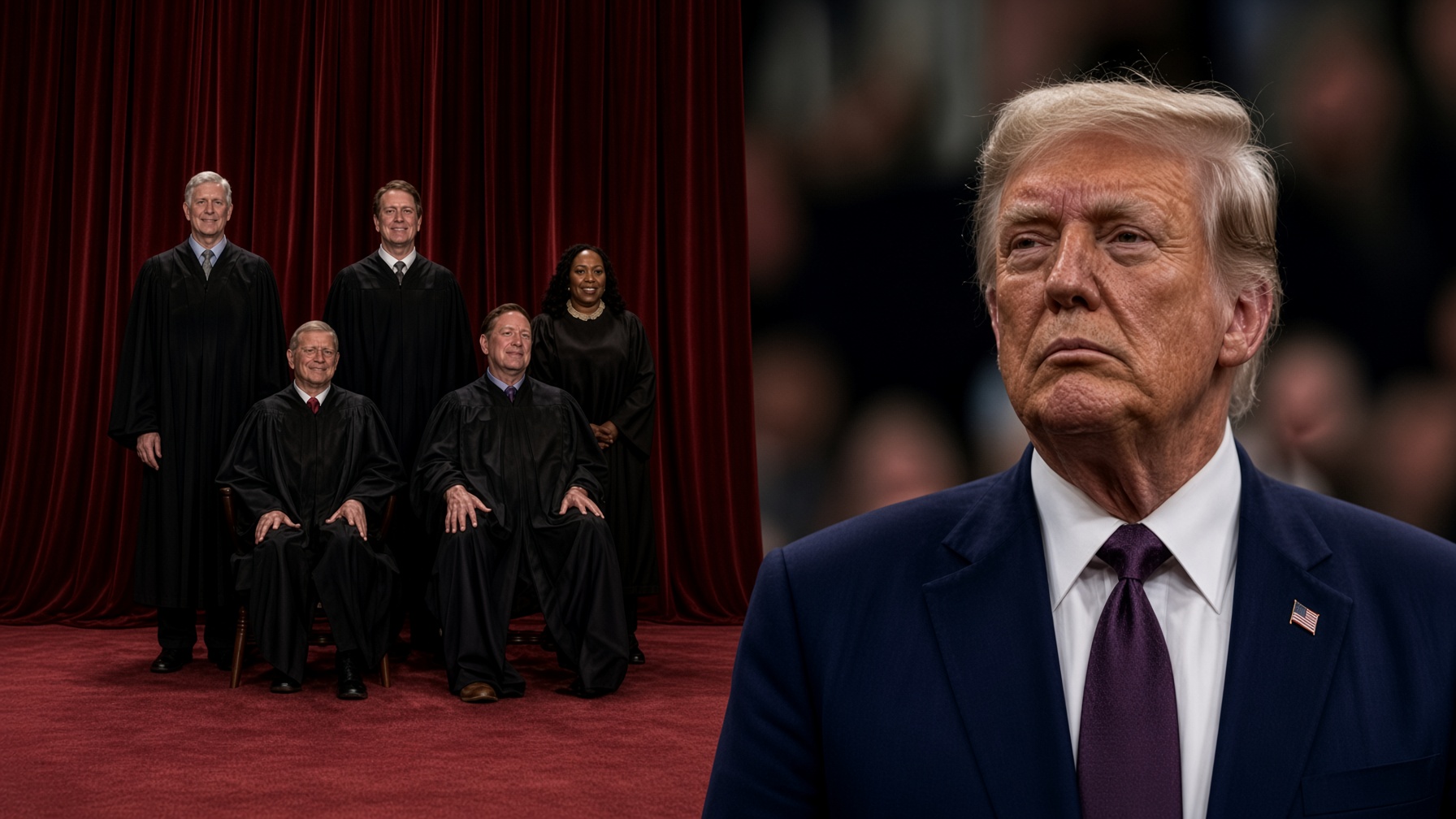
Justice Amy Coney Barrett authored the majority opinion, joined by Chief Justice John Roberts and Justices Clarence Thomas, Samuel Alito, Neil Gorsuch and Brett Kavanaugh.
The majority emphasized the separation of powers, arguing that establishing new legal rights and authorizing monetary damages are primarily responsibilities for Congress rather than federal judges.
Enacted in 1789, the Alien Tort Statute gives federal courts jurisdiction over certain civil claims involving violations of international law. However, the court stressed that the statute does not automatically create a broad system of liability for every alleged international human rights violation.
The justices also examined the Torture Victim Protection Act of 1991, which provides a civil remedy against individuals responsible for torture and extrajudicial killings under specified circumstances.
According to the majority, the statute does not expressly authorize the aiding-and-abetting liability asserted by the plaintiffs. The court declined to expand the law to cover that theory without sufficient authorization from Congress.
The decision reflects broader judicial concerns about allowing U.S. courts to adjudicate disputes involving conduct occurring primarily overseas. Such cases can raise complicated questions involving foreign sovereignty, diplomatic relations and the limits of American judicial authority.
🏢 Businesses Gain Legal Clarity
The ruling could influence how multinational corporations evaluate legal exposure when supplying technology, equipment and services to foreign governments accused of systematic abuses.
Companies operating internationally have faced lawsuits alleging that their commercial activities contributed to surveillance, persecution or other human rights violations. Supporters of the decision argue that businesses should not automatically face American litigation simply because foreign authorities allegedly misuse their products.
They also maintain that Congress, rather than the judiciary, should determine when companies or individuals can be held financially responsible for assisting misconduct abroad.
Human rights advocates, however, warn that the decision could make it more difficult for victims to obtain compensation when alleged abuses involve private companies that provide technological or logistical support.
The dispute highlights a central challenge in modern international commerce: determining when ordinary business activity crosses the line into legally actionable assistance to serious human rights violations.
🗣️ Dissent Raises Concerns About Victims’ Rights
The court’s three liberal justices opposed the majority’s approach, although they differed in their reasoning.
Justice Sonia Sotomayor, joined by Justice Elena Kagan, dissented over the interpretation of the Torture Victim Protection Act. Sotomayor argued that established principles of tort law support liability for individuals who intentionally assist acts of torture, even when they do not personally carry out the physical abuse.
She warned that restricting such claims could weaken the statute’s ability to provide meaningful remedies for victims.
Justice Ketanji Brown Jackson also wrote separately, concurring in part and dissenting in part, with Kagan joining her opinion. Jackson expressed concerns about narrowing the TVPA’s reach and the consequences for individuals seeking legal relief after suffering torture.
The dissenting justices raised broader questions about whether those accused of knowingly facilitating severe abuses should escape civil liability simply because they were not the direct perpetrators.
🌎 A New Chapter in Human Rights Litigation
The ruling builds on earlier Supreme Court decisions that narrowed the scope of human rights lawsuits under the Alien Tort Statute, including Sosa v. Alvarez-Machain in 2004, Kiobel v. Royal Dutch Petroleum Co. in 2013 and Nestlé USA, Inc. v. Doe in 2021.
For multinational businesses, the decision provides additional guidance on the limits of liability under the statutes considered by the court. For human rights organizations, it raises renewed concerns about the availability of compensation for victims whose alleged mistreatment involves corporate assistance across international borders.
The ruling’s practical impact will depend on how lower courts apply its reasoning in future cases and whether Congress chooses to enact legislation addressing assistance in overseas human rights abuses.
Ultimately, the decision reinforces the majority’s position that expanding federal civil liability in international human rights cases requires clear legal authorization from Congress, rather than new causes of action created by judges.