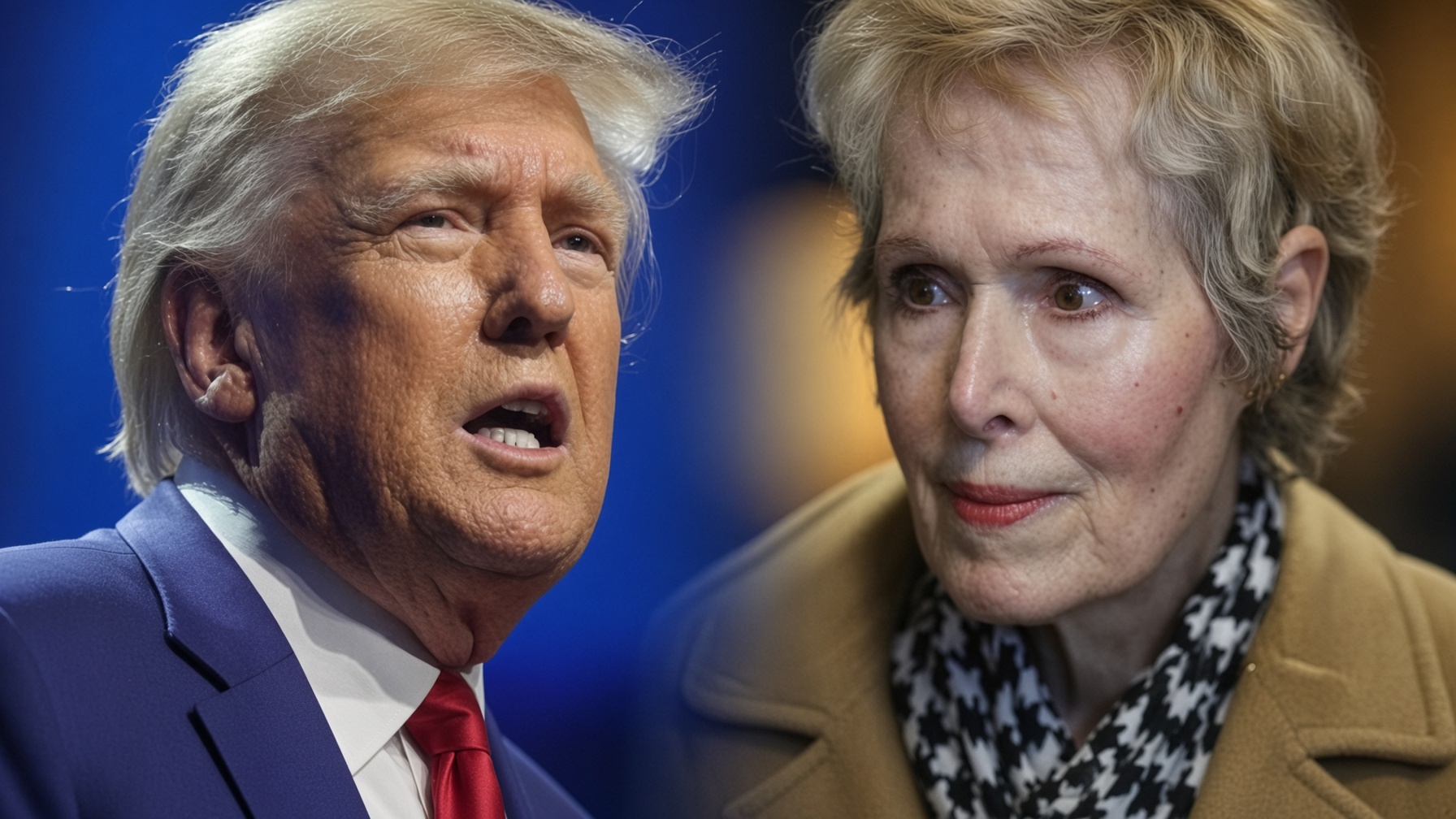
WASHINGTON — President Donald Trump’s long-running legal battle with writer E. Jean Carroll has returned to the spotlight after the Supreme Court took an unusual procedural step involving his request for a rehearing.
Trump’s legal team is seeking another review of the case, arguing that the jury was improperly allowed to consider evidence involving other women who had made allegations against him, as well as the 2005 Access Hollywood recording. The defense maintains that the evidence unfairly influenced the jury’s assessment of Carroll’s allegations.
The development has renewed debate over the boundaries of evidence in high-profile civil cases and whether testimony concerning unrelated allegations should be used to establish a pattern of behavior.
Questions Surrounding Carroll’s Legal Funding
Another issue raised in the material involves the financing of Carroll’s litigation. Reid Hoffman, the LinkedIn co-founder and prominent Democratic donor, reportedly provided financial support through American Future Republic, a nonprofit connected to the case.
The material claims that approximately $7 million was provided to Carroll’s legal team and that Hoffman’s involvement became public shortly before the first trial.
It also alleges that the Justice Department is examining whether Carroll gave false testimony regarding who was financing her legal expenses. However, those allegations remain disputed, and the existence or outcome of any investigation should not be interpreted as proof that perjury occurred.
A federal appeals court reportedly characterized Carroll’s failure to identify the funding source as something she could have “plausibly forgotten,” a conclusion that has itself become part of the political debate surrounding the case.
The Underlying Allegations
Carroll accused Trump of sexually assaulting her in a dressing room at Bergdorf Goodman in Manhattan in the mid-1990s. Trump has consistently denied the allegation and said he did not know Carroll.
A photograph showing Trump and Carroll together at a 1987 NBC charity event later became significant during the litigation. Carroll acknowledged that the encounter was brief, while Trump argued that the photograph did not establish that he knew her personally or remembered meeting her decades later.
The case ultimately went before a federal jury, which found Trump liable for sexual abuse and defamation and awarded Carroll substantial damages. The verdict was subsequently upheld on appeal.
Trump’s Supreme Court Argument
Trump’s current petition focuses heavily on the evidence presented to the jury.
His attorneys argue that testimony from other accusers concerning allegations from different periods, along with the Access Hollywood recording, should not have been admitted to establish a pattern of conduct in Carroll’s case.
Carroll’s legal team has argued that her own testimony was sufficient to support the verdict and that the additional evidence was properly admitted.
The dispute therefore raises a broader legal question: how should courts balance potentially relevant pattern evidence against the risk that jurors could be influenced by allegations unrelated to the specific claim being considered?
A Case With Broader Political Implications
The litigation has also become part of a larger political debate over the treatment of sexual-assault allegations involving prominent public figures. Supporters of Trump argue that he has faced an unfair legal process, while Carroll’s supporters maintain that the jury verdict and subsequent appellate ruling should stand.
The case has continued to attract attention partly because of Trump’s political prominence and partly because of the unusual procedural developments surrounding his Supreme Court petition.
For now, the legal battle remains unresolved. The Supreme Court’s handling of the rehearing request does not itself constitute a ruling in Trump’s favor, and the allegations concerning Carroll’s testimony and legal funding remain matters of dispute.
As the case moves forward, the central issues will remain whether the lower courts properly handled the evidence presented to the jury and whether Trump will receive another opportunity for Supreme Court review.
The controversy surrounding the case is unlikely to fade soon, ensuring that Trump, Carroll and the legal questions surrounding their long-running dispute will remain under intense national scrutiny.