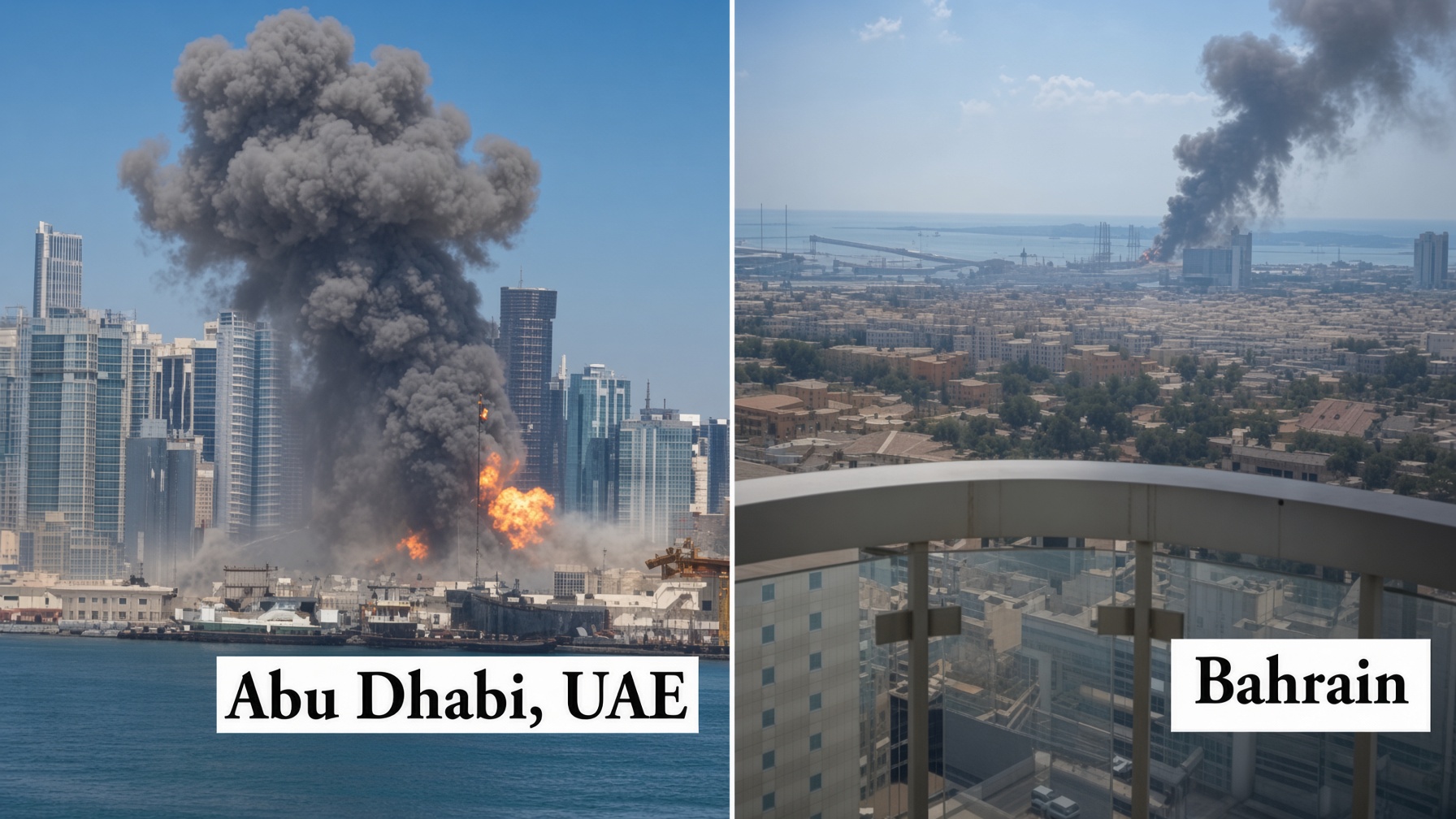
WASHINGTON — Tensions between the United States and Iran have sharply escalated after American forces struck Iranian rocket launchers on Larak Island near the Strait of Hormuz, prompting Tehran to launch retaliatory attacks against U.S. military positions in Jordan and claim operations against American assets in the United Arab Emirates.
The U.S. strikes on Sunday marked the first publicly acknowledged American military action against Iran in roughly a month. U.S. Central Command said the operation targeted two Iranian launchers associated with the Islamic Revolutionary Guard Corps after American forces detected preparations to deploy rockets and sea mines into the strategically important waterway.
Iran condemned the attack as an act of aggression and vowed to respond. The IRGC subsequently announced missile and drone operations against U.S. military facilities in Jordan, describing the strikes as retaliation for the Larak Island attack.
Jordan Intercepts Iranian Missiles
Jordanian authorities said their air-defense systems intercepted eight missiles that entered the country’s airspace. Officials did not report injuries at the targeted U.S. facilities.
Iran claimed its strikes caused significant damage to American military infrastructure, but those assertions have not been independently verified. The conflicting accounts highlight the difficulty of establishing the full extent of damage during an active military confrontation.
The attacks represent a significant development because Jordan has attempted to avoid becoming a direct participant in the U.S.-Iran conflict while continuing to host American military assets.
UAE Also Pulled Into Crisis
The United Arab Emirates was also drawn into the latest escalation.
Iranian forces claimed to have launched dozens of drones toward U.S. military assets at Al Minhad Air Base. However, UAE authorities rejected the claim that the base itself had been attacked. The UAE Ministry of Defence separately reported intercepting an Iranian-origin drone over its territorial waters.
The competing claims have added another layer of uncertainty as regional governments attempt to prevent the confrontation from spreading beyond Iran and U.S. forces.
Strait of Hormuz Remains Central
At the center of the latest confrontation is the Strait of Hormuz, one of the world’s most important energy and shipping corridors.
Washington says the Larak operation was intended to prevent Iranian forces from deploying sea mines that could threaten commercial shipping. Iran, meanwhile, has continued to challenge U.S. military activity in and around the waterway.
Any prolonged disruption could have consequences for global energy markets, international shipping and fuel prices.
A Dangerous New Phase
The latest exchange marks a sharp reversal after weeks of relative calm. Iran’s President Masoud Pezeshkian has said Tehran is not seeking war but would respond to what it considers aggression, while Iranian officials have continued warning that further attacks could trigger additional retaliation.
For Washington and its regional partners, the immediate challenge is preventing further attacks while protecting military personnel and keeping critical shipping routes open.
With U.S. and Iranian forces now exchanging fire again, the coming days could prove decisive. Whether the latest confrontation remains limited or develops into a broader regional escalation may depend largely on the next military and diplomatic moves by both sides.