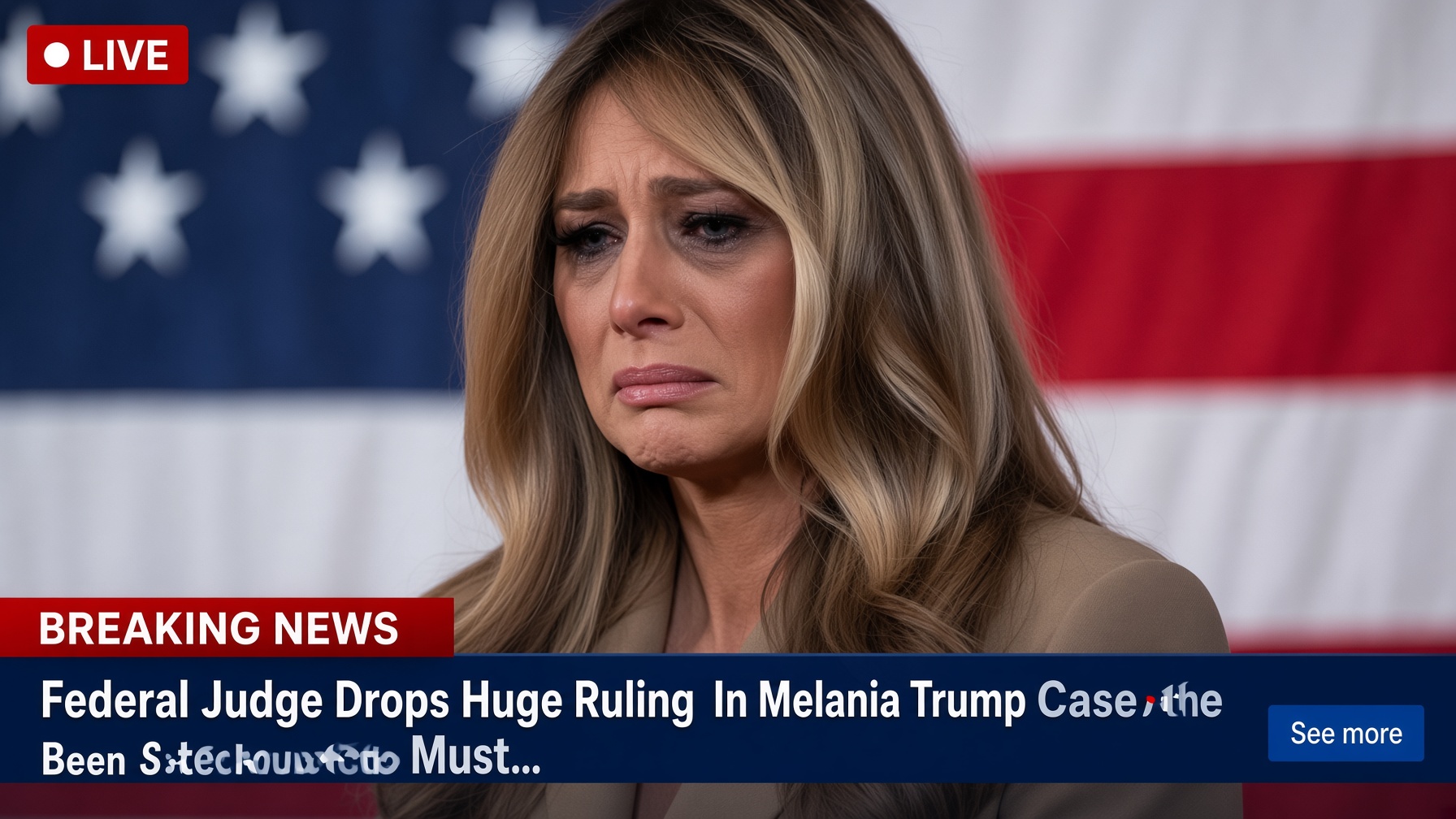
NEW YORK — A federal judge has dismissed journalist and author Michael Wolff’s lawsuit against First Lady Melania Trump, ruling that the dispute should be handled in state court rather than through the federal judiciary.
U.S. District Judge Mary Kay Vyskocil described Wolff’s attempt to litigate the matter in federal court as “contorted” and criticized what she characterized as an inappropriate level of tactical maneuvering. Although the judge acknowledged that the parties have a genuine legal dispute, she said the federal court should not be used to manage what she viewed as an improperly presented conflict.
“It’s an inappropriate level of tactical gamesmanship,” Vyskocil said during the proceedings, according to reports.
The judge also said she would not be “drafted to oversee an abusively presented spat,” while emphasizing that her decision did not necessarily resolve the underlying disagreement between Wolff and the first lady.
The dispute began after an attorney for Melania Trump sent Wolff a legal demand last year calling on him to remove statements he had made concerning the first lady. The letter reportedly warned that Melania Trump would have “no alternative” but to pursue legal action if the statements were not withdrawn.
Wolff subsequently filed a lawsuit in state court in October. Melania Trump’s attorney, Alejandro Brito, later moved the case to federal court. Vyskocil ruled that federal jurisdiction existed but declined to exercise it, effectively sending the matter back to be litigated through the state judicial system.
A spokesperson for Melania Trump defended the first lady’s position, saying she remains prepared to challenge what her legal team considers malicious and defamatory statements.
The dispute centers in part on comments Wolff has made about Melania Trump and her relationship with President Donald Trump. Wolff’s lawsuit argues that some of his statements were protected opinion or had been taken out of context.
Among the statements cited in the litigation was Wolff’s characterization of the Trump marriage as a “sham marriage, trophy marriage.” His legal filings reportedly argued that the statement constituted an opinion rather than a factual allegation.
Wolff also maintained that he had never accused Melania Trump of participating in criminal activity connected to convicted sex offender Jeffrey Epstein. The first lady has repeatedly denied any association with Epstein and has publicly objected to what she described as false claims linking her to him.
“The lies linking me with the disgraceful Jeffrey Epstein need to end today,” Melania Trump said during an April press conference.
She accused those making the allegations of attempting to damage her reputation and rejected what she described as efforts to defame her.
The controversy also drew attention after The Daily Beast retracted an article published last summer that had suggested Melania Trump was “very involved” in the Epstein scandal. The article was based on an interview with Wolff and was withdrawn after the publication received a letter from Brito.
Wolff later clarified that his comments referred to Melania Trump being involved “behind the scenes” in dealing with matters at the White House, while he said he was not alleging criminal involvement.
The broader Epstein controversy has also generated political responses. Republican Rep. Nancy Mace praised Melania Trump for speaking publicly about Epstein victims and pointed to her support for legislation addressing the distribution of fabricated intimate images.
Democratic lawmakers have likewise called for greater congressional scrutiny. Rep. Robert Garcia said lawmakers supported Melania Trump’s call for a public hearing and urged congressional leaders to schedule one.
In her remarks, Melania Trump called on Congress to take action and urged lawmakers to give victims an opportunity to testify under oath.
For now, however, the legal dispute with Wolff remains unresolved on its underlying merits. Judge Vyskocil’s ruling determines where the case should be litigated, not whether either side ultimately prevails.
The dismissal represents a procedural setback for Wolff in federal court, while leaving the broader dispute—and the competing claims over speech, reputation and defamation—to be addressed through the appropriate state-court proceedings.