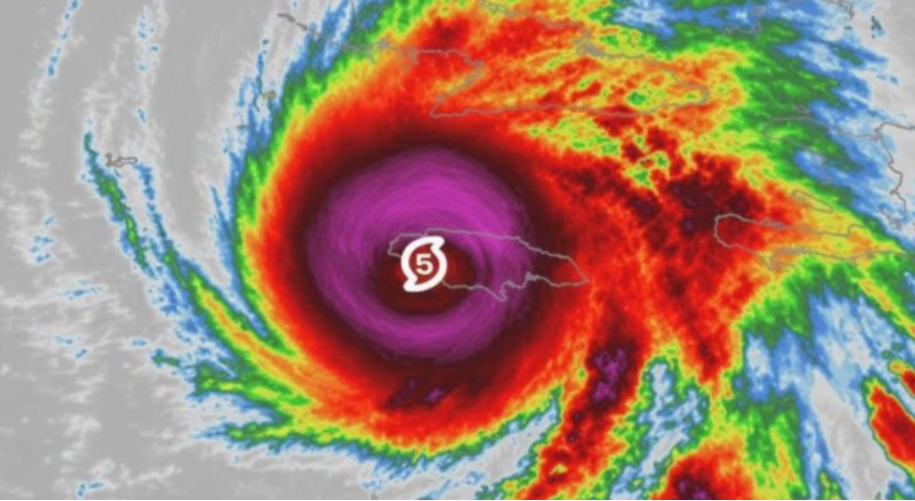
Hurricane Melissa made landfall in Jamaica on October 28, 2025, as a powerful Category 5 hurricane, bringing extreme winds and life-threatening conditions to the island’s southwest coast.
The storm reportedly struck near New Hope with estimated sustained winds of 185 mph and a minimum central pressure of 892 millibars. Those measurements placed Melissa among the most powerful hurricanes ever recorded at landfall in the Atlantic basin, underscoring the extraordinary intensity of the storm as it reached Jamaica.
Melissa’s maximum sustained winds put the hurricane in rare company. Its reported wind speed matched the intensity recorded by Hurricane Dorian in 2019 and the catastrophic 1935 Labor Day Hurricane, both of which rank among the strongest Atlantic hurricanes documented at landfall.
The storm’s central pressure was equally remarkable. At 892 millibars, Melissa reportedly matched the pressure recorded by the 1935 Labor Day Hurricane for the lowest known landfall pressure in the Atlantic basin.
Such measurements provide an indication of the exceptional strength of the system. Lower atmospheric pressure is generally associated with stronger tropical cyclones, while extremely high sustained winds can produce catastrophic damage to buildings, infrastructure, vegetation and coastal communities.
For Jamaica, the arrival of Melissa represented a major emergency.
Communities along the island’s southwest coast faced the combined threat of destructive hurricane-force winds, torrential rainfall and dangerous storm surge. The intensity of the system meant that residents and emergency authorities had limited room for error as the hurricane approached.
The storm also demonstrated how rapidly tropical systems can intensify before reaching land. Hurricanes can strengthen dramatically when atmospheric and oceanic conditions are favorable, leaving communities with only a limited window to complete preparations and evacuations.
For residents in the storm’s path, the immediate dangers extended well beyond the strongest winds. Heavy rainfall can trigger flash flooding and landslides, while storm surge can inundate coastal communities and damage roads, homes and critical infrastructure.
The extreme wind speeds associated with a Category 5 hurricane can also cause widespread structural damage and create dangerous flying debris. Power networks, communications systems and transportation infrastructure can be severely affected, potentially complicating rescue and recovery operations after the storm passes.
Melissa’s reported intensity therefore placed Jamaica in an exceptionally dangerous situation as the hurricane approached and made landfall.
The storm’s arrival also highlighted the continuing challenge posed by increasingly powerful tropical cyclones. While individual storms vary significantly, extreme hurricanes demonstrate the importance of early warnings, strong building standards, emergency planning and rapid access to reliable information.
For communities affected by Melissa, the focus after landfall would shift from preparation to survival, rescue and recovery. Emergency crews would need to assess damage, locate residents requiring assistance and restore essential services where possible.
The full consequences of the hurricane would depend on the extent of wind, rainfall and storm-surge impacts across Jamaica.
But Melissa’s reported 185-mph winds and 892-millibar pressure already place the storm among the most extraordinary Atlantic hurricanes ever observed at landfall—a stark reminder of the destructive power of nature when a major hurricane reaches maximum intensity over a populated region.