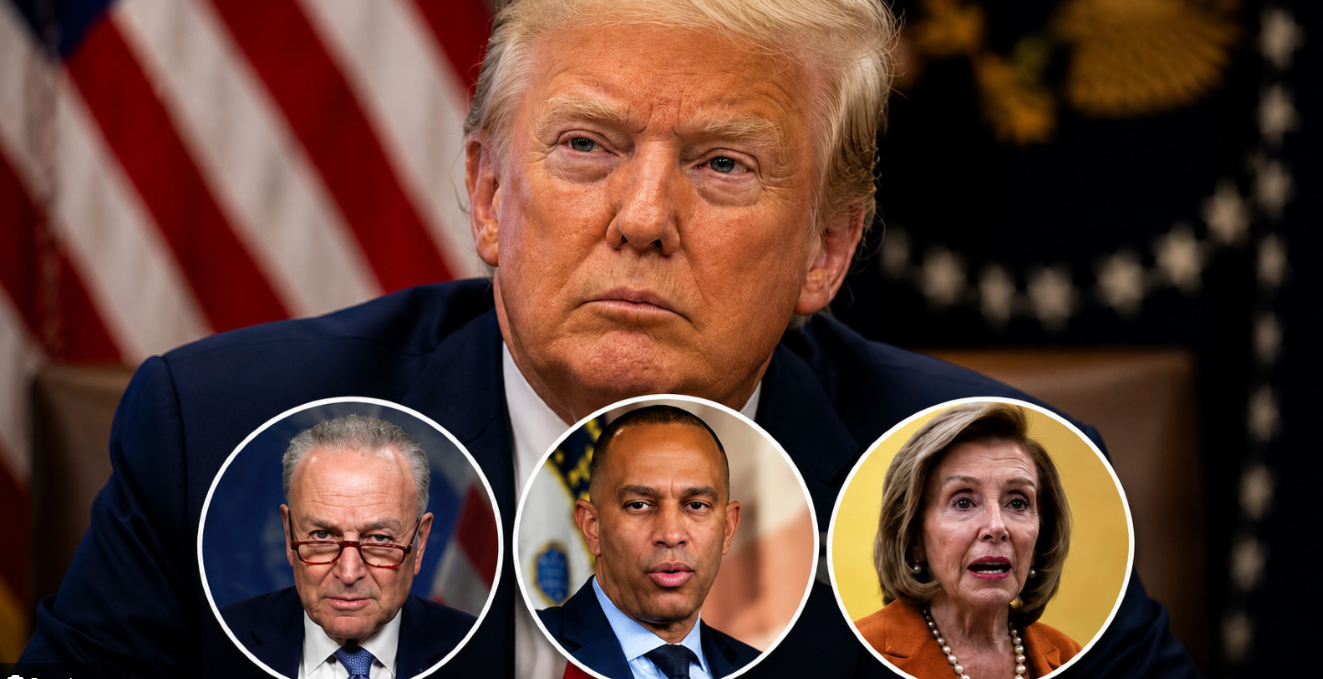
Republicans and Democrats in the Senate, who have not gotten together on much of President Donald Trump’s agenda, managed a big bipartisan win late last week before adjourning for a month.
The Senate on Saturday approved legislation to keep the federal government funded beyond the midterm elections, sending the measure to the House as lawmakers work to avoid a government shutdown before the Oct. 1 funding deadline.
The bill passed the Senate by a bipartisan vote of 90-6, with Sen. Darline Graham, R-S.C., voting “present.”
The measure would extend current federal funding levels through Dec. 11, while including several targeted exceptions.
Senate leaders accelerated consideration of the legislation under a bipartisan agreement reached Saturday morning, allowing lawmakers to complete action on the bill before departing for the August recess, Politico reported.
The House and Senate have now approved separate continuing resolution bills to avert a government shutdown, leaving lawmakers to reconcile the differences before the start of the new fiscal year.
The House measure would fund the government through Dec. 4, while the Senate version extends funding through Dec. 11.
The Senate bill also sets the stage for a broader debate later this year over the Trump administration’s proposal to give political appointees greater authority over the approval of federal grants.
The legislation would temporarily prevent the administration from implementing that policy during the life of the continuing resolution, setting up a potential confrontation when Congress revisits government funding in December.
Sen. John Kennedy, R-La., said he intends to oppose any long-term restrictions on the administration’s grant proposal.
Senate Appropriations Chair Susan Collins (R-Maine) said she will “continue to oppose” the Trump administration plans “because I think they politicize the grants process, and I don’t want that to occur.”
Sen. Patty Murray, D-Wash., the committee’s ranking Democrat, also said she is prepared to challenge the administration’s proposal.
The Senate also rejected an amendment offered by Sen. Ted Budd, R-N.C., that would have allowed a federal ban on intoxicating hemp products to take effect in November.
Senate leaders, at the administration’s request, instead included language delaying implementation of the ban.
In addition, the Senate bill specifies that Immigration and Customs Enforcement (ICE) and U.S. Customs and Border Protection would not receive additional funding under the temporary spending measure, noting that Congress previously approved approximately $70 billion for those agencies earlier this year.
That provision may become a point of contention in the House. Rep. John Rutherford, R-Fla., said it “could be a dealbreaker,” while Rep. Jeff Van Drew, R-N.J., indicated he had not yet decided whether he would support the Senate version of the legislation, Politico said.
“I do not like the Senate language,” Van Drew said, noting the grant approval provision. “It’s one I would want to know what the president thinks.”
The White House issued a Statement of Administration Policy endorsing the Senate’s continuing resolution.
The administration did not release a comparable statement supporting the House-passed measure, which omitted several funding increases and policy authorizations requested by the White House, Politico said.
“Every Member of Congress should support passage of this [continuing resolution] to keep the Government open as discussions on full year appropriations continue,” the statement said.
Rep. Rosa DeLauro, D-Conn., the ranking Democrat on the House Appropriations Committee, praised the Senate’s continuing resolution, citing provisions that would temporarily block the Trump administration’s proposed changes to the federal grant approval process and prevent additional funding for immigration enforcement agencies under the stopgap measure.
“This bill is a clear improvement over the House Republican continuing resolution, but we are still nearly two months away from the end of the fiscal year and should be working together to pass full-year funding bills,” she said in a statement, per Politico.