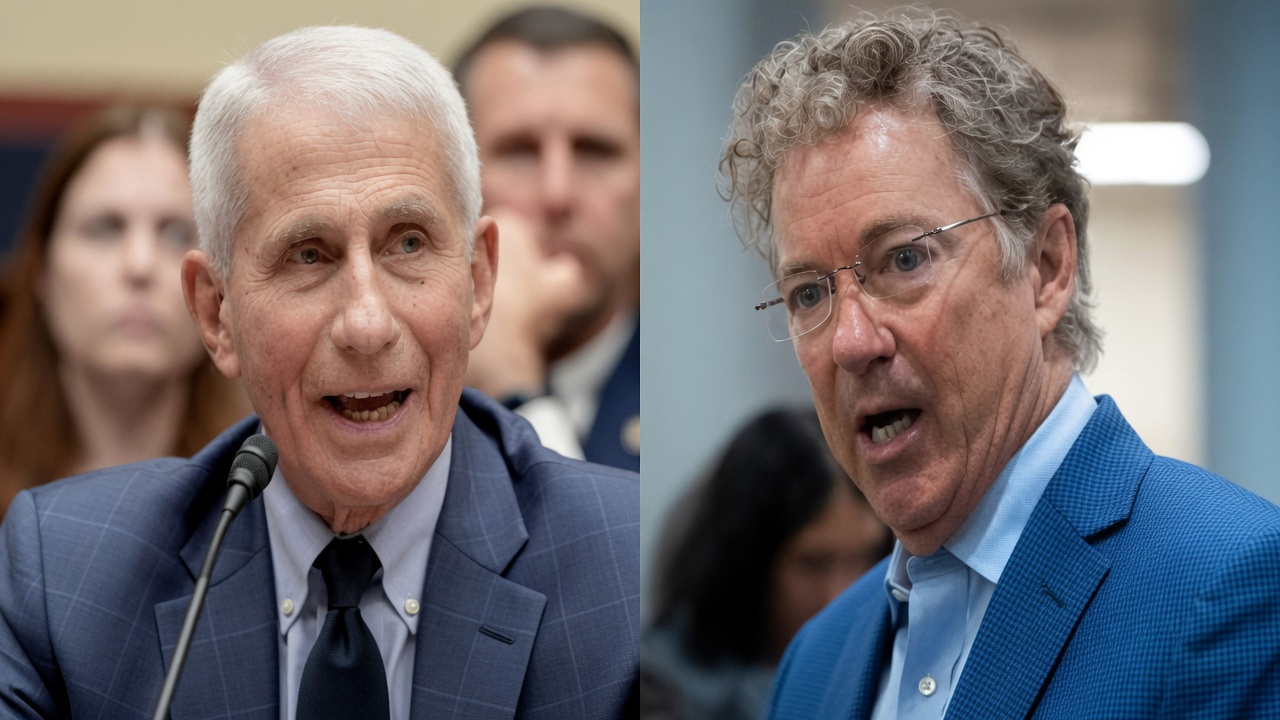
BREAKING: Newly Released Fauci Texts Raise Fresh Questions Over Public Messaging During COVID-19 Pandemic
Newly released text messages from Dr. Anthony Fauci’s government-issued phone are drawing renewed scrutiny from congressional investigators, with lawmakers examining whether Fauci’s private communications with other public health officials were consistent with the information he was presenting publicly during the COVID-19 pandemic.
The messages, which are now being reviewed as part of the Senate’s broader investigation into the federal government’s pandemic response, appear to show Fauci privately acknowledging that there could theoretically be a potential health concern involving pregnant women, even as his public messaging at the time reportedly offered a more reassuring assessment.
That apparent difference has become a major focus of criticism from lawmakers and Fauci’s opponents, who argue that the public deserved complete and transparent information about potential risks during a rapidly evolving health crisis.
The newly examined communications are particularly significant because Fauci served as one of the most prominent public faces of the federal government’s pandemic response. His statements were frequently cited by the media, government officials, and members of the public as authorities attempted to understand a virus that was still being studied.
Senate investigators are continuing to review the contents of Fauci’s government phone, meaning additional communications could potentially provide further context about how public health officials discussed emerging risks behind the scenes.
The messages do not necessarily establish that Fauci intentionally misled the public. Scientific understanding of COVID-19 and its potential effects changed rapidly, and public health officials were frequently forced to make recommendations based on incomplete or developing evidence. However, investigators are examining whether the differences between private discussions and public statements were appropriately communicated to Americans.
The controversy comes at a particularly significant moment for Fauci, who has faced increasingly intense congressional scrutiny over his role in the federal pandemic response. Lawmakers have questioned him about issues ranging from COVID-19’s origins and pandemic-era policies to federal research funding and communications among senior health officials.
The Senate investigation is also examining whether government officials accurately communicated scientific uncertainty during the crisis and whether certain information was withheld, minimized, or presented differently to the public.
For critics, the newly released messages represent another example of what they describe as inconsistent pandemic messaging. Supporters of Fauci, however, argue that private scientific discussions should be evaluated in their full context and that evolving scientific evidence should not automatically be interpreted as evidence of misconduct.
As investigators continue reviewing the phone records, the central question remains whether the newly uncovered communications reveal a meaningful contradiction between what Fauci and his colleagues understood privately and what the American public was told at the time.
With potentially more records still under examination, the latest disclosures could become another important chapter in the ongoing congressional effort to reconstruct how some of the most consequential decisions of the COVID-19 pandemic were made—and how those decisions were communicated to the public.