BREAKING: U.S. NAVY CONFRONTS IRANIAN-FLAGGED SHIP IN HIGH-STAKES GULF STANDOFF
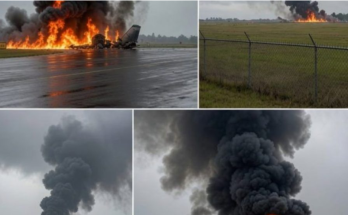
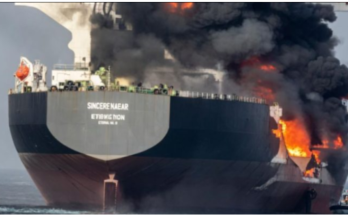
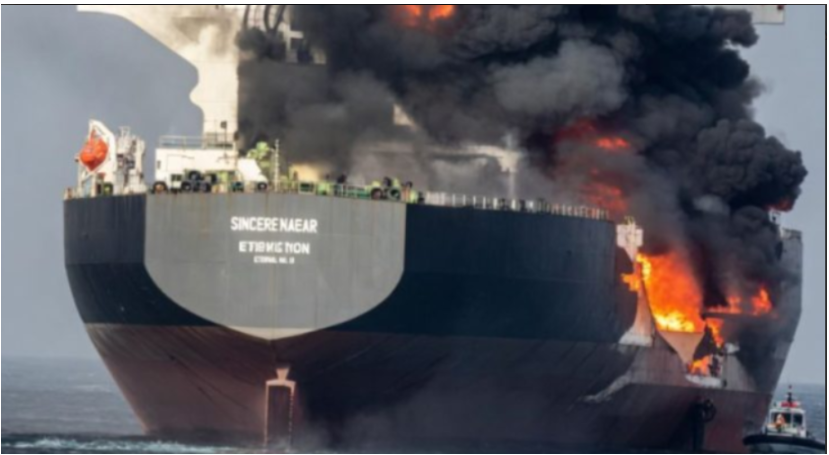
The waters near the Strait of Hormuz have become the scene of a dramatic confrontation after President Donald Trump said the U.S. Navy intercepted the Iranian-flagged cargo vessel **TOUSKA** in the Gulf of Oman.
According to Trump’s account, the vessel allegedly attempted to push through an American naval blockade despite repeated warnings from U.S. forces. The standoff reportedly lasted for roughly six hours, with American personnel repeatedly ordering the Iranian crew to stop.
The crew allegedly refused.
What followed was a dramatic escalation.
Trump said the USS *Spruance*, a U.S. Navy guided-missile destroyer, ultimately fired its 5-inch naval gun in an effort to disable the vessel. The reported strikes targeted the ship’s engine room, leaving the cargo vessel unable to continue moving under its own power.
U.S. Marines then reportedly boarded the vessel and took control.
Trump described the confrontation bluntly, saying the Iranian crew had been given repeated warnings and chose not to comply — a decision he said “did not go well for them.”
The reported encounter comes as tensions between Washington and Tehran remain extremely high, particularly around the Gulf of Oman and the Strait of Hormuz, one of the world’s most strategically important maritime routes.
The stakes extend far beyond a single ship.
The Strait of Hormuz is a critical corridor for international energy and commercial shipping. Any major military confrontation in or around the waterway could have consequences for global trade, energy markets and regional security.
The incident also places renewed attention on the role of the U.S. Navy in protecting American interests and enforcing maritime restrictions in a region where even relatively small encounters can rapidly become international crises.
Supporters of Trump’s approach are likely to view the reported operation as a clear demonstration of military deterrence — a message that U.S. forces will issue warnings, but will also act when those warnings are ignored.
Critics, however, are likely to demand more information about the legal authority for the interception, the precise circumstances surrounding the confrontation and the potential consequences of taking control of an Iranian-flagged vessel.
Important details remain subject to confirmation from U.S. military officials and independent maritime sources.
But one thing is clear: **the reported confrontation has raised the stakes in an already volatile region.**
As Washington and Tehran watch each other closely, the world will be watching what happens next.