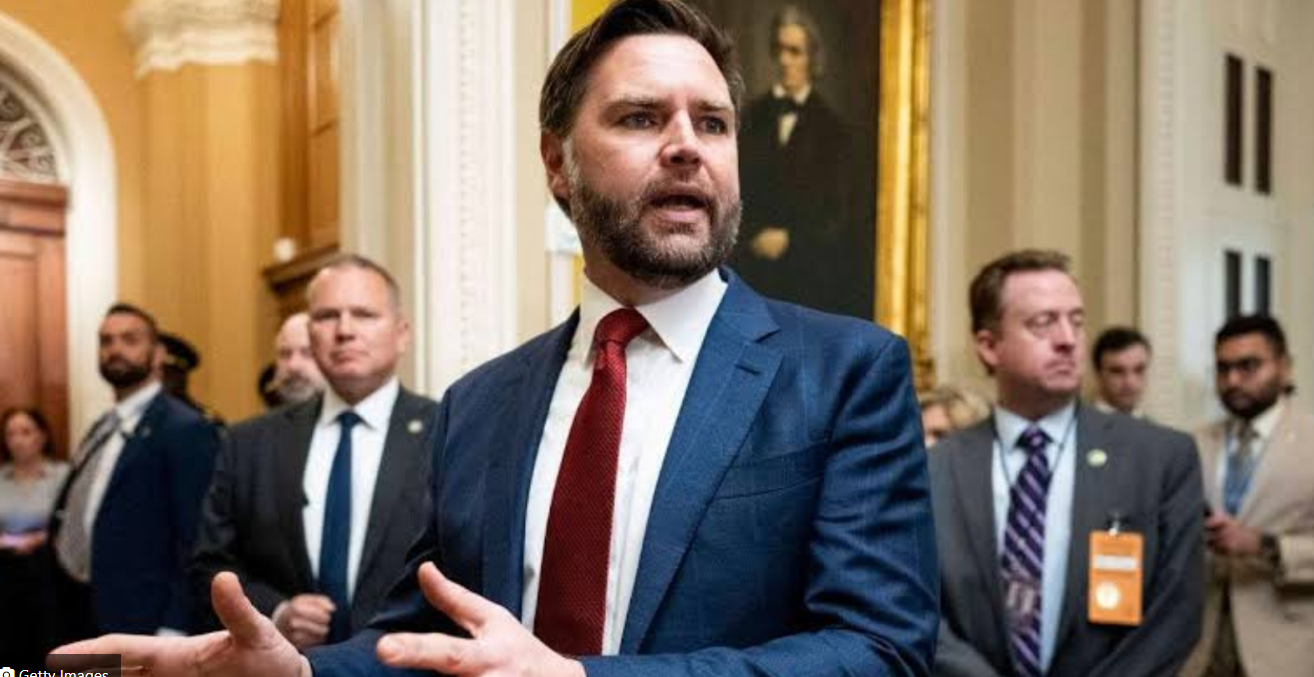
Vice President JD Vance on Wednesday urged House and Senate Republican leaders to pass legislation that would cement the White House Fraud Task Force’s progress against more than $230 billion in identified waste and abuse in federal spending programs.
Meeting with congressional GOP leaders, Vance stressed that the administration’s ongoing effort to root out fraudulent payments has already exposed massive losses to American taxpayers but cannot succeed long-term without statutory changes, tougher penalties, and additional resources.
The session focused on next steps for the task force, which has spent recent months scrutinizing federal benefit programs for improper payments, including cases in which noncitizens improperly received aid.
“This effort will fundamentally always have a limitation unless our colleagues in the House and the Senate are working with us,” Vance told the Republican leaders.
“In order to make this really work, we need our colleagues in Congress to really codify some of this stuff to make sure that it becomes law,” Vance added.
The vice president called specifically for bills requiring robust data sharing between state and federal governments, stiffer criminal penalties for those who defraud taxpayers, and increased appropriations to support prosecutions and investigations.
He pointed to weak information exchange in welfare programs as a major vulnerability, citing examples such as the Supplemental Nutrition Assistance Program, or SNAP, where noncitizens have accessed benefits.
“We need to know where your tax dollars are going,” Vance said.
“If the state of California or the state of New York isn’t going to tell us, we need Congress to force them to tell us,” Vance added.
Andrew Ferguson, vice chairman of the White House Fraud Task Force, noted that many federal benefit programs were designed for a “high trust” society that no longer matches today’s realities.
Nearly every executive branch agency is now deploying artificial intelligence to flag suspicious claims, he said.
“Data sharing should be a requirement for participating in these programs because that will unleash the power of American AI ingenuity and innovation in these agencies to stop the fraud before it happens,” Ferguson said.
He added that states resisting transparency reveal much about their priorities: “We should learn a lot about the leadership of that state if they want to protect fraud or they want to protect ordinary Americans.”
Stephen Miller, a special adviser to the task force, said more than 95 percent of fraud problems could be resolved through better data sharing and modern technology.
He advocated creation of a federal database that would verify an applicant’s age, citizenship status, and criminal record before benefits are approved.
Miller also highlighted the need for mandatory minimum sentences, observing that most fraud cases under $1 million currently go unprosecuted at the federal level.
“That change alone would be a watershed for fighting fraud, because it would mean that the Department of Justice would be able to, through prosecuting a few hundred or thousand cases in a year, be able to chill the criminal conduct of millions,” he said.
Vance echoed the call for tougher consequences.
“We’d like to change those statutes and actually make it harder for people to commit fraud, and make sure that when they do commit fraud, they go to jail and go to jail for a long time,” the vice president said.
Vince Haley, director of the Domestic Policy Council, pressed lawmakers to secure payment systems against abuse and move toward a comprehensive federal eligibility database.
He also urged Congress to fund additional fraud investigators so the Department of Justice can pursue more cases.
Vance reinforced the request for resources without specifying an exact dollar figure.
“We need a little bit of resources,” Vance said. “Every dollar you give us comes back at least five or tenfold, so it’s a good investment and it’s the sort of thing we need to see happen.”