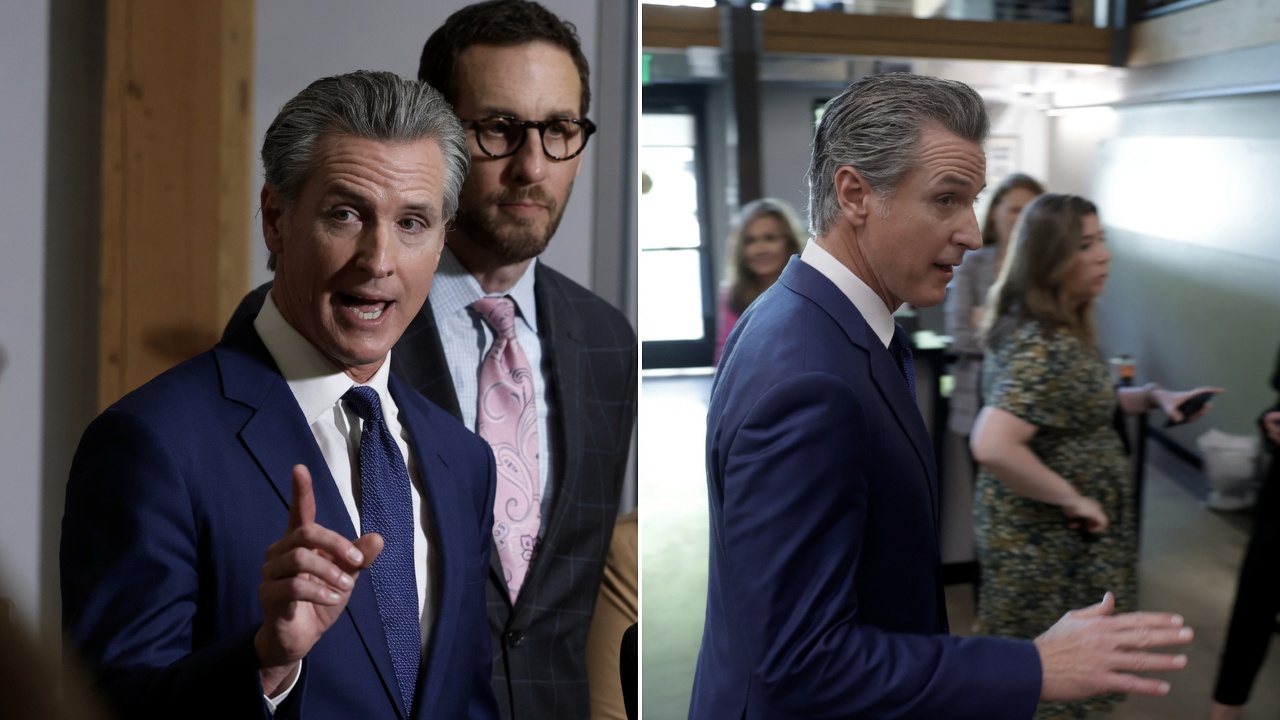
Life is getting increasingly complicated for California Gov. Gavin Newsom as the 2028 election cycle inches closer and he is expected to declare his candidacy for the Democratic nomination.
If he makes it that far.
Newsom is facing increased scrutiny over his extensive use of “behested payments” as federal investigations involving both the governor and First Partner Jennifer Siebel Newsom continue to attract attention.
The controversy centers on hundreds of millions of dollars in donations Newsom has solicited from corporations, wealthy individuals, labor unions, and organizations with interests before the state of California. Although behested payments are legal under California law, critics argue they create a loophole that allows donors to gain influence outside traditional campaign finance rules.
According to California disclosure records, Newsom has reported more than $347 million in behested payments since 2011. That total represents more than 62% of all behested payments reported by California elected officials during the same period.
Data from the California Fair Political Practices Commission shows that elected officials statewide directed roughly $556 million in behested payments between 2011 and 2026. Newsom alone accounted for nearly two-thirds of that amount.
Political strategist Dan Schnur told the *Orange County Register* that Newsom has relied on the practice far more extensively than other California elected officials. By comparison, former Gov. Jerry Brown reportedly solicited about $35 million in behested payments during his tenure.
The issue has drawn additional scrutiny because approximately $4.8 million in behested donations went to the California Partners Project, a nonprofit organization co-founded by Jennifer Siebel Newsom. Critics argue that such donations create at least the appearance of a conflict of interest.
Sean McMorris of California Common Cause described behested payments as “ripe for abuse,” arguing that elected officials often solicit donations from individuals and organizations with business before the government.
Questions have also been raised about several major donors that later benefited from state contracts or policy decisions. According to public reports, Blue Shield donated $20 million to initiatives supported by Newsom during the COVID-19 pandemic before later receiving a no-bid state contract related to vaccine distribution. Kaiser Foundation contributed nearly $10 million before later taking on a significant role in California’s Medi-Cal program. The Federated Indians of Graton Rancheria also donated millions to organizations associated with the governor and his wife’s initiatives while later benefiting from state decisions involving tribal gaming matters.
Critics contend that proving an explicit quid pro quo is often unnecessary because the concern centers on whether the system encourages donors to maintain favorable relationships with elected officials. Assemblyman David Tangipa described behested payments as a form of political influence peddling, arguing that legality alone does not resolve the underlying ethical concerns.
The debate comes as Newsom has acknowledged that he and his wife are subjects of multiple federal investigations, although neither has been charged with any wrongdoing and the Department of Justice has not publicly disclosed details about those inquiries.
Newsom also recently agreed to pay a $31,500 ethics fine related to the late disclosure of certain behested payments.
Supporters of the practice note that behested donations have funded wildfire relief, education, health care, workforce development, and other charitable initiatives. Critics, however, argue that the public benefit of those projects does not eliminate concerns about transparency, influence, and the ability of powerful interests to make unlimited donations to causes promoted by elected officials.
The growing debate over behested payments has renewed broader questions about ethics in California government and whether existing disclosure laws provide sufficient safeguards against potential conflicts of interest.