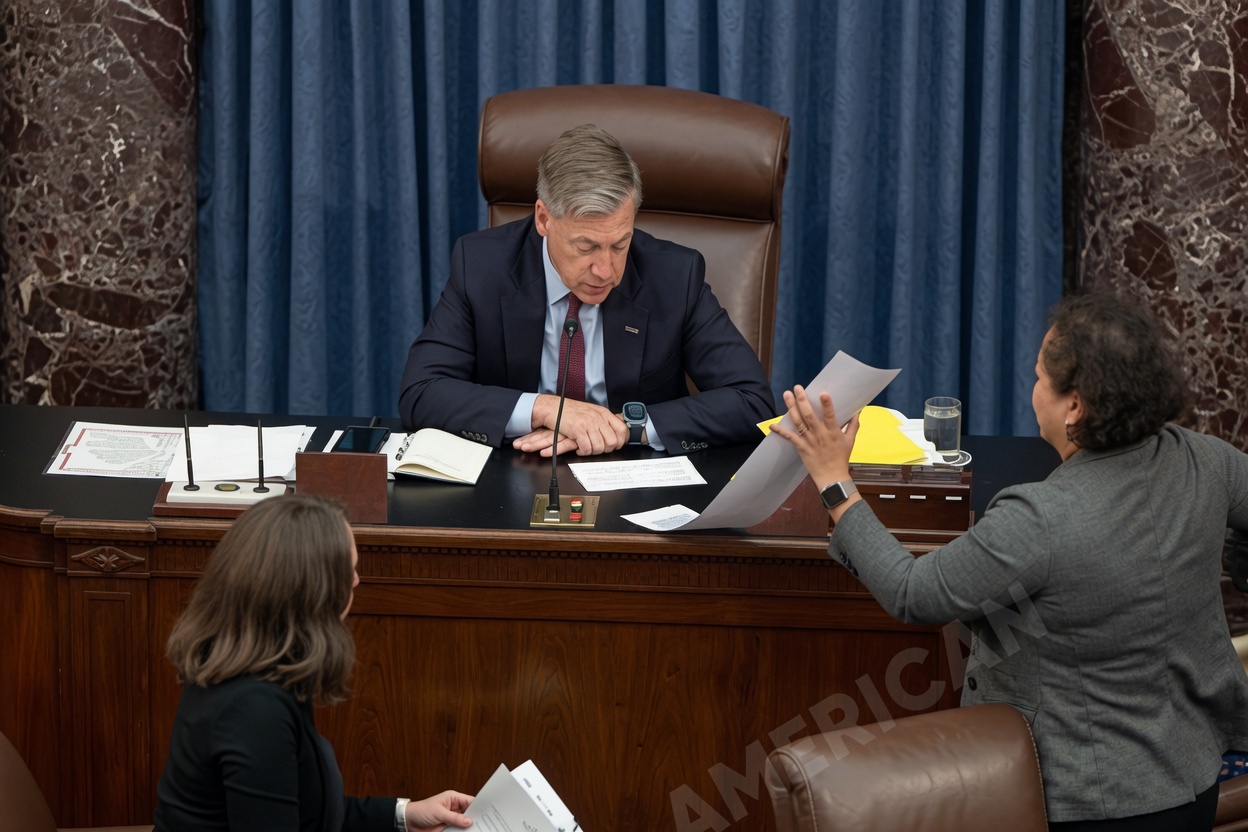
**BREAKING: Senate Democrats have blocked Republicans from advancing a sweeping $1.15 trillion defense authorization bill, setting off a high-stakes confrontation over military spending and President Donald Trump’s ongoing military operations against Iran. The move marks one of the most significant legislative clashes in recent months, as lawmakers spar over Congress’s constitutional role in authorizing the use of military force.**
In a tense procedural vote, the Senate failed to move forward with the annual National Defense Authorization Act after the measure fell short by a vote of **50-46**, with every Democratic senator voting against advancing the legislation. The vote effectively halted consideration of one of Congress’s most important annual bills, throwing its immediate future into doubt and intensifying the partisan battle over national security and war powers.
Democratic leaders argued that Congress should not approve one of the largest defense spending packages in American history while U.S. forces are engaged in military operations against Iran without first holding a full debate over the president’s actions and whether Congress should formally authorize them. They contended that lawmakers have a constitutional responsibility to scrutinize military engagements before approving hundreds of billions of dollars in additional defense funding.
Several Democrats said it would be irresponsible to proceed with business as usual while the United States is once again conducting military strikes in the Middle East. They argued that Congress cannot simply ignore the expanding conflict and approve a massive defense bill without first addressing the broader questions surrounding the administration’s military strategy, legal authority, and long-term objectives.
Republicans sharply criticized the move, accusing Democrats of injecting partisan politics into legislation traditionally viewed as essential to funding the military, supporting service members, and maintaining national security. GOP lawmakers warned that delaying the annual defense authorization bill could disrupt military planning and send the wrong message to U.S. allies and adversaries alike.
Democrats rejected those accusations, insisting their opposition was not directed at the military itself but at the timing of the legislation. They argued that approving more than **$1 trillion** in defense spending without first debating the president’s expanding military actions would amount to Congress surrendering its oversight responsibilities during a period of escalating international tensions.
The impasse now leaves one of Capitol Hill’s most significant annual legislative priorities in limbo. Unless lawmakers can reach a compromise, the defense authorization bill could face prolonged delays as the Senate remains divided over both military policy and federal spending.
The standoff also highlights the increasingly fierce political and constitutional debate over President Trump’s handling of the conflict with Iran, with lawmakers expected to continue pressing questions about executive war powers, congressional authority, and the future direction of U.S. military involvement in the region as negotiations over the defense bill continue.