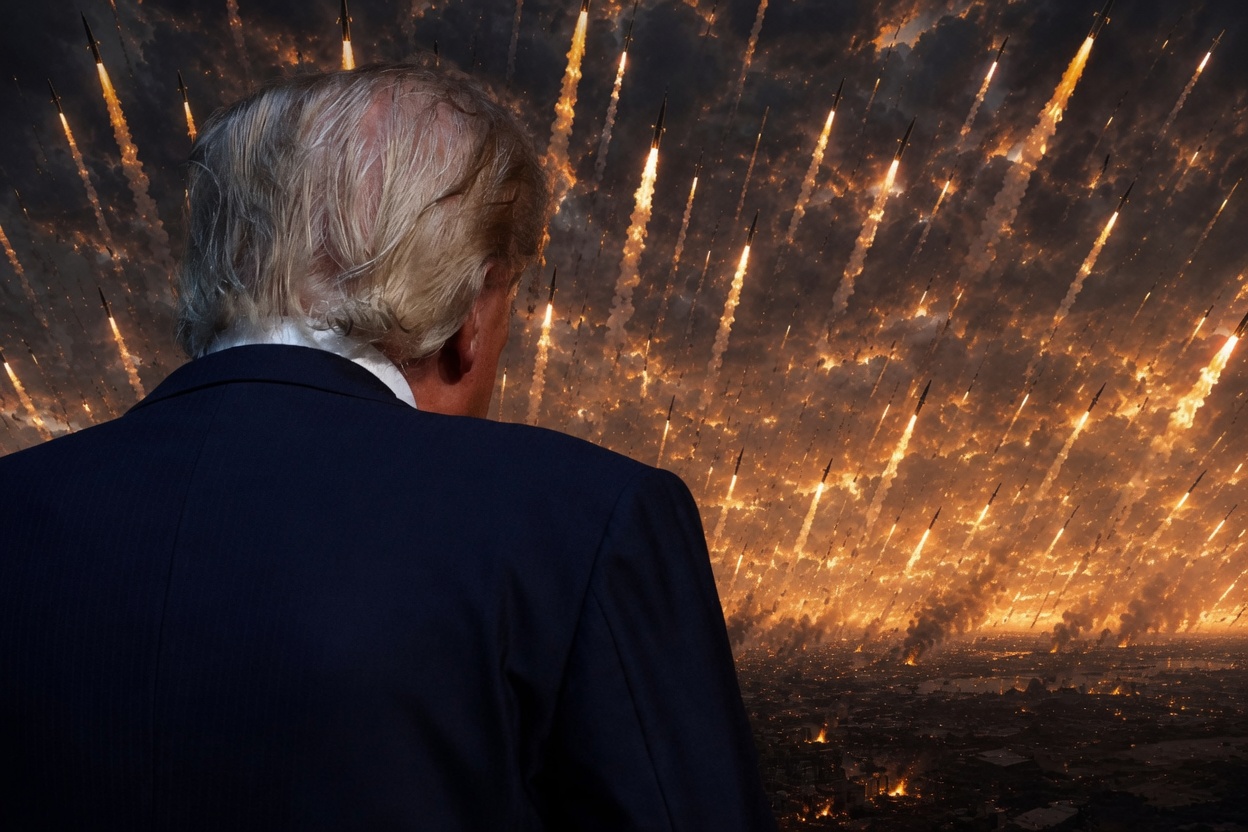
President Donald J. Trump issued a forceful statement addressing ongoing tensions between the United States and Iran, emphasizing that the United States remains prepared to respond to any credible threat against its leadership, military personnel, or national interests.
The remarks come as security officials continue to monitor developments in the Middle East, where regional instability and longstanding hostilities between Iran and the United States have contributed to an elevated security environment. American officials have repeatedly stated that protecting U.S. personnel and national security remains a top priority.
In his statement, Trump asserted that the U.S. military possesses the capability and readiness to respond rapidly and decisively to acts of aggression. He framed deterrence as a central element of American national security policy, arguing that maintaining a credible military posture is intended to discourage attacks and reinforce the country’s commitment to defending its interests and allies.
The statement also described the current situation as a choice between further escalation and diplomatic de-escalation. While emphasizing military preparedness, Trump said that peace remains possible if tensions are reduced and hostile actions are avoided.
National security experts note that strong public statements often accompany periods of heightened geopolitical tension, serving as signals of resolve while diplomatic and intelligence efforts continue behind the scenes. Analysts also caution that public rhetoric should be considered alongside official policy decisions, military movements, and diplomatic negotiations when evaluating the broader security picture.
The comments have drawn attention from policymakers, foreign governments, and security analysts, who continue to monitor developments closely. As regional tensions evolve, the international community remains focused on efforts to prevent further escalation while maintaining stability through diplomacy, deterrence, and coordination among allies.
The situation remains fluid, and officials have indicated they will continue assessing intelligence, consulting with international partners, and taking appropriate measures to safeguard U.S. interests while seeking to reduce the risk of a broader regional conflict.