A revealing new report has reignited debate over how foreign leaders navigate meetings with President Donald Trump, suggesting that behind the formal diplomacy and carefully staged photo opportunities lies a strategy built on humor, personal flattery, and calculated attempts to keep conversations on favorable ground.
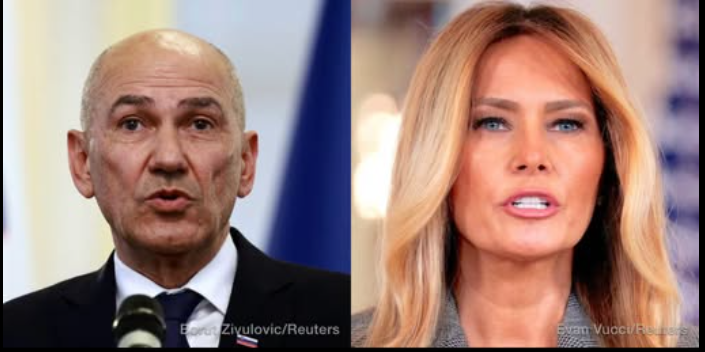
According to a report by The Wall Street Journal, one of the more memorable moments occurred during last year’s NATO summit after member nations reached an agreement to increase defense spending. As leaders celebrated the breakthrough, Slovenian Prime Minister Janez Janša congratulated President Trump before making a lighthearted remark about First Lady Melania Trump.
Janša reportedly joked that if anyone understood how determined Slovenians could be, it would be the husband of Melania Trump. President Trump smiled, and the room erupted in laughter. On its surface, it appeared to be nothing more than a moment of diplomatic humor between allied leaders.
But according to accounts cited in the report, some participants viewed the exchange as more than a harmless joke. Former Bulgarian Prime Minister Boyko Borisov reportedly suggested that many European leaders believed maintaining a productive relationship with President Trump often required a personalized diplomatic approach—using compliments, humor, and carefully chosen language to build rapport during high-stakes negotiations.
The report paints a picture of leaders who recognized President Trump’s unique communication style and sought to adapt their own strategies accordingly. Rather than relying exclusively on traditional diplomatic protocol, officials reportedly emphasized personal engagement, believing it could help create a more favorable atmosphere during discussions involving NATO, defense spending, trade, and international security.
The approach extended beyond a single exchange. According to the report, NATO Secretary General Mark Rutte frequently praised President Trump throughout alliance meetings, with some officials describing his interactions as unusually complimentary. Meanwhile, Finnish President Alexander Stubb and Norwegian Prime Minister Jonas Gahr Støre reportedly discussed how to craft messages to President Trump in ways that would resonate with his communication style, even considering which words to capitalize for emphasis.
Supporters of President Trump argue that these interactions demonstrate something very different—that foreign leaders recognize his influence on the world stage and understand the importance of maintaining a positive working relationship with the United States. From that perspective, diplomatic compliments and personal rapport are longstanding tools of international politics rather than something unique to one administration.
Critics, however, interpret the reported exchanges differently. They argue that the accounts illustrate how allied governments adjusted their diplomatic tactics to accommodate President Trump’s personality, believing that personal engagement could prove just as important as policy discussions in achieving consensus on major international issues.
The broader backdrop to these meetings was a period of significant tension within the NATO alliance. Member nations faced disagreements over defense spending, trade disputes, evolving security challenges, and uncertainty about the future direction of transatlantic cooperation. Those issues made every summit especially consequential, with leaders seeking to preserve unity while navigating differences over foreign policy priorities.
According to the report, many European officials privately worried about the long-term stability of the alliance amid disagreements involving tariffs, Greenland, and broader geopolitical conflicts. Whether those concerns were justified remains a matter of political debate, but the report suggests they influenced how some leaders prepared for interactions with President Trump.
As NATO leaders prepare for future gatherings, the report offers a rare behind-the-scenes look at the subtle art of diplomacy among world leaders. Whether viewed as ordinary political theater or as evidence of an unusually personalized approach to international negotiations, the accounts underscore the lengths governments may go to in order to strengthen relationships, ease tensions, and advance their national interests on the global stage.