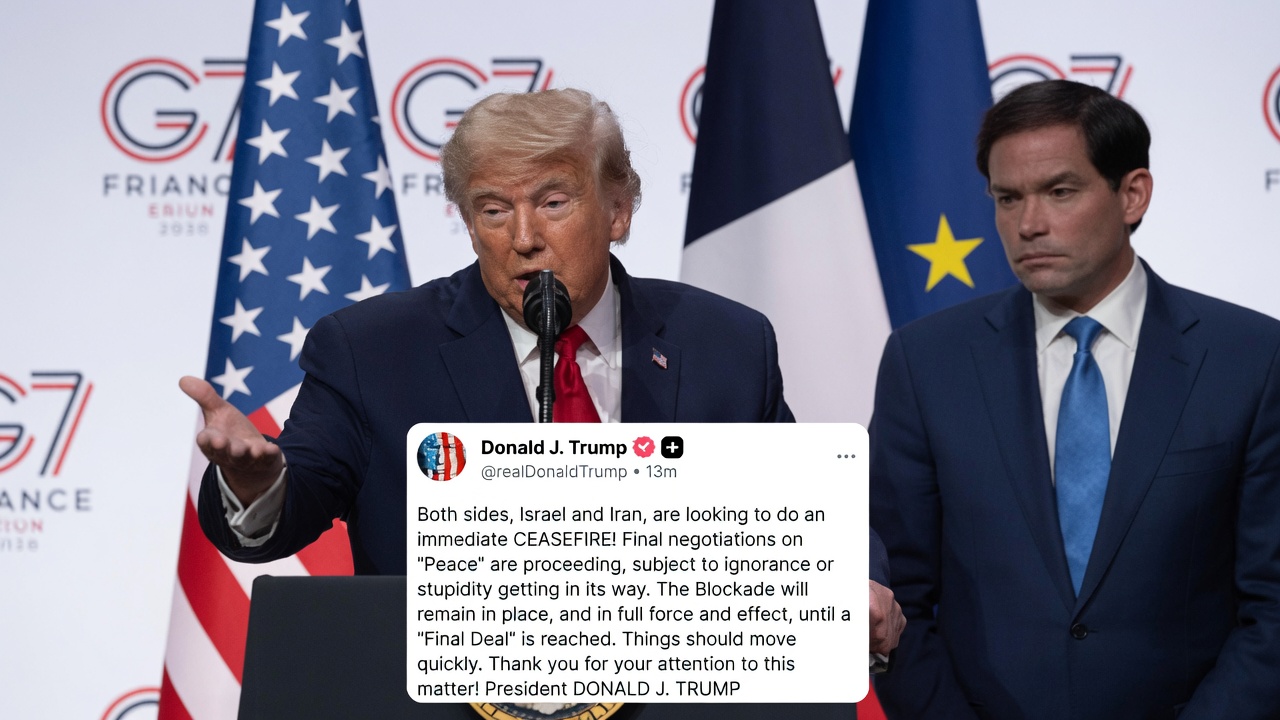
Debate has intensified in international political circles over the perceived influence of US President Donald Trump in ongoing Middle East diplomatic developments, particularly as tensions remain high across the region and Israel continues to navigate a complex domestic political environment.
According to political commentary and media analysis circulating in global discourse, Trump is viewed by some observers as playing an outsized role—formally or informally—in shaping the strategic calculations of key regional actors. These interpretations often link his diplomatic posture and political messaging to broader negotiations involving Israel, Iran, and Gulf states, as well as to the internal political dynamics facing Israeli leadership, including Prime Minister Benjamin Netanyahu.
Supporters of this viewpoint argue that Trump’s approach to foreign policy is characterized by leverage-based diplomacy, where strategic pressure, bilateral negotiation, and conditional support are used to influence outcomes. They claim that this style of engagement can accelerate decision-making processes and force clearer political outcomes in situations that are often stalled by multilateral bureaucracy.
However, critics caution against attributing excessive influence to any single political figure, emphasizing that Middle East diplomacy is shaped by a wide range of institutional, military, economic, and geopolitical factors. They argue that regional stability depends on complex interactions between sovereign governments, intelligence agencies, international organizations, and shifting domestic political pressures rather than the actions of one leader alone.
Within Israel, political observers continue to note uncertainty surrounding electoral dynamics and coalition stability, with leaders facing pressure from both domestic constituencies and international partners. At the same time, regional actors including Iran, Qatar, and other Gulf states are closely monitoring developments, particularly as ceasefire arrangements and diplomatic understandings remain fragile.
Analysts broadly agree that while high-profile political figures may influence rhetoric and negotiation momentum, the durability of any diplomatic framework ultimately depends on sustained engagement across multiple governments and institutions. Security guarantees, economic considerations, and long-term regional agreements remain central to any lasting resolution.
As the situation continues to evolve, international attention remains focused on whether current diplomatic efforts can produce measurable stability or whether competing political pressures will further complicate an already volatile regional landscape.