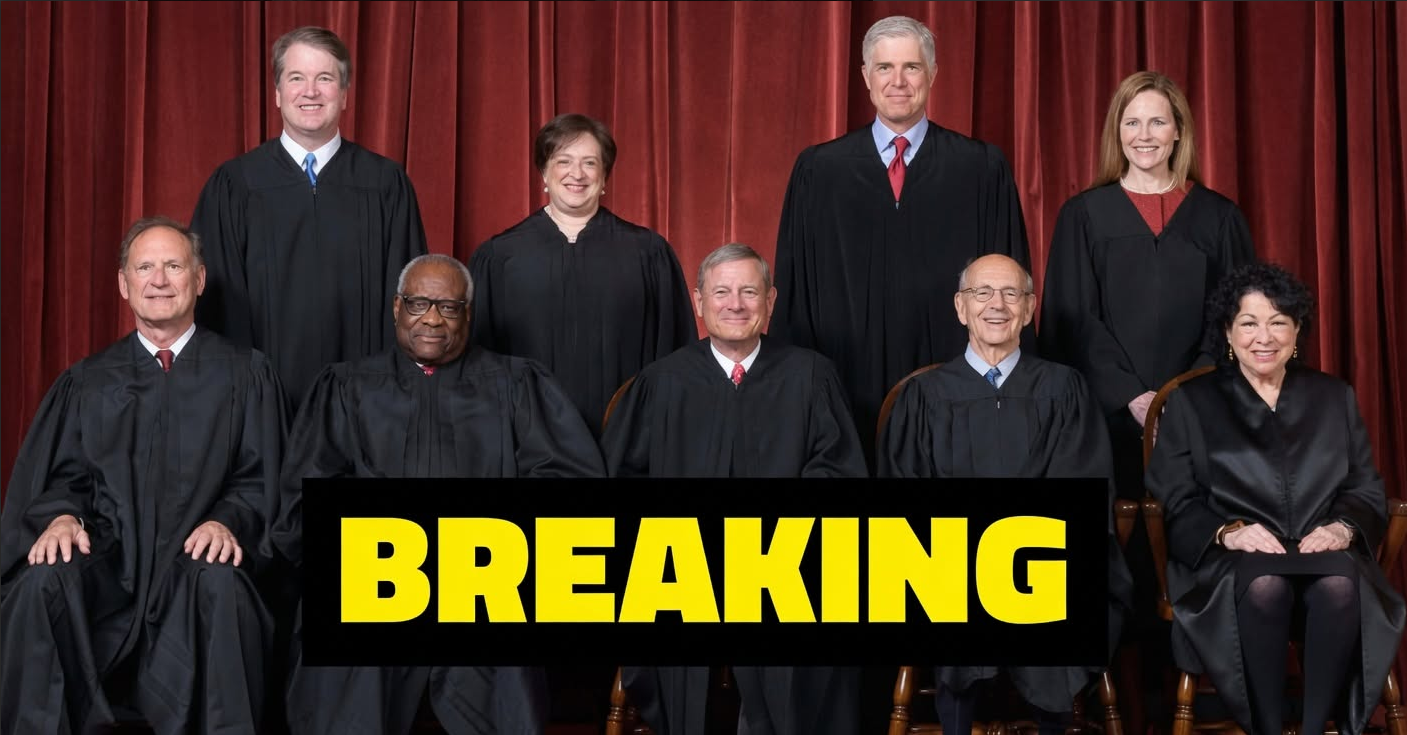
The U.S. Supreme Court delivered a significant ruling in favor of President Donald Trump, allowing his administration to proceed with changes affecting the legal status of certain migrants in the United States.
In an 8–1 decision, the Court lifted a lower court injunction that had blocked the federal government from ending Temporary Protected Status (TPS) protections for approximately 300,000 Venezuelan nationals. The ruling enables the administration to move forward with its plan to terminate these protections and reconsider the legal status of affected individuals. Justice Ketanji Brown Jackson was the sole dissenter.
According to court filings and legal arguments presented by U.S. Solicitor General John Sauer, the lower court had exceeded its authority in intervening in matters involving executive discretion over immigration and foreign policy. Sauer argued that the case concerned sensitive policy decisions reserved for the executive branch.
The policy in question stems from a series of decisions involving Venezuela’s TPS designation. Originally granted due to “extraordinary and temporary conditions,” the status was later extended and modified across multiple administrations. In 2023, Venezuela was both extended and newly redesignated for TPS, creating overlapping protections with different expiration dates.
In early 2025, Department of Homeland Security Secretary Kristi Noem revoked a prior extension decision and moved to terminate the 2023 designation, concluding that conditions in Venezuela no longer justified continued protections. The administration argued that ending TPS for this group was consistent with national interest and current country conditions.
A federal district court in California, however, temporarily blocked the move, with Judge Edward Chen ruling that the government’s justification was insufficient and criticizing aspects of its reasoning. That injunction has now been lifted by the Supreme Court’s decision.
Separately, the Supreme Court also declined to reinstate a Florida law that would have allowed state officials to prosecute individuals who entered the state unlawfully after crossing into the United States. The law, known as SB 4-C, had been blocked by lower courts on the grounds that it likely conflicted with federal immigration authority.
The Court issued its order without a detailed explanation and without noted dissent. Earlier, both a federal district court and a federal appeals court had ruled against the law, finding it likely unconstitutional under the principle of federal preemption in immigration enforcement.
Together, the rulings reflect ongoing legal disputes over the balance of authority between federal courts, state legislation, and executive power in U.S. immigration policy.