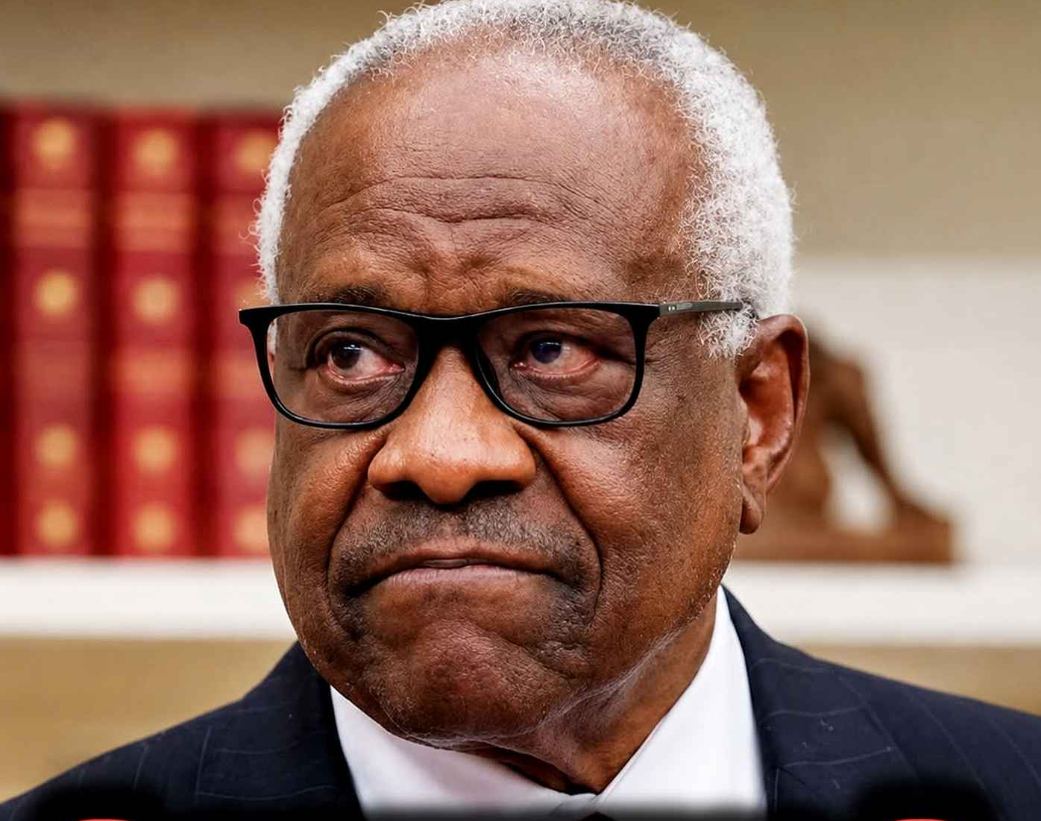
A sharp disagreement emerged at the U.S. Supreme Court after Justice Clarence Thomas criticized the court for refusing to hear Florida’s lawsuit against California and Washington over commercial driver’s licenses issued to undocumented immigrants.
The controversy gained national attention following a deadly 2025 crash on the Florida Turnpike involving an undocumented truck driver who was reportedly licensed in either California or Washington. According to Florida’s lawsuit, the driver allegedly made an illegal U-turn and was unable to properly interpret roadway signs, leading to a collision that killed three people.
The Supreme Court declined to hear the case without providing an explanation. However, Justice Thomas, joined by Justice Samuel Alito, argued that the Constitution requires the Supreme Court to hear disputes between states because no other court has the authority to resolve them.
“If this Court does not exercise jurisdiction over a controversy between two States, then the complaining State has no judicial forum in which to seek relief,” Thomas wrote in his dissent.
Thomas contended that Florida’s allegations raised serious public safety concerns and questioned whether states were properly complying with federal commercial driver’s license requirements. He argued that federal law requires CDL applicants to pass driving tests, demonstrate sufficient English-language proficiency, and meet eligibility requirements established under federal regulations.
The justice specifically referenced the Florida crash involving truck driver Harjinder Singh, claiming the driver was unable to read road signs. Thomas argued that states should not issue commercial licenses to individuals who cannot safely operate large commercial vehicles.
“An illegal alien who cannot read English road signs cannot drive an 80,000-pound tractor-trailer,” Thomas wrote.
Thomas further argued that the Supreme Court has exclusive constitutional authority over disputes between states and should not decline such cases based on policy considerations. He warned that refusing to hear interstate disputes leaves states without a legal avenue to seek relief.
The case highlights ongoing national debates over immigration enforcement, commercial driver licensing standards, and the extent to which state policies can affect public safety beyond their borders.
The issue has also attracted attention from federal transportation officials. In 2025, Transportation Secretary Sean Duffy announced stricter federal oversight of commercial driver licensing requirements for non-citizens and warned that states could face consequences if they failed to comply with revised federal standards.
The Supreme Court’s decision not to hear the lawsuit leaves Florida’s claims unresolved while continuing the broader debate over immigration policy, state authority, and highway safety across the United States.