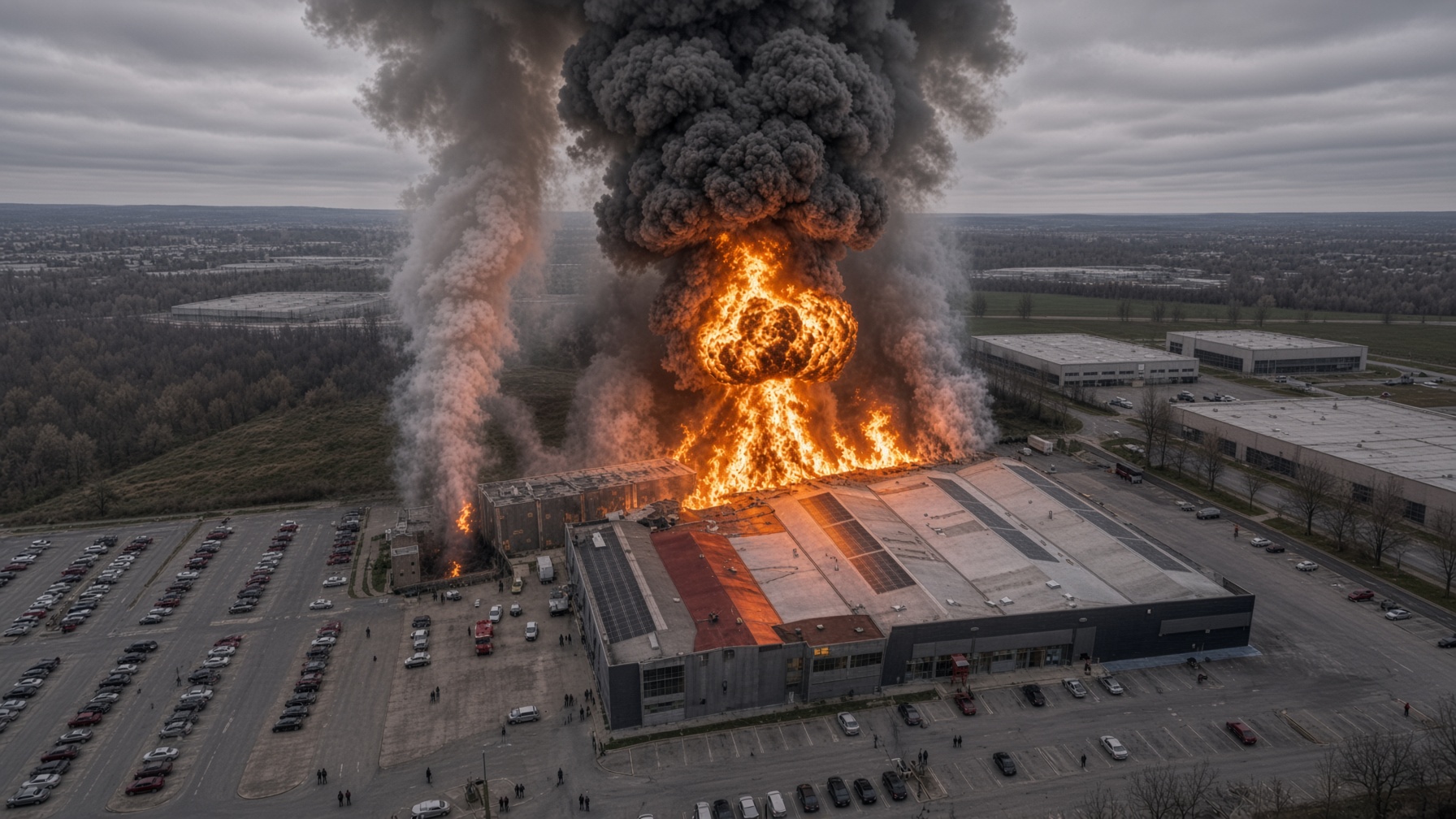
TRIKALA, Greece — In what has been described as one of Greece’s deadliest industrial tragedies in decades, a devastating explosion and subsequent fire tore through the well-known “Violanta” biscuit and confectionery factory on the outskirts of Trikala, central Greece, early on Monday, January 26, 2026.
The catastrophic incident, which occurred just before 4:00 a.m. local time, has claimed the lives of five female workers, injured seven others, and completely destroyed the extensive 24-hour manufacturing facility situated about 200 miles (~320 kilometers) north of Athens (1.1.11).
At the time of the blast, 13 employees—consisting of 4 men and 9 women—were working the overnight “graveyard” shift inside the affected production wing of the prominent domestic confectionery and baked-goods manufacturer (1.1.16, 1.1.17). Following an intensive, hazardous search-and-rescue operation that lasted through the night and into the following morning, search teams eventually recovered the remains of five trapped workers, with the final victim being located in the rubble on Tuesday, January 27, 2026 (1.1.5, 1.1.17).
Grief-stricken local authorities and the workers’ families have identified the five deceased women, all mothers of young children: Vasiliki Skampardoni, 42; Elena Katsarou, 45; Stavroula Boukovala; Anastasia Nasiou, 56; and Agapi Bounova, 40 (1.1.12, 1.2.19).
A DEVASTATING NIGHTTIME BLAST
According to local accounts, the explosion was extraordinarily powerful, with the concussive force rattling windows in villages several miles away and being heard up to 10 kilometers distant (1.1.18, 1.2.18). The blast was immediately followed by a fast-moving, high-intensity inferno that rapidly consumed the facility’s main production and baking wing, leading to the collapse of its roof and steel-frame structures, trapping multiple workers before they could flee (1.2.16, 1.2.17).
Eight employees, including three women and five men, were able to evacuate the burning building in the chaotic early moments of the disaster (1.2.18).
“It was like a war zone,” said an employee who managed to escape the burning interior. “There was no warning—just a deafening boom, and then everything was instantly on fire, filled with thick, black smoke and collapsing debris.”
The Hellenic Fire Service dispatched a massive regional response, deploying more than 50 specialized firefighters, 15 emergency engines, a drone team, and specialized ladder units to the scene (1.1.17, 1.1.18). Heavy smoke and intense thermal conditions, which reached estimated temperatures of 1,000 degrees Celsius, severely hampered initial rescue operations (1.2.17).
Traffic police closed local roadways, including Karditsi Street, and diverted traffic to allow heavy rescue and demolition equipment access to the site (1.1.18, 1.2.14).
Regional emergency medical services transported seven individuals—six factory workers suffering from severe smoke inhalation and thermal burns, alongside one responding firefighter injured during suppression efforts—to the General Hospital of Trikala, where they remain under observation in stable condition (1.1.2, 1.1.7).
THE INVESTIGATION AND SAFETY SCRUTINY
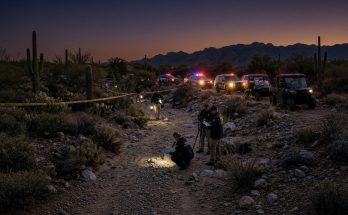
Greek judicial authorities, the Fire Service’s Arson Crimes Division, and the Arson Investigation Directorate (DAEE) have launched a major criminal and technical inquiry to identify the exact cause of the tragedy (1.2.16).
The investigation has focused heavily on a “violent explosion” scenario (1.2.17). Authorities disclosed that the primary working theory points to a long-term propane leak from a buried pipe roughly 80 centimeters (~2.5 feet) below the plant’s basement floor (1.1.11, 1.1.17). It is believed that gas had been accumulating for months, and a spark—possibly from the simple act of switching on electrical or mechanical equipment—finally triggered the blast (1.1.17, 1.2.17).
The search and safety check of the site will continue to inspect:
Gas-powered industrial baking ovens and buried fuel pipelines for leaks or structural failure (1.1.11).
Whether the plant had functional, operational gas detection sensors, given that employees had reportedly raised concerns about a persistent smell of gas for some time prior to the blast (1.1.17).
The status and last inspection dates of automated thermal and gas-shutoff systems (1.2.17).
The effectiveness of the facility’s water-sprinkler systems during the early moments of the disaster.
In the days following the event, the Piraeus-based owner of the factory, Konstantinos Tziortziotis, and two other individuals were arrested in connection with the incident, eventually appearing before a public prosecutor and investigating judge in Trikala to prepare their defense memorandums (1.1.13, 1.1.17). Greek Prime Minister Kyriakos Mitsotakis has publicly expressed his condolences to the families of the victims, vowing that the government would ensure a full and transparent investigation (1.1.14, 1.1.15).
A STUNNED COMMUNITY AND LABOR PROTESTS
The disaster has sent shockwaves through the Thessaly region, where the Violanta plant had been a major employer and one of the largest biscuit producers in the country, exporting products to more than 40 nations (1.1.1, 1.1.14). Shock was compounded by the poignant detail that, just hours before the explosion, some of the victims had been celebrating together at the company’s traditional New Year cake-cutting event, which had also led to a smaller-than-usual night shift of just 12 people on the night of the disaster (1.2.21).
In response, the Trikala Labor Center and local labor syndicates called a 24-hour strike and held a massive rally at Riga Feraiou Square in Trikala to demand justice and a thorough investigation into workplace safety, displaying banners reading, “No more dead workers at the profit’s altar” (1.1.11, 1.1.12).
While the legal process moves toward formal judicial scrutiny—including Appeals Court petitions from victims’ families seeking to upgrade charges against the defendants—the community remains united in grief (1.2.12). For the families of the five mothers, an industrial workplace has been forever transformed into a site of unimaginable loss.